
Gym screens are active upselling tools that display targeted, behavior-driven offers to members at the exact moment they are most likely to buy. Static posters and printed banners fail because banner blindness sets in within two weeks of a member joining, making generic content invisible. Digital signage solves this by delivering personalized, zone-specific messages that match where a member is, what they are doing, and what they need next. This guide explains why gyms use screens for upselling, how the gym zone model works, what hardware you actually need, and how Proof of Play metrics turn your screen network into a measurable revenue channel.
Why gyms use screens for upselling instead of static signage
Digital signage outperforms static displays because it responds to context. A poster on the wall says the same thing to every member, every hour of every day. A screen running behavior-based content can show a protein shake promotion to a member finishing a cardio session, then switch to a personal training offer for someone who has been active for 90 days without booking a PT session.
The industry term for this approach is intelligent signage, and it treats each screen as a conversion channel rather than a notice board. Targeted PT session promotions consistently outperform generic messaging because they match member intent. That match is what drives revenue.
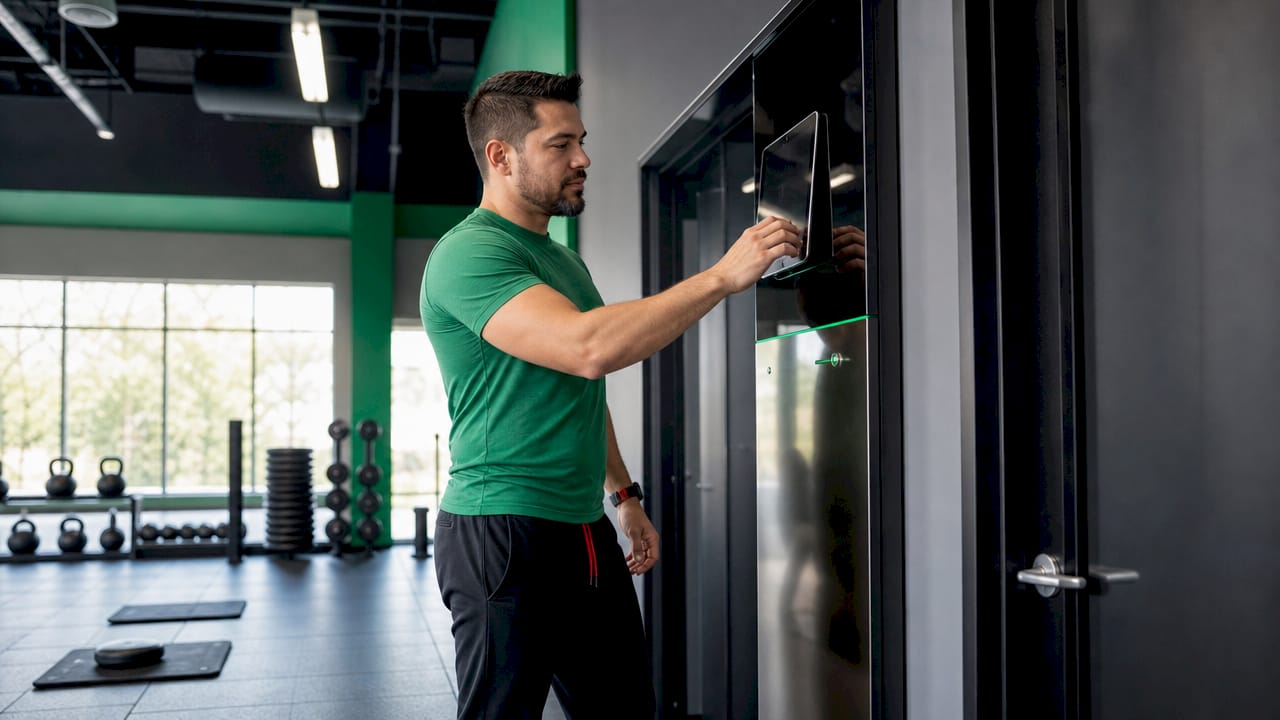
Gym upselling strategies built on intelligent signage also reduce pressure on front desk staff. The screen handles the first touchpoint. Staff follow up on warm leads rather than cold-pitching every member who walks through the door.
How strategic screen placement within gym zones maximizes upselling
The gym zone model divides your facility into three distinct areas, each with a different member mindset and a different upsell goal. Placing the right content in the right zone is the single biggest factor in whether your screen network generates revenue or gets ignored.
| Gym Zone | Average Dwell Time | Content Type | Upsell Goal |
|---|---|---|---|
| Retention zone (cardio floor) | 20–40 minutes | Brand storytelling, member spotlights, class schedules | PT packages, premium memberships |
| Urgency zone (studio entrances) | 2–5 minutes | Class countdowns, limited-time offers, enrollment prompts | Class packs, workshop bookings |
| Retail zone (lobby, juice bar) | 3–8 minutes | Product showcases, nutrition tips, impulse offers | Supplements, merchandise, add-ons |
The retention zone on the cardio floor is your most valuable real estate for brand storytelling. Members spend 20–40 minutes there, which means you have time to build a narrative rather than just flash a price. Use that dwell time to run member success stories, class highlight reels, and long-form content that builds emotional connection with your brand.
The urgency zone at studio entrances works differently. Members are transitioning between activities and have a narrow attention window. Short, punchy messages with a clear call to action work best here. A countdown timer showing three spots left in Saturday's spin class creates genuine urgency without feeling manipulative.
The retail zone near the lobby or juice bar is where the endowment effect works in your favor. Members who have just finished a workout are physiologically primed to invest in recovery. A screen showing a protein shake bundle at the point of purchase is not advertising. It is a timely, relevant suggestion that aligns with what the member already wants.
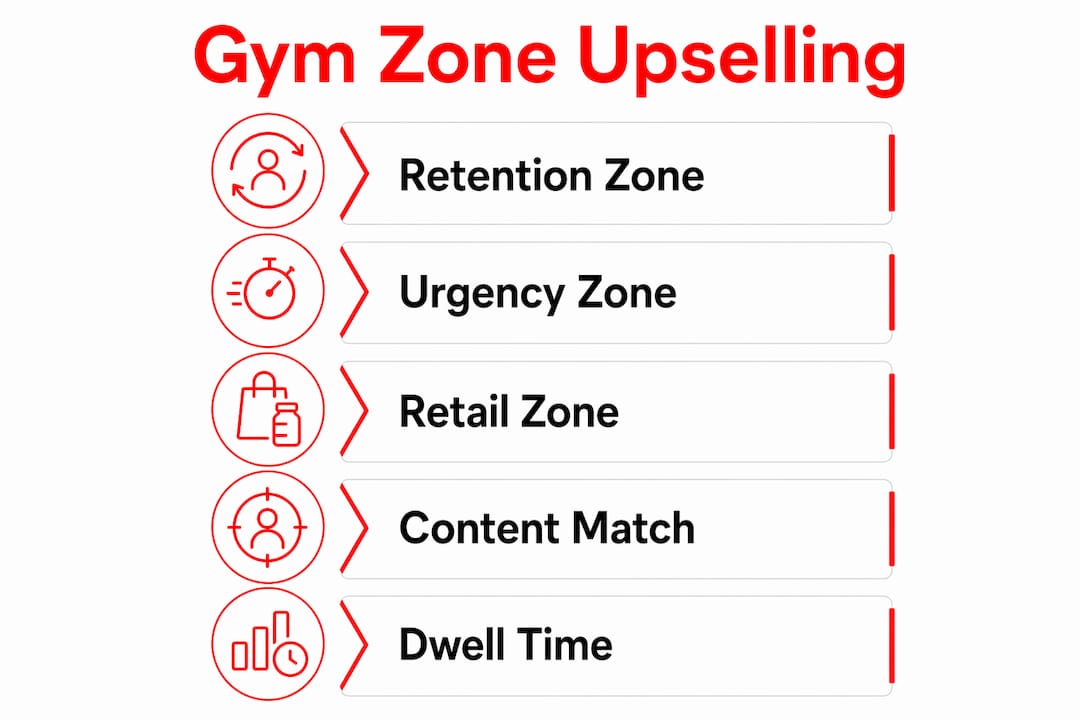
Matching content duration to dwell time is what separates a gym with a screen network from a gym with a digital upselling strategy. Learn how to set up each zone correctly with a gym digital signage setup guide built specifically for gym operators.
How does personalization on gym screens drive higher conversion rates?
Generic messaging fails because members stop seeing it. Intelligent signage targeting specific member behaviors produces significantly higher conversion rates than blanket content. The difference is data.
When your signage platform integrates with your CRM and POS systems, you can segment members and time offers based on real behavior. Effective gym upselling strategies built on personalization include:
- Activity-based targeting: Show PT package promotions only to members who have been active for 90 days but have never booked a personal training session.
- Purchase history triggers: Display supplement bundle offers to members who have previously bought single-serve products at the juice bar.
- Attendance pattern prompts: When a member's visit frequency drops, trigger a re-engagement offer on the lobby screen tied to their membership profile.
- Class enrollment nudges: Show available spots in premium classes to members who regularly attend standard classes but have not upgraded their booking tier.
Automated screen prompts tied to member actions remove the guesswork from staff upselling efforts. The screen delivers the first message. Staff close the conversation. That division of labor is more efficient and less intrusive for members.
Pro Tip: Set up milestone triggers in your signage platform so that when a member books their 10th class, a congratulatory message appears on the nearest screen alongside a relevant upgrade offer. Members are emotionally receptive at achievement moments, and that receptivity translates directly to higher upsell acceptance.
Properly structured upsell programs reduce sales pressure by relying on member goal data rather than staff intuition. Digital prompts integrated with staff touchpoints create a consistent, low-friction upsell experience that members accept rather than avoid.
Why commercial-grade hardware is non-negotiable for gym screens
Consumer TVs fail in gym environments. The reasons are practical, not theoretical.
- Operational hours: Consumer TVs are rated for 6–8 hours of daily use. Gyms run screens 12–18 hours a day. A consumer TV in a gym will fail within months.
- Heat and ventilation: Gym environments generate heat from equipment and bodies. Consumer screens lack the internal cooling systems needed for sustained operation in warm, humid conditions.
- Brightness: Gyms use strong overhead lighting to keep spaces energized. Commercial-grade screens require 500–700 nits of brightness to remain visible under those conditions. Most consumer TVs top out well below that threshold.
- Portrait mounting: Leaderboard displays, member spotlights, and class countdown timers all work best in portrait orientation. Screens designed for portrait mounting have internal cooling systems that prevent burn-in when rotated, which consumer TVs do not reliably support.
Pro Tip: When budgeting for your screen network, factor in total cost of ownership rather than purchase price alone. A commercial-grade screen that lasts five years costs less per month than replacing a consumer TV every 18 months, and it never goes dark during peak hours when upsell opportunities are highest.
Content maintenance matters as much as hardware quality. High-performing gym signage networks use scheduled content calendars and assign dedicated staff responsibility for updates. A screen showing a January promotion in march is worse than no screen at all. It signals to members that your facility is not paying attention, which undermines the trust that upselling depends on. Use a content scheduling system to keep every screen current without manual daily effort.
How do gyms turn screen networks into measurable revenue channels?
The shift from passive display to active revenue channel happens when you add measurement. Proof of Play (PoP) reporting is the mechanism that makes this possible.
Proof of Play metrics provide detailed logs of what content played, on which screen, at what time, and for how long. That data does three things for your business:
- Internal accountability: You can verify that your content calendar is running as scheduled and identify screens that have gone offline or are showing outdated content.
- Conversion analysis: By cross-referencing PoP logs with POS sales data, you can identify which content types and which zones produce the highest upsell conversion rates.
- Partner revenue: PoP data transforms your screen network into an advertising platform for local businesses. A sports nutrition brand, a physiotherapy clinic, or a sportswear retailer will pay for verified screen time in a gym with a qualified, health-conscious audience.
"Digital signage is entering a Proof Era where members expect data-driven, real-time content that enhances community and wellness experience. Gyms that can demonstrate screen performance with verified metrics will attract both member engagement and partner advertising revenue."
Conversion logic aligned to the member journey is what separates a gym with screens from a gym with a digital marketing channel. Map each offer to a specific zone, a specific member segment, and a specific point in the member lifecycle. Then measure the result, adjust the content, and repeat. Track the right screen content performance metrics to know exactly which offers are working and which need replacing.
Content calendars with scheduled review cycles prevent the single biggest failure mode in gym signage: content staleness. Assign a monthly review date for every zone. Rotate offers based on seasonal priorities, membership campaigns, and partner commitments. The gyms that generate consistent upsell revenue from their screens treat content management as an ongoing operation, not a one-time setup task.
Key Takeaways
Gym screens generate upsell revenue when zone-based placement, behavior-driven personalization, commercial-grade hardware, and Proof of Play measurement work together as a single system.
| Point | Details |
|---|---|
| Zone-based placement | Match content type and duration to each gym zone's average dwell time for maximum relevance. |
| Behavior-driven personalization | Integrate CRM and POS data to trigger offers based on member activity, milestones, and purchase history. |
| Commercial-grade hardware | Use screens rated for 24/7 operation at 500–700 nits to avoid failure and maintain visibility under gym lighting. |
| Proof of Play measurement | Use PoP logs to verify content delivery, analyze conversions, and generate partner advertising revenue. |
| Content calendar discipline | Schedule regular content reviews to prevent staleness and sustain member engagement across all zones. |
What I've learned from watching gyms get this wrong
Most gym owners install screens and then treat them like digital posters. They upload a promotional graphic, set it to loop, and consider the job done. Six months later, they wonder why the screens are not moving memberships or supplements.
The mistake is not the hardware. The mistake is the mental model. A screen that shows the same content every day is not a upsell channel. It is wallpaper. Members stop seeing it within days, and the investment produces nothing.
The gyms I have seen generate real, measurable revenue from their screens share one habit: they treat content management as a weekly operational task, not a quarterly project. They review what is playing, check PoP data against sales figures, and swap out anything that has stopped performing. That discipline is unglamorous, but it is the actual source of the revenue lift.
The second mistake I see consistently is ignoring zone logic. A gym owner will put the same content on every screen because it is easier to manage. But a protein shake promotion in the cardio zone during a 30-minute treadmill session is a missed opportunity. That member has time and attention. Give them a story, a member spotlight, a class series they have not tried. Save the product push for the retail zone, where the purchase is one step away.
The third mistake is underestimating hardware. I have watched gyms install consumer TVs to save money, then spend more on replacements within 18 months than they would have spent on commercial screens from the start. Gym environments are hard on electronics. Buy hardware that is built for the environment.
The gyms that get this right are not doing anything exotic. They are applying the same logic that any good digital marketer applies to a website: right message, right audience, right moment, measured result. The screen is just the channel.
— Kingdom
Kingdomsignage makes gym screen upselling measurable and manageable
Running a screen network across multiple gym zones without the right platform means juggling content updates, hardware monitoring, and performance data across separate tools. Kingdomsignage unifies all of that into a single dashboard built specifically for gym environments.
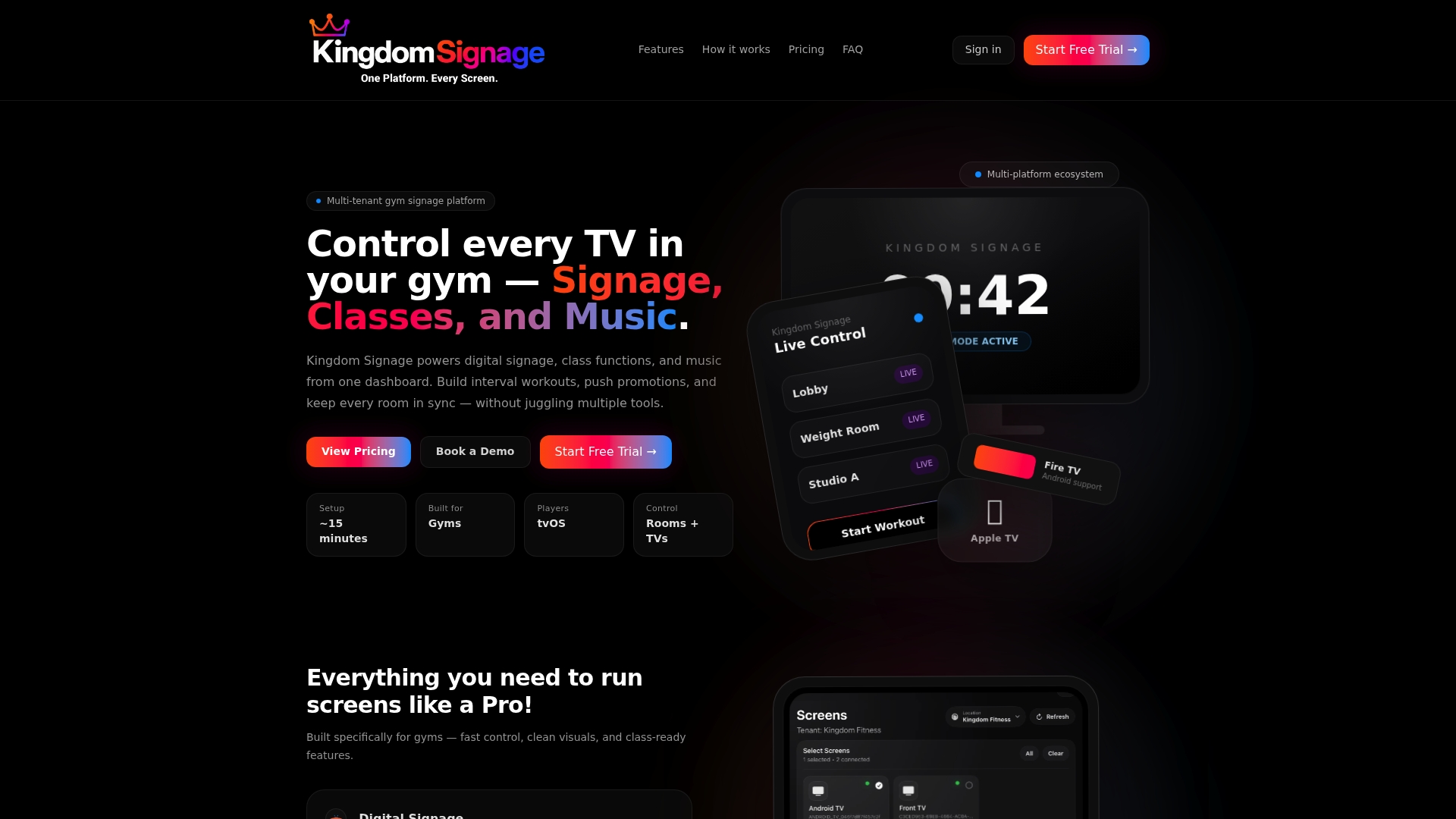
Kingdomsignage supports zone-based content scheduling, automated behavioral targeting, and Proof of Play reporting so you can verify what is running and measure what is converting. The platform integrates with commercial-grade screen hardware and handles audio-visual synchronization across rooms, which means your lobby, cardio floor, and studio screens stay coordinated without manual intervention. Gym owners ready to turn their screen network into a revenue channel can see exactly how Kingdomsignage supports every stage of the upsell strategy covered in this guide.
FAQ
Why do gyms use screens instead of printed signs for upselling?
Digital screens allow gyms to display targeted, time-sensitive offers that change based on member behavior and gym zone, while printed signs show the same static message to every member regardless of context. Banner blindness from generic content sets in within two weeks of a member joining, making static signage ineffective for upselling.
What is the gym zone model for screen placement?
The gym zone model divides a facility into three areas: the retention zone (cardio floor) for long-form brand content, the urgency zone (studio entrances) for time-sensitive class and offer promotions, and the retail zone (lobby, juice bar) for impulse purchase triggers. Each zone matches content to member mindset and dwell time to maximize upsell relevance.
What is Proof of Play and why does it matter for gym revenue?
Proof of Play is a reporting system that logs what content played on each screen, at what time, and for how long. It enables gyms to verify content delivery, measure upsell conversion rates, and sell verified advertising time to local partners, turning screens from a cost into a revenue source.
Can gym screens integrate with CRM and POS systems for personalized upselling?
Yes. When signage platforms connect to CRM and POS data, screens can display offers triggered by specific member behaviors such as booking frequency, purchase history, and milestone achievements. Automated prompts tied to member actions increase conversion rates and reduce reliance on staff to initiate upsell conversations.
What type of screen hardware do gyms need for effective upselling?
Gyms require commercial-grade screens rated for 24/7 operation with a minimum brightness of 500–700 nits to remain visible under gym lighting. Consumer TVs are not built for the heat, humidity, and continuous operation of a gym environment and will fail prematurely, interrupting upsell content delivery at peak hours.