
Social media feeds on gym screens are defined as live or curated digital content streams pulled from platforms like Instagram, TikTok, or YouTube and displayed on in-facility screens to motivate members and support class flow. The role of social media feeds on gym screens goes well beyond decoration. Research shows 47.5% of gym members cite short-form video reels as their primary engagement motivator, and 70.5% prioritize influencer or peer credibility when deciding what content holds their attention. That data tells gym managers one thing clearly: what you put on those screens matters as much as where you put them. Done right, social media display screens build community, reinforce your brand, and keep members coming back.
What types of social media content best engage gym members on in-gym screens?
Short-form authentic video is the highest-performing content format for gym screens. Members respond to content that feels real, not polished to the point of being unrelatable. A 30-second clip of a member hitting a personal record lands harder than a stock photo of a model with perfect lighting.
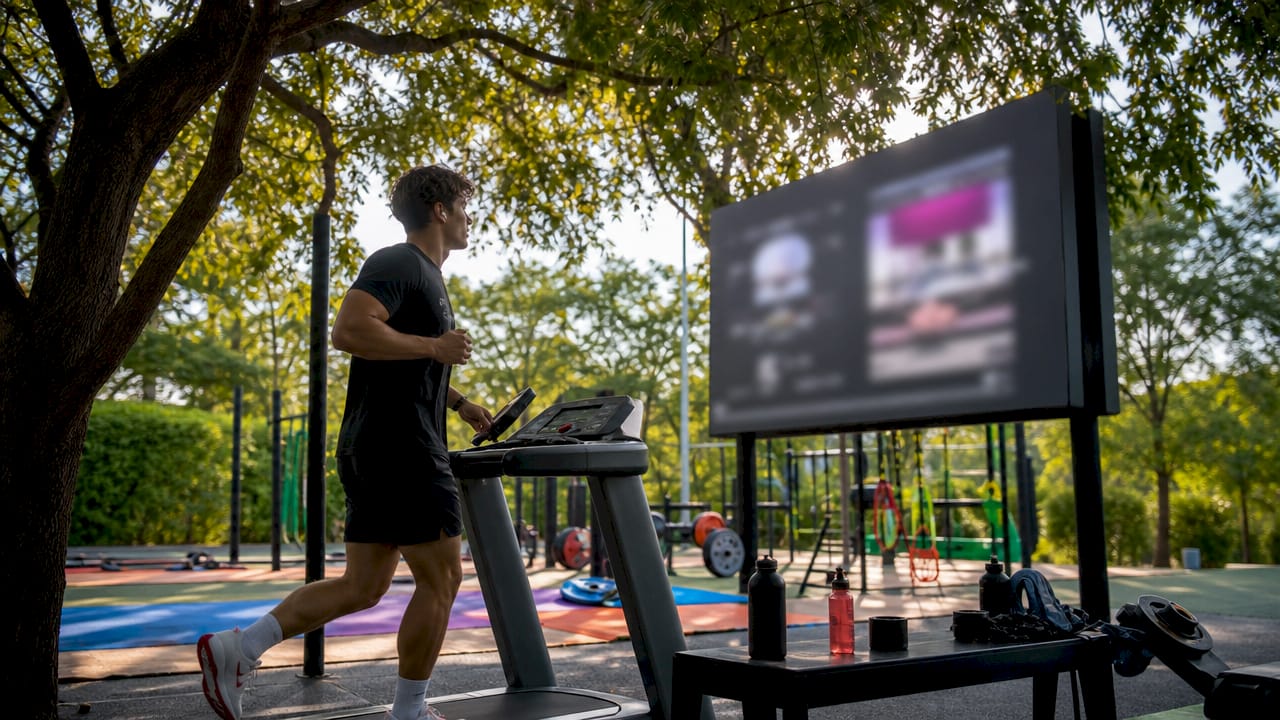
Credibility is the second driver. Influencer and peer credibility are critical factors for member attention, which means content from recognizable coaches, local athletes, or your own members outperforms generic brand content. Your gym's Instagram feed, when it features real people from your community, becomes one of your strongest retention tools.
The content types that consistently perform well include:
- Member spotlights: Short video clips or photo posts celebrating milestones like a first pull-up or a weight loss goal. Member spotlights and social updates create emotional connections that improve retention and build gym community.
- Class highlights: Behind-the-scenes clips from HIIT sessions, yoga flows, or cycling classes that show the energy of your programming.
- Coach-generated content: Short instructional reels from your trainers explaining form, technique, or workout philosophy.
- Community challenges: Countdown posts, leaderboard updates, or challenge progress feeds that create social accountability.
One content category gym managers must actively avoid is traditional "fitspiration." A decade of research shows consistent exposure to fitspiration content leads to self-comparison, decreased positive self-perception, and disordered eating behaviors. Short-term motivation boosts do not outweigh those long-term harms. Curate for inclusion, not aspiration.
Pro Tip: Set a monthly content audit. Review every feed source displayed on your screens and remove any account that consistently posts body-shaming, extreme diet, or unrealistic physique content. Your members notice, even if they do not say so.
How should gym managers place and use screens for maximum impact?
Screen placement determines whether your social media content gets seen or ignored. The best content in the world fails if members have to crane their necks or squint to read it. Eye-level mounting, corner clustering for 360-degree visibility, and high-brightness commercial panels are the three non-negotiable standards for gym screen deployment.
Follow this placement framework:
- Mount at eye level. Screens positioned too high force members to look up during workouts, which breaks form and reduces viewing time. Eye level for standing members is roughly 5 to 6 feet from the floor.
- Cluster in corners. Corner placement gives screens two walls of sightlines. A single screen in the center of a wall leaves members on either side with poor angles.
- Use commercial-grade panels. Consumer TVs are not built for gym lighting. Poor screen setup causes members to squint, turn away, or miss workout cues entirely. Commercial panels with 700 nits or higher brightness handle overhead fluorescent and natural light without washing out.
- Size screens to the room. A 43-inch screen in a 3,000-square-foot weight room is invisible. Match screen size to viewing distance: roughly one inch of screen diagonal for every foot of viewing distance.
- Check sightlines before installing. Walk the room during a live class. Identify every angle where a member might stand, sit, or lie down. If a screen is blocked by equipment or a pillar, move it.
Pro Tip: Before finalizing screen positions, run a gym digital signage setup test during a peak-hour class. Watch where members' eyes naturally go. Those are your prime screen locations.
Line-of-sight and lighting are the two most overlooked technical factors in gym screen deployment. Getting both right before installation saves you from expensive remounts later.
What operational benefits do social media feeds bring to gym class management?
Social media feeds integrated with gym screens do more than motivate members. They reduce the operational load on coaches and improve how information moves through your facility. Digital screens in fitness environments are most effective when integrated as class infrastructure, automating tasks like timers and scheduling so coaches can focus on personalized training.
The operational benefits are concrete:
- Reduced verbal workload: Gym display systems that show schedules, exercise demos, and announcements cut the number of times a coach has to stop and repeat instructions. Members read the screen; coaches coach.
- Faster onboarding: New members who can see exercise instructions and class flows on screen retain information better than those relying solely on verbal cues. Visual communication combined with verbal coaching improves class flow and member onboarding.
- Real-time class updates: Screens displaying live timers, interval countdowns, and round numbers keep the entire class synchronized without the coach shouting over music.
- Promotional efficiency: Social media feeds can be paired with class enrollment announcements, new program launches, or membership offers. Members see the content while they are already engaged and in a buying mindset.
- Community reinforcement: Rotating member achievement posts between workout sets gives members something to look forward to during rest periods. It also signals to newer members that results are achievable in your gym.
The shift from treating screens as TVs to treating them as operational tools is the single biggest mindset change gym managers need to make. A screen showing a live Instagram feed during a rest period is useful. A screen showing a timer, a workout cue, and a member spotlight in rotation is a class management system.
How can gym managers curate and control social media content effectively?
Content curation is where most gym managers lose control of their screen strategy. Without a clear process, screens end up showing whatever was last posted, which may not align with your brand, your members' needs, or your facility's values.
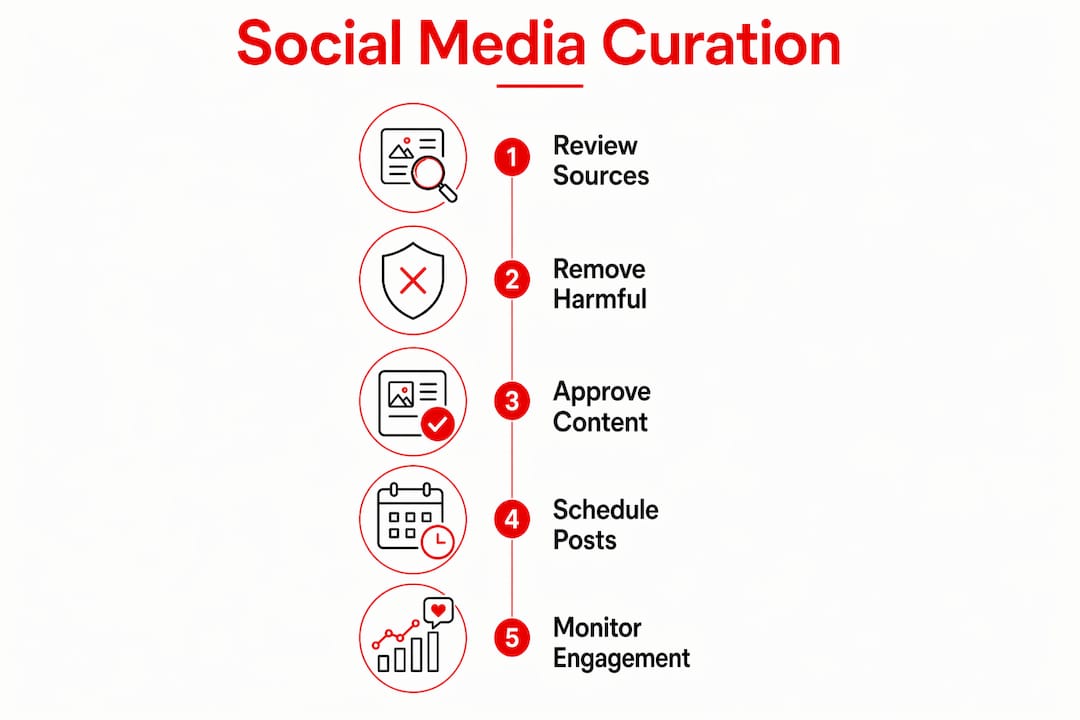
The table below outlines the key differences between an unmanaged feed approach and a curated content strategy:
| Content approach | What it looks like | Member experience impact |
|---|---|---|
| Unmanaged live feed | Random posts from followed accounts, no filtering | Inconsistent tone, risk of harmful content |
| Manually curated feed | Staff selects posts weekly, uploads to screen | More control, but time-intensive |
| Template-based rotation | Pre-approved content types cycle automatically | Consistent brand, lower staff effort |
| Centralized dashboard | All screens managed from one platform in real time | Full control, instant updates, brand consistency |
Centralized dashboards allow gym managers to update social media feeds, schedules, and announcements across multiple screens from a single interface. That efficiency matters when you are managing a multi-room facility or multiple locations.
Brand consistency is the practical goal of content curation. Your screens should reflect the same values, tone, and visual identity as your website, your social profiles, and your staff communication. A gym brand consistency guide can help you define what content belongs on your screens and what does not.
Content selection criteria worth building into your curation process include: Does this post show a real member or coach from your community? Does it promote a healthy, inclusive relationship with fitness? Does it align with your current class schedule or promotional calendar? If the answer to any of those is no, the post does not go on the screen.
Pro Tip: Build a content template library with pre-approved post formats: member spotlight template, class schedule template, challenge countdown template. When new content comes in, staff simply drop it into the right template and push it live.
Key Takeaways
Social media feeds on gym screens deliver the most value when they combine authentic member content, strategic screen placement, and centralized management that keeps every display aligned with your brand and class schedule.
| Point | Details |
|---|---|
| Authentic content drives engagement | Short-form reels and peer-credible posts outperform polished brand content with gym members. |
| Fitspiration content causes harm | Curate feeds actively to remove body-shaming or extreme physique content that damages member wellbeing. |
| Placement determines visibility | Eye-level mounting, corner clustering, and commercial-grade panels are the baseline for effective screens. |
| Screens work best as class tools | Integrating timers, schedules, and social feeds reduces coach workload and improves class flow. |
| Centralized management saves time | A single dashboard for all screens maintains brand consistency and cuts manual content effort. |
What gym managers get wrong about social media screens
Most gym managers treat screens as a set-it-and-forget-it feature. They mount a TV, connect an Instagram feed, and consider the job done. That approach wastes the asset entirely.
The gyms that get the most from their screens treat every display as a live communication channel. They rotate content with intention. They tie social feeds to class schedules. They use member spotlights not just to celebrate individuals but to signal to every other member what is possible here. That is a fundamentally different use of the same hardware.
The psychological safety angle is one I feel strongly about. Fitspiration content is still everywhere, and it is easy to let it slip onto your screens through an unfiltered feed. The research is not ambiguous: consistent exposure to that content does real harm. Gym managers have a responsibility to curate, not just display. Your screens are part of the member experience, and that experience should make people feel capable, not inadequate.
The operational integration piece is also underused. Coaches who spend class time repeating instructions or managing transitions are coaches who are not coaching. Screens that handle timers, cues, and announcements give those coaches their attention back. That is a direct improvement in the quality of every class you offer.
The best gym screen strategies I have seen share one trait: they are built around the member's experience at every point in the workout, from warm-up to cooldown, not around what is easiest to display.
— Kingdom
How Kingdomsignage supports gym screen and social media integration
Kingdomsignage is built for exactly the challenge gym managers face: managing TVs, workout class screens, music, and social media feeds from one place, without juggling multiple tools or devices.
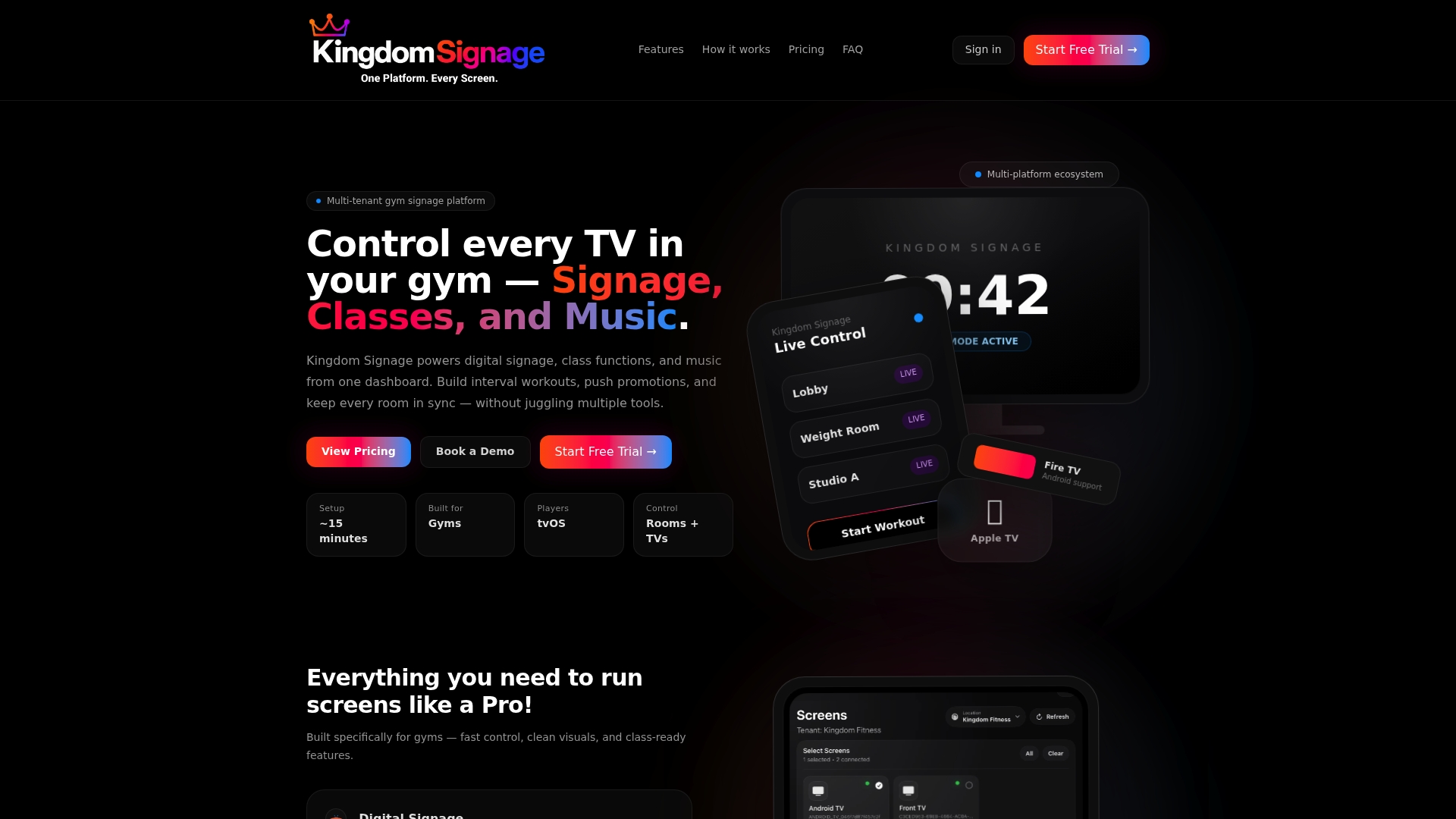
With Kingdomsignage, you can push social media content, class schedules, timers, and announcements to every screen in your facility from a single dashboard. The platform syncs audio and visuals across rooms, so your cycling studio, weight floor, and reception area all stay aligned. For gym managers who want to run a tighter operation while improving what members see and feel during every visit, Kingdomsignage removes the friction between great content and consistent delivery. Explore how the platform handles gym class promotion alongside social media feed management.
FAQ
What is the role of social media feeds on gym screens?
Social media feeds on gym screens display live or curated content from platforms like Instagram or TikTok to motivate members, build community, and support class flow. They work best when integrated with operational tools like timers and schedules rather than used as standalone entertainment.
What social media content works best on gym screens?
Short-form authentic video reels and peer-credible posts from coaches or real members drive the highest engagement. Generic brand content or polished stock imagery performs significantly worse with gym audiences.
How do I avoid harmful fitspiration content on my gym screens?
Conduct a monthly audit of every feed source displayed on your screens and remove accounts that post extreme physique, body-shaming, or restrictive diet content. A decade of research confirms that consistent exposure to fitspiration content causes measurable psychological harm.
Where should gym screens be mounted for best visibility?
Screens should be mounted at eye level, roughly 5 to 6 feet from the floor, with corner placement for maximum sightlines. Commercial-grade panels with high brightness ratings prevent glare under typical gym lighting conditions.
Can gym screens reduce the workload on fitness coaches?
Yes. Screens that display exercise instructions, interval timers, and class announcements reduce the number of verbal cues coaches need to give. That frees coaches to focus on form correction and personalized feedback during class.