
A synchronized workout class atmosphere is defined as the deliberate alignment of music, instructor cues, lighting, and scheduling to unify participants' movements and energy into a single, cohesive experience. This is the industry standard approach to what fitness professionals call "group exercise synchronization." Getting it right matters more than most gym operators realize. Group fitness settings increase workout intensity by 10–15% compared to solo training, driven entirely by collective energy and social motivation. That intensity boost translates directly to member satisfaction, retention, and word-of-mouth growth. The techniques in this guide give fitness professionals a practical framework for building that environment from the ground up.
How to create a synchronized workout class atmosphere with music tempo
Music is the single most powerful tool for creating a synchronized fitness experience. Synchronous music that matches movement cadence can improve physical performance by up to 15%. That number is not a rounding error. It means a well-curated playlist is as valuable to class outcomes as the workout program itself.
The key principle is treating music as a metronome, mapping tempo strictly to each class zone rather than running one generic playlist from start to finish. Each workout phase has a metabolic logic, and the music must follow it. A warm-up phase calls for 100–120 BPM tracks that ease participants into rhythm. Peak intensity phases work best at 130–145 BPM, where the beat drives effort without conscious thought. Cooldown phases drop back to 80–100 BPM, signaling the body and mind to decelerate together.
Building an energy arc into your playlist structure is what separates coordinated fitness classes from random music collections. The arc mirrors the class structure: gradual build, sustained peak, deliberate descent. Instructors who follow this arc report that participants move more uniformly and require fewer verbal corrections during transitions.
- Use motifs and stingers (short musical phrases) to signal transitions between workout phases. A consistent 4-beat stinger before every interval round trains participants to anticipate the shift.
- Avoid tempo jumps greater than 15 BPM between consecutive tracks. Sudden changes break rhythm and pull participants out of the group flow.
- Build playlists in advance and test them against your actual class timing. A track that runs 30 seconds too long disrupts the entire energy arc.
- Refresh playlists on a rolling 4-week cycle to prevent familiarity fatigue without abandoning the BPM structure.
Live playlists synchronized to instructor cues produce a 22% increase in participant retention. That figure makes a strong case for moving beyond pre-recorded mixes toward dynamic, instructor-controlled audio.
Pro Tip: Map your playlist BPM to a printed class timeline before your first session. Lay the music against each phase duration and confirm the transitions land on natural beat counts, not mid-phrase.
What instructor techniques build synchronized movement and group cohesion?
Instructor delivery is the human layer of group exercise synchronization. Music sets the rhythm, but the instructor locks participants into it. Call-and-response vocal cueing is the most effective technique for building attentiveness and social bonds during high-intensity sections. When an instructor calls out "Three more!" and the group responds with effort, a shared commitment forms that no playlist alone can create.
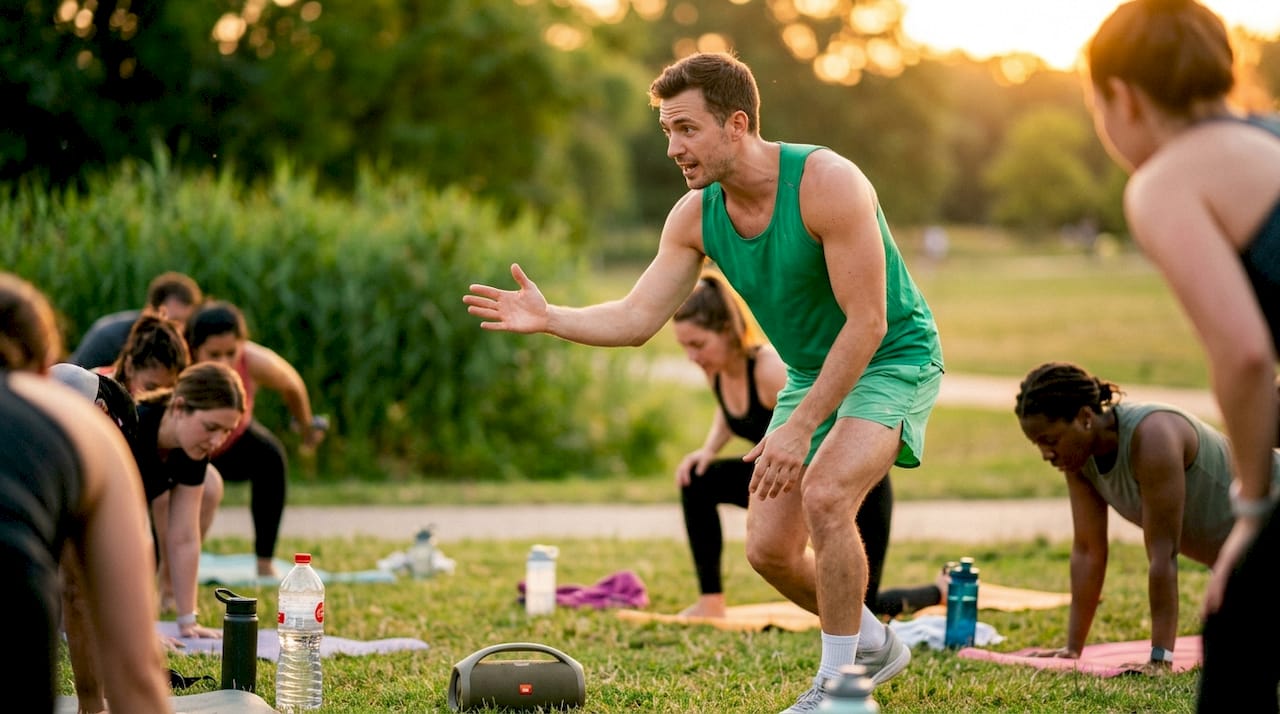
Clear instructor cues synchronized with musical beats produce better participant focus and group cohesion than cues delivered off-beat. The standard practice is to deliver movement cues every 8 beats, which aligns with the natural phrasing of most fitness music. Cuing on beat 1 of a new phrase gives participants a full 8 counts to prepare and execute the movement together.
Practical techniques that build synchronized movement include:
- Anticipatory cueing. Call the next movement 8 beats before it starts. "Squats on one" delivered at beat 8 of the current phrase gives the group time to reset their stance and move as a unit.
- Rhythmic vocal accents. Use short, punchy words on the beat during peak effort moments. "Push, push, push" timed to the kick drum keeps effort synchronized without requiring participants to think.
- Offbeat micro-rest cues. Deliver recovery instructions between beats, not on them. This keeps the musical rhythm intact while giving participants clear guidance.
- Visual demonstration on the downbeat. When modeling a movement change, initiate the demo on beat 1 so participants can mirror the timing exactly.
- Ritualized opening and closing. Start every class with the same 8-count countdown and end with the same cooldown phrase. Repetition builds anticipation and signals group membership.
Common instructor errors include cueing too late (after the beat has passed), using long sentences during peak intensity, and switching between count systems mid-class. These mismatches break the group's rhythm and force participants to rely on individual effort rather than collective momentum.
Pro Tip: Record one of your classes and watch it back with the audio muted. If your movement demonstrations don't land on visible beat transitions, your cueing timing needs adjustment.
How does lighting choreography support a motivating workout session?
Lighting is an underused tool in most gyms, yet it directly regulates social energy, signals workout phase transitions, and alters perceived effort. The right lighting preset at the right moment reduces the cognitive load on participants. They feel the phase change before the instructor announces it.
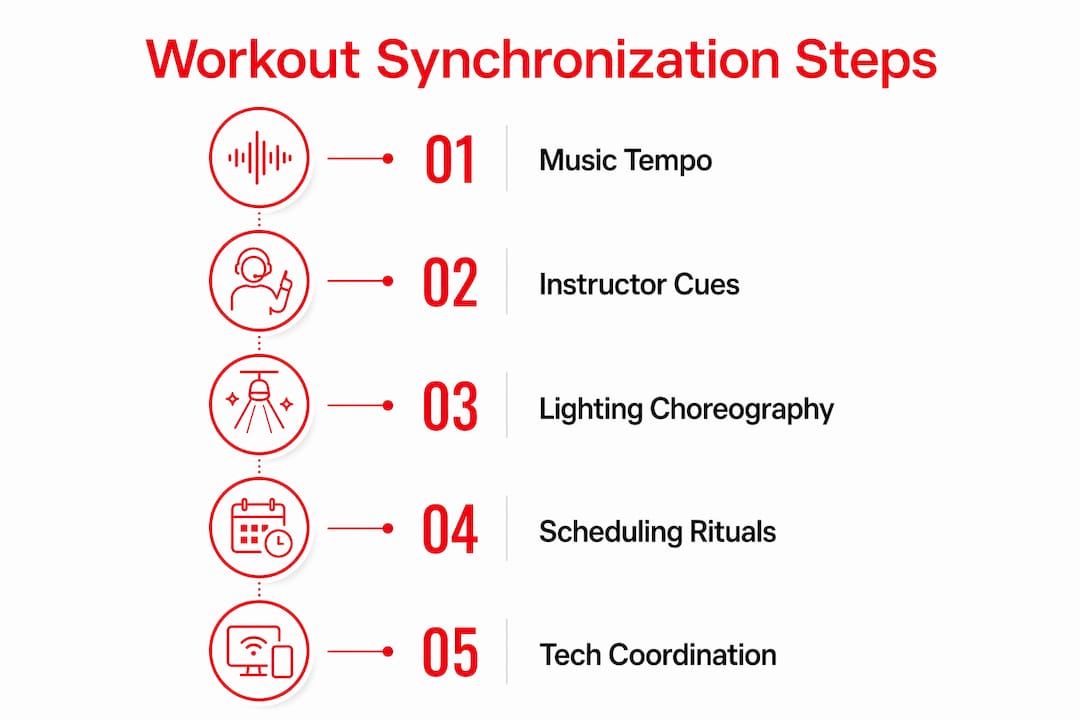
A practical lighting model for group fitness classes follows the same energy arc as the music:
| Class Phase | Color Temperature | Brightness Level | Effect on Participants |
|---|---|---|---|
| Warm-up | Warm white (2700K) | 60% | Relaxed alertness, gradual engagement |
| Peak intensity | Cool white or blue (5000K+) | 90–100% | Heightened arousal, increased perceived energy |
| Active recovery | Neutral white (3500K) | 70% | Sustained focus without overstimulation |
| Cooldown | Warm amber (2200K) | 30–40% | Parasympathetic activation, calm |
Smart lighting systems available at consumer price points, including Philips Hue and LIFX, support programmable scenes that gym operators can trigger manually or on a timer. A single preset saved per class phase eliminates the need for a dedicated lighting technician.
Key considerations for multi-zone gym environments:
- Assign separate lighting zones to the instructor area and the participant floor. Keeping the instructor slightly brighter than the group improves visual focus and authority.
- Use color shifts rather than brightness changes alone. Color temperature changes register subconsciously and feel more natural than sudden dimming.
- Test lighting presets during an empty class before going live. What looks dramatic in a dark room may feel disorienting with 20 people moving.
- For studios with windows, install blackout shades to maintain lighting control regardless of time of day.
The gym AV infrastructure that supports synchronized lighting and audio works best when both systems share a single control point, which eliminates the timing gaps that occur when two separate operators manage each system independently.
What scheduling strategies build a synchronized group workout culture?
Consistent scheduling is the structural foundation of group exercise synchronization. Studios with predictable, repeatable class cadences see higher attendance and stronger social connection among participants. Familiarity with the schedule removes friction from the decision to attend, and regulars who know exactly when their class runs become the social anchors that draw in newer members.
Building a synchronized group workout culture through scheduling involves:
- Anchor sessions. Schedule your highest-energy, most popular classes at the same time each week. These become the social heartbeat of your facility and attract consistent attendance.
- Predictable instructor assignments. Participants bond with instructors as much as with the class format. Rotating instructors too frequently breaks the social rhythm that drives retention.
- Post-workout social phases. Build 5–10 minutes of unstructured time after class into the schedule. This is when social bonds form and participants commit to returning.
- Graduated class intensity across the week. Structure the weekly schedule so intensity builds toward a midweek peak and eases toward the weekend. This mirrors natural energy patterns and reduces dropout from overtraining.
- Transparent schedule displays. Updating class schedule displays in real time prevents the attendance friction caused by last-minute changes that participants only discover on arrival.
Ritualized instructor greetings at the start of each session reinforce the sense of a shared community. A consistent opening phrase, a specific warm-up song, or even a signature countdown creates a Pavlovian signal that the group experience is beginning. Participants arrive earlier and engage faster when they know exactly what to expect.
What are the common technical challenges in synchronized class delivery?
Technical failures are the fastest way to break a synchronized class atmosphere. Audio latency is the most common problem in live-streamed and multi-room setups. Longer crossfades in music compensate for audio latency, ensuring smoother transitions when signal delay is unavoidable. A 2–4 second crossfade absorbs most latency without participants noticing the overlap.
Synchronization fails not in the planning but in the execution. The gap between a perfectly designed class and a perfectly delivered one is almost always a technical or timing issue that rehearsal would have caught.
Other common challenges and their solutions:
- Playlist freshness vs. flow. Updating music too frequently disrupts the familiar energy arc participants rely on. Rotate 20–30% of tracks per cycle while keeping the BPM structure and phase timing identical.
- Instructor rhythm errors. Instructors who lose the beat mid-class pull the group off sync. Regular rhythm training, including metronome practice and recorded self-review, corrects this faster than verbal coaching alone.
- Environmental distractions. Noise bleed from adjacent rooms, HVAC sounds, and phone notifications break immersion. Physical acoustic treatment and a clear phone-off policy at the door address both.
- Individual pacing vs. group cohesion. Some participants naturally move faster or slower than the group. Instructors who acknowledge this openly ("Work at your pace, but stay with the beat") reduce self-consciousness and keep the group energy intact.
Managing multiple screens and audio zones from a single dashboard eliminates the coordination errors that occur when instructors, AV staff, and front-desk teams each control separate systems.
Key Takeaways
A synchronized workout class atmosphere requires music tempo mapping, instructor beat-aligned cueing, lighting choreography, and consistent scheduling to work together as a single system.
| Point | Details |
|---|---|
| Music tempo mapping | Match BPM to each class phase to drive physical performance and group rhythm. |
| Instructor cueing timing | Deliver movement cues every 8 beats to keep participants synchronized and focused. |
| Lighting choreography | Use color temperature shifts to signal phase transitions and regulate group energy. |
| Consistent scheduling | Anchor sessions at fixed times each week to build social bonds and reduce attendance friction. |
| Technical reliability | Use crossfades and centralized AV control to prevent latency and synchronization failures. |
What working with fitness instructors taught me about synchronization
The most common mistake I see gym operators make is treating synchronization as a music problem. They invest in a great playlist and wonder why the class still feels disconnected. The truth is that music is only one layer. The moment an instructor's cue lands two beats late, or the lights stay bright through a cooldown, the spell breaks. Participants feel it even when they can't name it.
The gyms that get this right share one operational habit: they rehearse the full sensory experience before opening the doors. They run the playlist against the lighting presets, the instructor practices cueing against the actual tracks, and someone checks the audio levels in every corner of the room. That level of preparation sounds excessive until you see the retention numbers.
The investment priority I recommend to gym operators is centralized control first, content second. A gym with mediocre playlists but perfect audio-visual synchronization across every room will outperform a gym with great music and fragmented systems every time. When your multi-room gym displays and audio run from one dashboard, your instructors stop managing technology and start managing energy. That shift is where the real member experience improvement happens.
— Kingdom
How Kingdomsignage supports synchronized group fitness environments
Kingdomsignage is built specifically for gym operators who need music, visuals, and instructor messaging to work as one system rather than three separate tools. The platform gives you centralized control over TVs, digital signage, and audio across every room from a single dashboard, so class transitions happen on cue without manual coordination between staff.
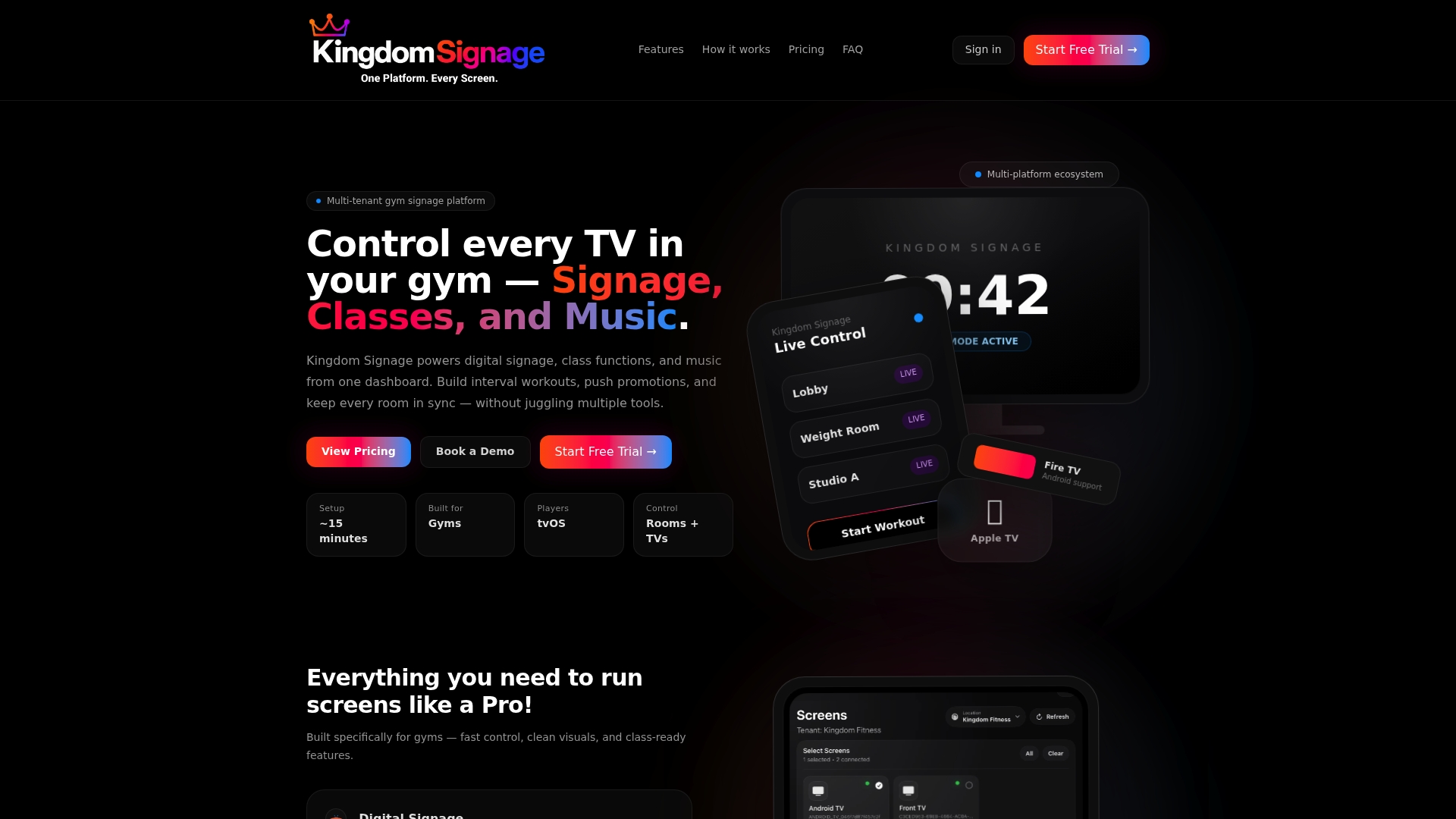
Whether you run a single studio or a multi-location facility, Kingdomsignage lets you push real-time schedule updates, sync class-phase lighting triggers with audio content, and deliver promotional messaging between sessions without interrupting the workout experience. Gym operators using the platform report smoother class delivery and stronger member engagement from the first week of use. See what centralized gym control looks like for your facility and request a demo directly from the Kingdomsignage team.
FAQ
What BPM range works best for peak-intensity fitness classes?
Peak-intensity phases work best at 130–145 BPM, where the beat drives effort without requiring conscious focus from participants. Warm-up phases should use 100–120 BPM, and cooldowns work best at 80–100 BPM.
How does call-and-response cueing improve group synchronization?
Call-and-response vocal cueing increases attentiveness and social bonds during high-intensity sections by creating shared commitment between the instructor and the group. It keeps participants engaged with the collective rhythm rather than working in isolation.
How often should fitness class playlists be updated?
Rotate 20–30% of tracks on a 4-week cycle to prevent familiarity fatigue while keeping the BPM structure and energy arc consistent. Changing too much at once disrupts the familiar flow participants rely on for synchronization.
What is the most effective lighting change for signaling a cooldown?
Shifting to warm amber light at 2200K and reducing brightness to 30–40% activates the parasympathetic nervous system and signals participants to decelerate. This change works best when paired with a simultaneous BPM drop in the music.
How can gym operators fix audio latency in live-streamed classes?
Longer crossfades of 2–4 seconds compensate for audio latency in live-streamed environments, absorbing signal delay without participants noticing the overlap between tracks.