
Workout class ambiance improvement is the intentional design of sensory and social cues that shape how members feel, perform, and return. Music, lighting, scent, spatial layout, and instructor rituals are the primary contributors to a class environment that motivates. These elements influence habit formation, perceived class quality, and long-term attendance. Gym owners and fitness instructors who treat ambiance as a system, not an afterthought, consistently outperform those who rely on energy alone. The industry term for this practice is environmental design, and it applies directly to every class format you run.
1. How can curated music playlists improve workout class atmosphere?
Curated music playlists aligned with workout intensity and mood can boost member motivation by up to 15%. That number reflects a real behavioral shift, not just a mood lift. When members feel more motivated, they push harder, stay longer, and come back more often.
Music design in group settings shapes rhythm, pacing, emotional tone, and movement quality. Different workout blocks require different energy levels and lyrical content. A warm-up needs a gradual BPM ramp, not a drop into a 160 BPM track. A cool-down needs something that signals the body to slow down, not a chorus that triggers a second wind.
The practical framework is BPM mapping:
- Warm-up (0–10 min): 100–120 BPM, minimal lyrics, building energy
- Peak effort (10–35 min): 128–145 BPM, high-energy vocals, strong rhythm
- Cool-down (35–45 min): 80–100 BPM, ambient or instrumental, emotionally neutral
One risk gym owners overlook is overstimulation. Overly loud and aggressive music keeps the body in a sustained stress state, which causes burnout rather than performance. Sound should provide rhythm and support, not constant noise. Volume control matters as much as track selection.
Pro Tip: Build three separate playlists per class type, one for each phase, and save them as templates. This removes the guesswork on busy days and keeps your atmosphere consistent regardless of who is running the class.
2. What role does lighting design play in enhancing fitness class ambiance?
Lighting regulates social energy, signals workout transitions, and alters perceived effort. Bright, cool light suits technical strength sessions. Warm, lower light supports mobility and recovery. This is not aesthetic preference. It is a behavioral cue that tells the nervous system what mode to enter.
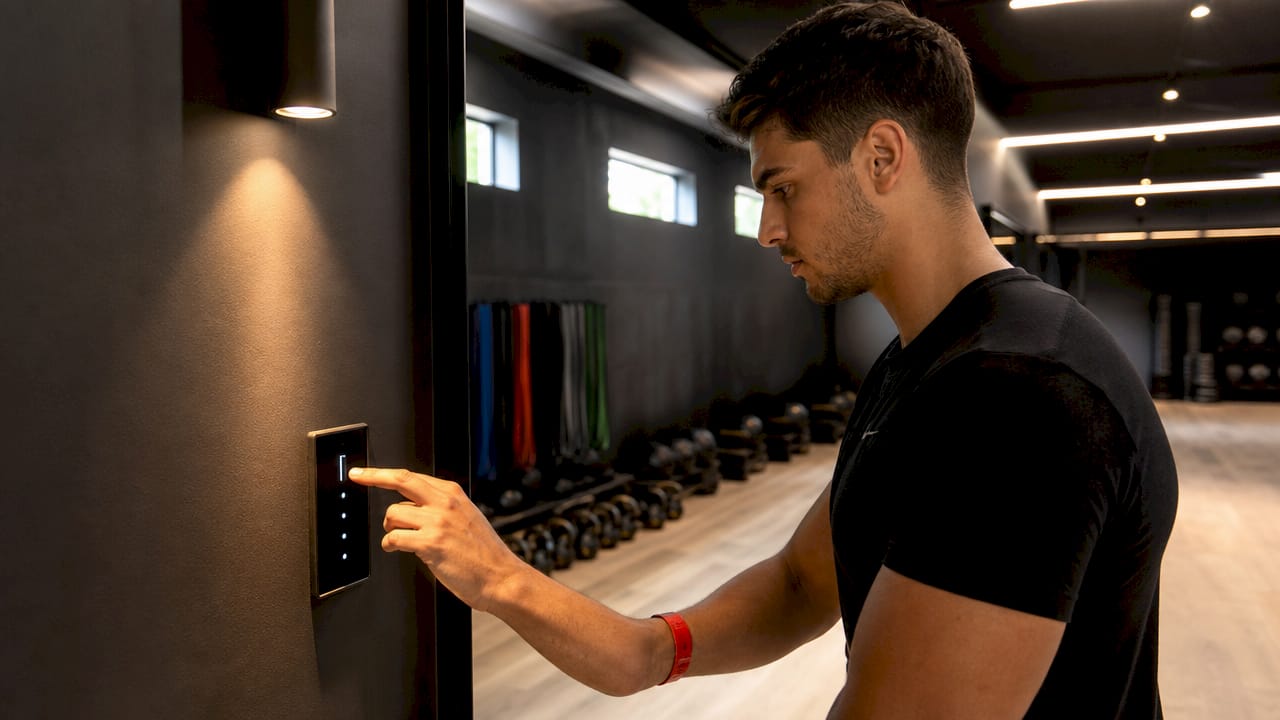
Dynamic lighting changes are one of the most underused tools in fitness class design. A shift from cool white to warm amber at the cooldown mark communicates the transition without the instructor saying a word. Members respond to it physically before they process it mentally.
Practical lighting categories for class environments:
- High-intensity classes: 4,000–5,000K color temperature, full brightness, minimal shadow
- Strength and technical classes: Bright overhead with focused task lighting on equipment zones
- Yoga and mobility classes: 2,700–3,000K, dimmed to 30–50% capacity, no harsh overhead glare
- Recovery and stretch: Warm, indirect light, near darkness acceptable for final minutes
Controllable lighting systems increase repeatability. When a preset exists for each class type, any staff member can deliver the right environment without manual adjustment. That consistency is what builds member trust over time.
Pro Tip: Program three lighting presets into your control system: high energy, moderate focus, and recovery. Label them by class type so any instructor can activate the right one in under ten seconds.
3. How do scent, room layout, and equipment placement influence workout energy?
Environmental design elements like scent and layout influence member perception and ease of participation directly. Clear spatial cues and consistent equipment placement reduce decision fatigue and make workouts feel professional. A member who walks in and immediately knows where to go, what to grab, and where to stand is already in the right mental state to train.
Scent is the most overlooked sensory lever in fitness class design. Citrus and peppermint aromas are associated with alertness and energy. Lavender and eucalyptus support recovery-focused environments. The key is subtlety. A diffuser running at low output near the entrance is enough. Overpowering scent creates distraction, not motivation.
Layout and equipment placement follow a simple rule: make the desired behavior easy and the wrong behavior hard. Mats pre-rolled and stacked near the door signal readiness. Weights arranged by size in clear rows remove the need to search. Marked floor zones tell members exactly where to set up, which reduces the social anxiety that keeps new members from returning.
Consistent equipment placement also signals professionalism. A studio where everything is in the same place every class communicates that the instructor is prepared and the experience is reliable.
4. What pre-class rituals and social elements build a motivating atmosphere?
Consistent pre-class checklists covering music, lighting, layout, and scent improve class atmosphere reliability and member comfort. Checklists handle chaotic days and help instructors welcome newcomers without missing a beat. Ambiance is about building systems that ensure consistency, not perfection.
A pre-class checklist for instructors should cover:
- Music queued and volume tested at least five minutes before start
- Lighting preset activated for the class type
- Equipment staged and zones marked
- Scent diffuser running at appropriate level
- Welcome greeting prepared for new members by name if possible
Class rituals enable the nervous system to transition faster into focused training mode, lowering decision fatigue. Routine opening greetings, signature mobility sequences, and consistent instructor phrases become behavioral cues. Members start associating those cues with effort and focus, which means they arrive mentally ready rather than needing five minutes to warm up socially.
Social rituals matter too. Milestone recognition, such as calling out a member's 50th class, creates a moment the whole group shares. That shared experience builds loyalty faster than any discount or promotion.
Pro Tip: Create a two-minute opening ritual that is identical every class: the same greeting, the same first movement, the same energy check-in. Members will start anticipating it, and that anticipation is what drives attendance habits.
5. How to tailor ambiance strategies to different class types
The right ambiance supports target session outcomes such as power, pace, recovery, or focus. Design choices should make desired behavior easier and unwanted behavior harder. A HIIT class and a yoga class require completely different sensory environments, and running the same setup for both is a missed opportunity.
Member feedback and attendance data should inform your adjustments. If a recovery class consistently draws lower numbers than your HIIT sessions, the ambiance may be contributing. Soft lighting and calm music in a room that still smells like the previous spin class sends a mixed signal.
| Class type | Music | Lighting | Scent |
|---|---|---|---|
| HIIT and cardio | 128–145 BPM, high-energy vocals | Bright, cool white | Citrus or peppermint |
| Strength and technical | 110–128 BPM, minimal lyrics | Bright, focused task lighting | Light citrus or neutral |
| Yoga and mobility | Ambient, 60–90 BPM, no lyrics | Warm, dimmed to 40% | Lavender or eucalyptus |
| Recovery and stretch | Instrumental, 50–70 BPM | Near dark, warm tone | Eucalyptus or chamomile |
The table above is a starting point, not a fixed rule. Your members' preferences and your studio's physical constraints will shape the final setup. The goal is intentionality. Every sensory choice should serve the class outcome, not just fill the silence.
Key takeaways
Consistent sensory and social design is the most reliable way to improve workout class ambiance, drive attendance habits, and reduce member churn.
| Point | Details |
|---|---|
| Music drives motivation | BPM-mapped playlists aligned to workout phases boost member motivation and movement quality. |
| Lighting signals transitions | Preset lighting schemes for each class type reduce instructor effort and improve member focus. |
| Layout reduces friction | Consistent equipment placement and clear zones lower decision fatigue for new and returning members. |
| Rituals build attendance habits | Opening rituals and milestone recognition create behavioral cues that drive repeat attendance. |
| Match ambiance to class goals | Tailor music, lighting, and scent to each class type to support the specific physical outcome. |
Why ambiance is the most underrated retention tool in fitness
Most gym owners invest in equipment upgrades before they invest in atmosphere. That is the wrong order. A member can tolerate older equipment in a class that feels electric. They will not tolerate a flat, inconsistent environment no matter how new the dumbbells are.
What I have seen consistently is that intentional atmosphere cues protect the brand and create stronger client trust and recommendation likelihood. The studios that fill classes week after week are not always the ones with the best instructors. They are the ones where members know exactly what to expect the moment they walk in. That predictability is a product. It is built through systems, not talent alone.
The mistake I see most often is treating ambiance as a one-time setup. You pick a playlist, set the lights once, and move on. But atmosphere is a repeated behavioral cue. It compounds. A member who experiences the same high-quality environment 20 times in a row has built a conditioned response to your studio. That response is what keeps them renewing.
Small rituals and pre-class checklists are not administrative overhead. They are the delivery mechanism for your brand promise. Staff who follow them consistently give every member the same experience, regardless of who is teaching that day. That is what scales.
— Kingdom
How Kingdomsignage helps you deliver consistent class ambiance
Managing music, lighting, and class communications across multiple rooms is where ambiance systems break down for most gym operators. Kingdomsignage unifies control of TVs, audio, and digital signage through a single dashboard, so your instructors are not juggling three separate tools before a 6 AM class.
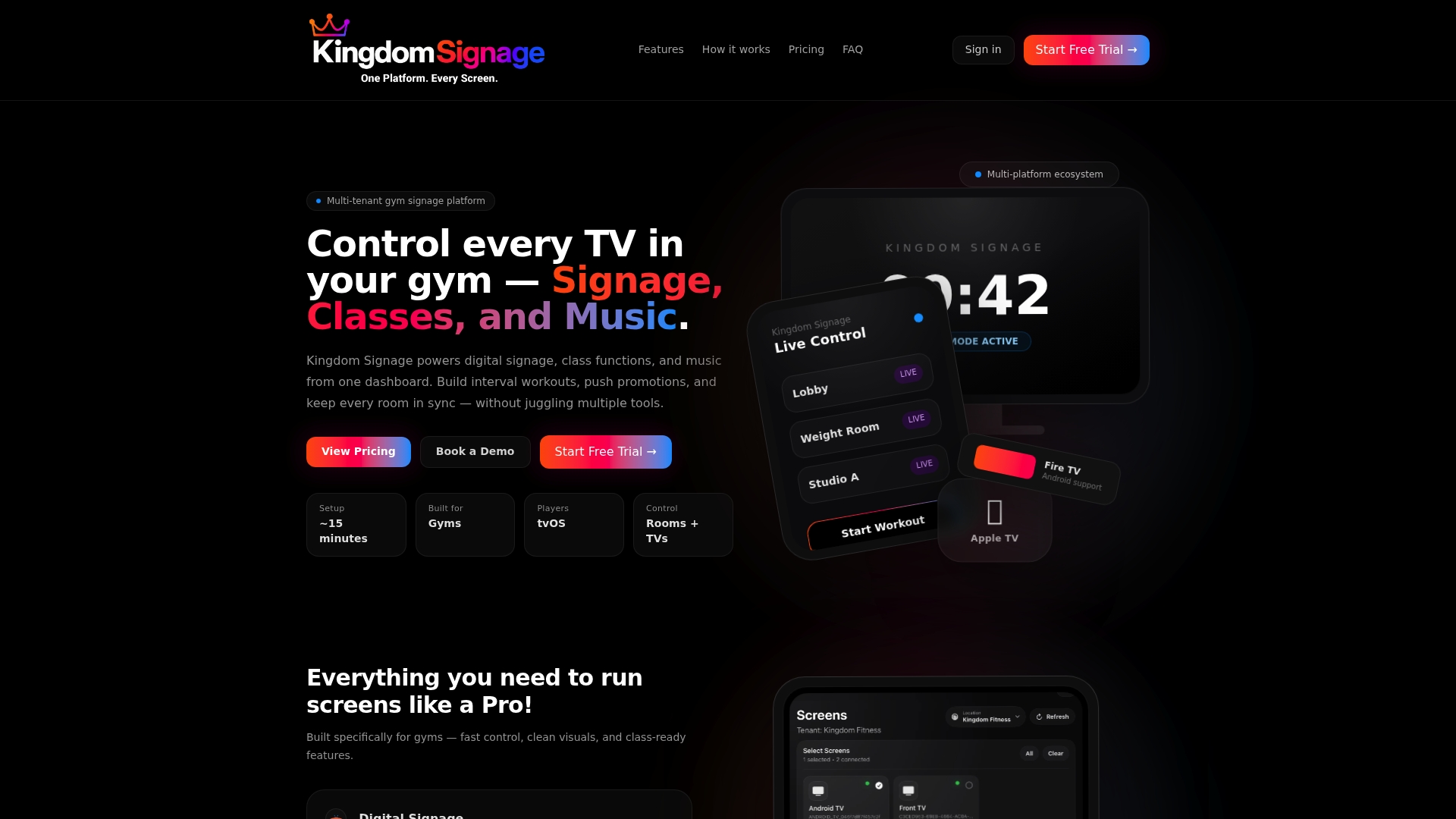
With Kingdomsignage, you can push class schedules and motivational content to screens in real time, sync audio environments across rooms, and update messaging without leaving the floor. The platform is built for gym operators who need reliability and speed, not a tech degree. If you are ready to make your ambiance system repeatable and staff-proof, explore Kingdomsignage and see how it fits your studio.
FAQ
How does music improve workout class atmosphere?
Music aligned with workout intensity shapes rhythm, pacing, and emotional tone across all class phases. BPM-mapped playlists that match warm-up, peak effort, and cool-down phases produce the strongest motivational effect.
What lighting works best for high-intensity fitness classes?
Bright, cool white light in the 4,000–5,000K range suits high-intensity and strength sessions. Warm, dimmed lighting in the 2,700–3,000K range works best for yoga, mobility, and recovery classes.
Why do pre-class rituals matter for member retention?
Routine opening rituals create behavioral cues that help members mentally transition into training mode faster. Consistent rituals also reduce anxiety for new members, which directly improves early retention.
How often should gym owners update their ambiance setup?
Review your ambiance setup quarterly using attendance data and member feedback. Adjust playlists seasonally and update lighting presets whenever you add a new class format to your schedule.
Can scent really affect workout performance?
Scent influences mood and alertness without requiring conscious attention. Citrus and peppermint aromas support energy and focus, while lavender and eucalyptus suit recovery environments. Keep diffuser output subtle so it supports the session rather than distracts from it.