
A real-time gym content update is the automated delivery of live information, such as class schedules, trainer availability, and performance data, to digital screens across your facility from a single centralized dashboard. This technology replaces manual screen management with dynamic, always-current content that responds instantly to changes in your gym's operations. Platforms like Mindbody integrate directly with digital signage networks to push live schedule updates the moment a class is added, canceled, or modified. The result is consistent messaging across every screen in your facility without a staff member touching a single display. For gym operators managing multiple locations, this is the difference between a professional member experience and a communication breakdown.
What is a real-time gym content update, exactly?
A real-time gym content update is defined as any automated, live push of information to gym digital signage without manual intervention. The industry term for the broader system is dynamic digital signage, and it covers everything from class schedule boards to performance leaderboards to promotional screens. What separates it from standard digital signage is the live data connection. Static signage shows what you uploaded last Tuesday. Dynamic signage shows what is happening right now.
The core of any real-time system is a cloud-based content management system, or CMS. The CMS acts as the control center, pulling data from your gym management software and pushing it to every connected screen. Platforms like Spectrio and Stratacache offer deep scheduling integrations that connect class data, promotional calendars, and trainer rosters directly to your screen network. This means a class cancellation at 6:00 AM appears on every lobby screen within seconds, not after a staff member notices and manually updates a slide deck.
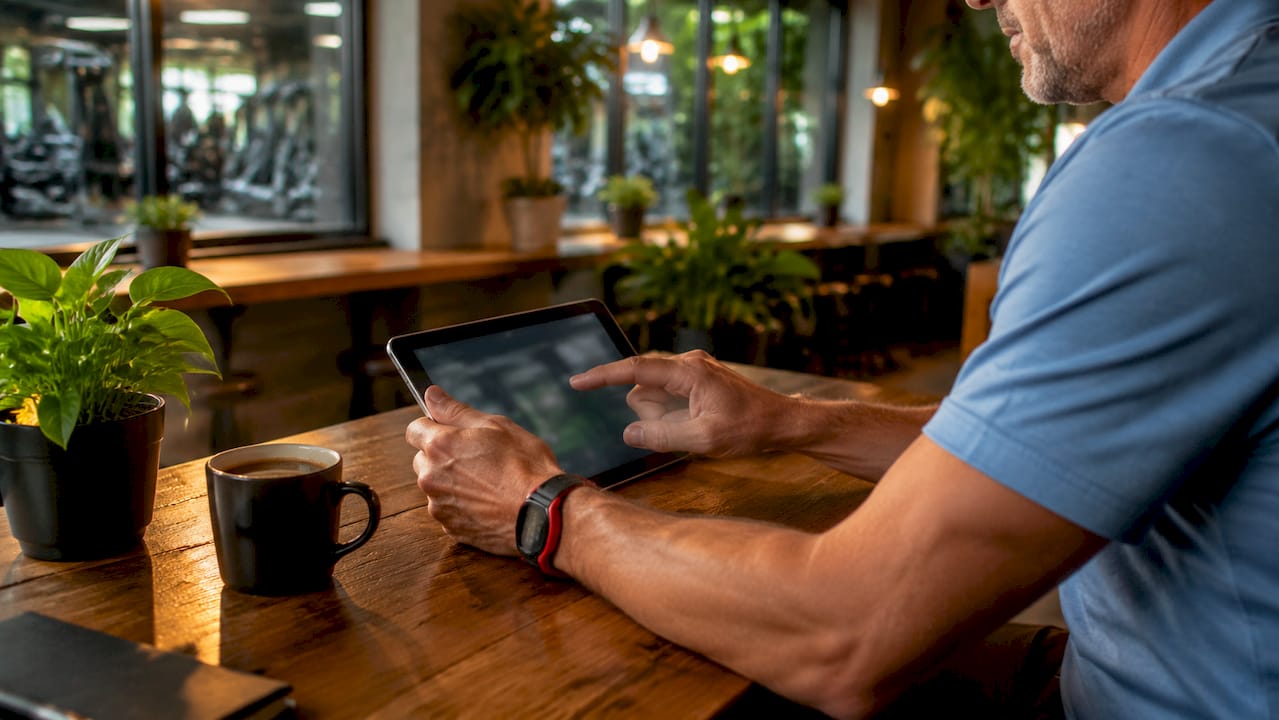
For multi-location operators, the value compounds. A centralized CMS lets you manage hundreds of screens across different locations from one device. Brand consistency, promotional timing, and emergency communications all stay synchronized without requiring local staff to do anything.
What technology powers live gym updates?
The hardware and software stack behind real-time gym content management has three layers: the display hardware, the media player, and the CMS.
Display hardware includes commercial-grade TVs and LED panels mounted in lobbies, studios, and weight rooms. Consumer TVs are not built for 12-hour daily operation and will fail faster under continuous use. Commercial displays from manufacturers like Samsung and LG offer longer duty cycles and remote management ports.
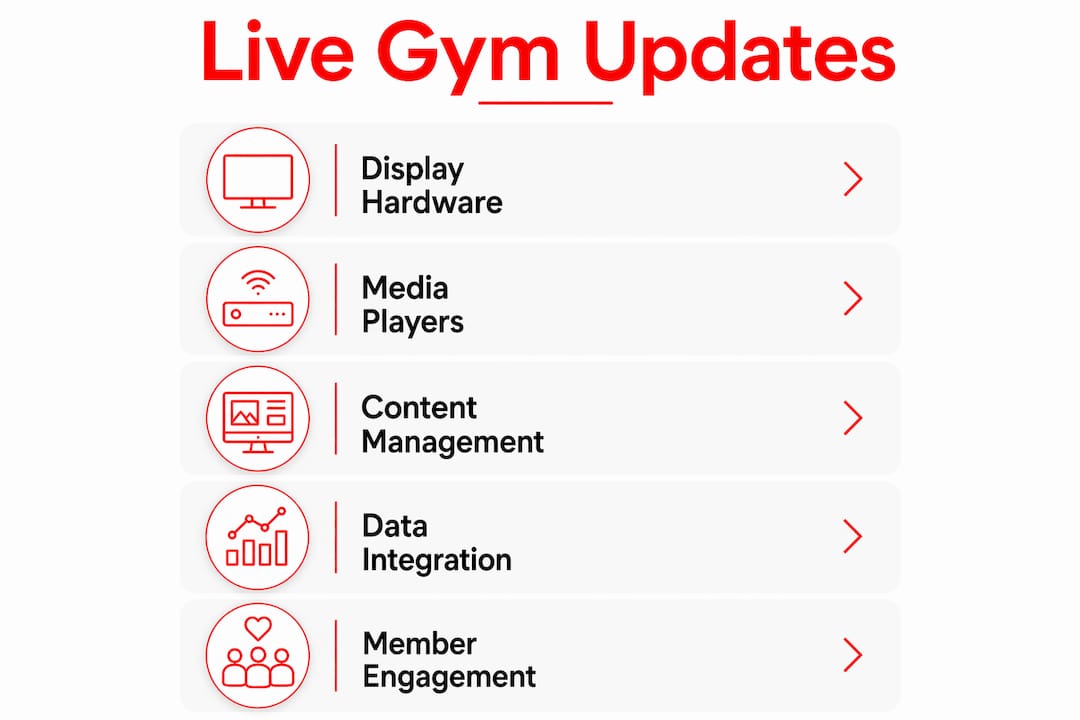
Media players are the small computing devices connected to each screen. They receive content from the CMS and render it locally. This matters because a media player with local caching can continue displaying content even during a brief network interruption.
The CMS is where your gym content management actually happens. Cloud-based CMS platforms are the standard choice for gyms because they allow remote updates from any device with a browser. Local server-based systems exist but require on-site IT support and cannot be updated remotely with the same speed.
Here are the key infrastructure decisions that determine whether your system works reliably:
- Network connection type: Hardwired Cat6 Ethernet is the correct choice for signage screens. Shared gym Wi-Fi causes screen blackouts during peak hours when member devices compete for bandwidth.
- Power delivery method: Power over Ethernet, or PoE, lets a single cable carry both data and power to a screen. This reduces installation costs by eliminating the need for separate electrical wiring near each display.
- Remote reboot capability: Your CMS must include remote reboot functions. Without this, a frozen screen at a location 30 miles away requires a physical visit to fix.
- API integrations: Your CMS needs to connect to your gym management software via API. Mindbody, Wodify, and similar platforms publish APIs that allow live data to flow directly into your signage content.
Pro Tip: Before finalizing your screen placement plan, confirm that each location has a hardwired Ethernet port available. Retrofitting network drops after screens are mounted is expensive and disruptive.
How do gyms display live class schedules and biometric data?
The most common application of live gym updates is class schedule broadcasting. When a trainer calls in sick or a class fills up, your Mindbody or Wodify integration pushes that change to every schedule board in the facility automatically. Members see accurate information without staff having to announce changes over a PA system or update a whiteboard.
Performance data is the more advanced application, and it is where member engagement gets genuinely compelling. Platforms with live APIs can pull biometric data from wearables and gym equipment and display it on shared screens during a class. Heart rate zone indicators, calorie counts, and interval timers displayed on a studio screen create a competitive, motivating environment that static content simply cannot replicate. NordicTrack's AI-driven systems demonstrate how real-time performance feedback can adjust training intensity dynamically during a session.
Dynamic QR codes are a third application that most gym operators overlook. A dynamic QR code printed on a poster or membership card can be updated instantly from a dashboard without reprinting the physical material. Point it at a new class registration link, a seasonal promotion, or an onboarding video. The printed code never changes. The destination does.
Here is a comparison of common real-time content types and their impact on member engagement:
| Content Type | Data Source | Member Engagement Impact |
|---|---|---|
| Live class schedules | Mindbody, Wodify API | Reduces missed classes and front-desk questions |
| Performance leaderboards | Wearables, gym equipment sensors | Increases competitive motivation during group sessions |
| Trainer availability boards | Gym management software | Drives personal training bookings in real time |
| Dynamic QR codes | CMS dashboard | Connects printed materials to live digital content |
| Interval timers and heart rate zones | Biometric sensors, class software | Improves workout adherence and perceived session value |
Pro Tip: If you run group fitness classes, add a live interval timer to your studio screen. Members who can see the countdown work harder and report higher satisfaction with the session.
What operational advantages come from live content refreshing?
The operational case for real-time gym content updates is as strong as the member experience case. The most immediate benefit is staff time recovery. When screens update automatically, front-desk staff stop fielding questions about schedule changes. Trainers stop updating whiteboards. Managers stop sending reminder emails to staff about promotional deadlines.
Consistent brand messaging across locations is a second major advantage. Centralized cloud-based control means every location shows the same promotional content on the same day, with no risk of one location running an expired offer. For franchise operators, this is a compliance and brand protection tool, not just a convenience.
The revenue angle is often overlooked. Proof of Play reporting, available in platforms like Spectrio, logs exactly when and where a piece of content played. This data lets you sell ad space on your screens to supplement brands, protein companies, or local businesses with the same transparency that Facebook and Google ads provide to digital advertisers.
"We are now in the Proof Era of fitness marketing. Real-time data and dynamic information display are no longer optional. Members expect them." — Digital Signage for Gyms
Two challenges are worth naming directly. First, content overload is real. Screens packed with too many data streams confuse members rather than inform them. Second, irregular update schedules undermine trust. If your schedule board is wrong twice, members stop looking at it. Both problems are management issues, not technology issues.
What are the most common technical pitfalls in gym content management?
Most real-time system failures trace back to infrastructure decisions made before a single screen was mounted. Here are the numbered steps that separate reliable systems from frustrating ones:
- Run Cat6 Ethernet to every screen location. Wi-Fi is not a substitute. Shared bandwidth during peak gym hours causes content to freeze or fail to update.
- Use PoE switches where possible. A PoE switch powers and connects your media players through a single cable run, cutting installation complexity significantly.
- Verify remote reboot is included in your CMS plan. Some platforms charge extra for this feature. It is not optional for multi-location operators.
- Test API integrations before going live. Gym management software updates can break API connections. Build a monthly check of your data feeds into your operations calendar.
- Set a content freshness schedule. Assign one person to audit screen content weekly. Outdated promotional content erodes member trust faster than a blank screen.
- Monitor system health dashboards. Most enterprise CMS platforms include uptime monitoring. Use it. A screen that has been offline for three days in a remote studio is invisible to staff until a member complains.
Pro Tip: Ask your CMS vendor specifically whether their remote reboot function works when the media player's operating system has crashed, not just when the app has frozen. The answer will tell you a lot about the platform's reliability.
For a detailed walkthrough of the physical setup process, the gym TV network setup guide from Kingdomsignage covers the full infrastructure sequence for fitness managers.
Key takeaways
Real-time gym content updates work because they connect live operational data directly to member-facing screens, removing manual steps and delivering consistent, current information at scale.
| Point | Details |
|---|---|
| Definition is specific | Real-time updates are automated, live data pushes to digital screens, not scheduled content swaps. |
| Infrastructure determines reliability | Cat6 Ethernet and PoE are the correct choices; shared Wi-Fi causes peak-hour failures. |
| Live data drives engagement | Biometric leaderboards and interval timers increase member motivation beyond what static content achieves. |
| Proof of Play creates revenue | Logged playback data lets gyms sell screen ad space with verifiable transparency. |
| Remote reboot is non-negotiable | Multi-location operators cannot afford to physically visit every frozen screen. |
Why most gyms are still underusing this technology
At Kingdomsignage, we work with gym operators across a wide range of facility sizes, and the pattern is consistent. Most gyms have invested in screens. Far fewer have invested in the infrastructure and integrations that make those screens genuinely useful in real time.
The gap is not budget. It is understanding. Operators see digital signage as a display problem, when it is actually a data pipeline problem. The screen is the last step. The real work is connecting your scheduling software, your network, and your CMS into a system that updates without anyone touching it.
The gyms that get this right see something specific happen: front-desk conversations shift. Members stop asking "is the 6 PM spin class still on?" and start asking "how do I sign up for the new HIIT program I saw on the screen?" That is the difference between signage that informs and signage that drives behavior.
The next frontier is AI-driven personalization, where content adapts based on who is in the room, what time of day it is, and what classes are trending. That is not science fiction in 2026. It is already available in platforms that combine member data with dynamic content rules. Gyms that build the infrastructure foundation now will be positioned to use those tools without a complete system overhaul.
My honest advice: start with the network. Get Ethernet to every screen. Then get a CMS with remote reboot and API access to your gym management software. Everything else, including leaderboards, dynamic QR codes, and Proof of Play reporting, builds on that foundation.
— Kingdom
How Kingdomsignage handles real-time gym signage
Kingdomsignage is built specifically for the gym environment, unifying control of TVs, workout class displays, and audio from a single dashboard. You do not need separate tools for your lobby screens, your studio timers, and your music system. Everything syncs from one place.
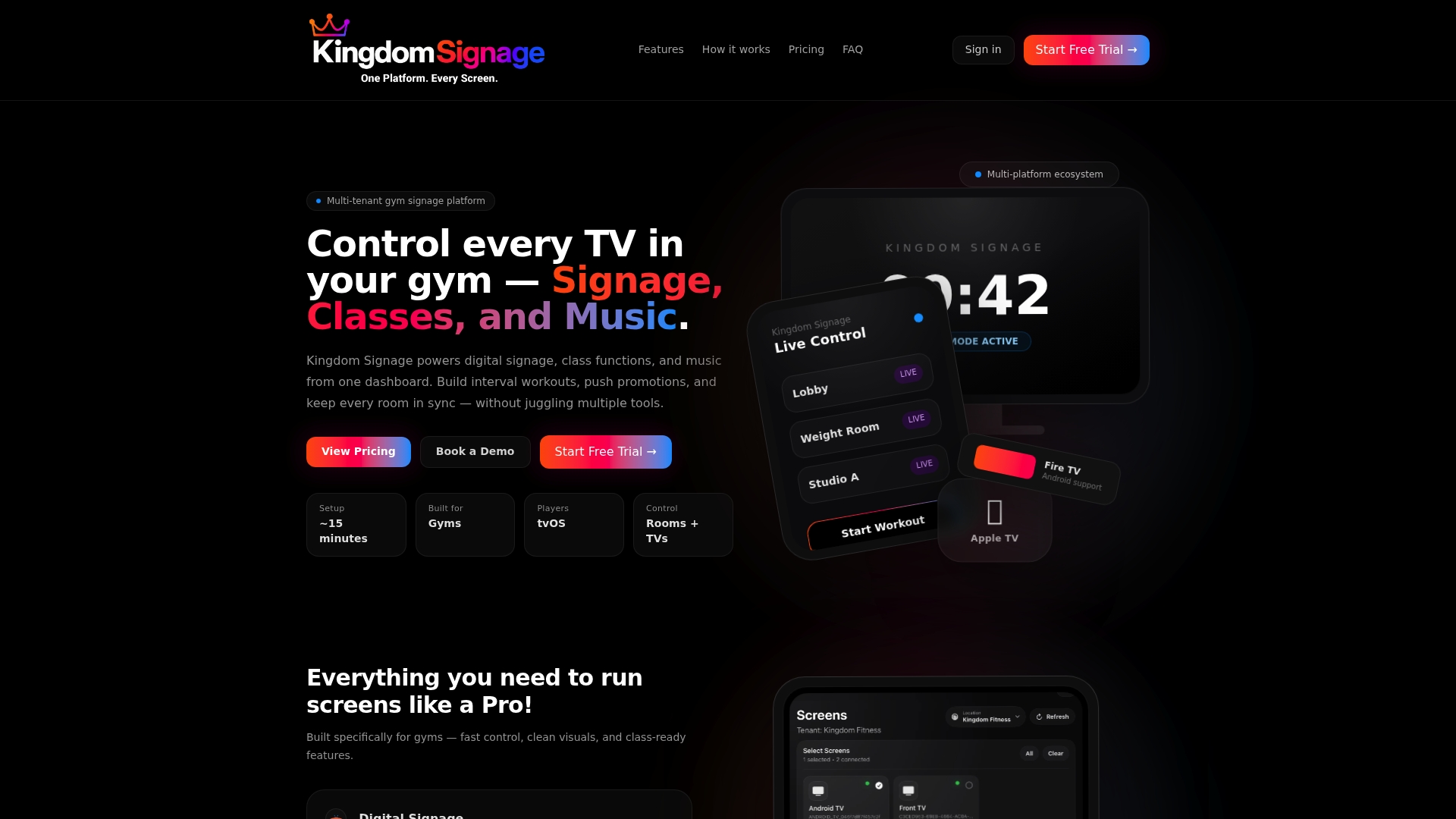
For multi-location operators, Kingdomsignage lets you push content updates, manage schedules, and control audio across every room in every facility without logging into multiple platforms. The system integrates with gym management software to keep class schedules and trainer information current automatically. If you are ready to move from manual screen management to a system that runs itself, explore what Kingdomsignage offers for gyms and see how centralized control changes daily operations. You can also review gym screen performance metrics to understand how to measure the impact once your system is live.
FAQ
What is a real-time gym content update?
A real-time gym content update is the automated delivery of live information, such as class schedules, trainer availability, and performance data, to digital screens from a centralized CMS. It differs from standard digital signage because the content changes instantly in response to live data, not on a manual upload schedule.
How does a gym CMS connect to scheduling software?
Most cloud-based CMS platforms connect to gym management software like Mindbody or Wodify through published APIs. The API pulls live schedule and roster data and pushes changes to connected screens within seconds of any update.
Why is ethernet better than wi-fi for gym digital signage?
Shared gym Wi-Fi loses bandwidth during peak hours when member devices compete for the same network. Hardwired Cat6 Ethernet gives each screen a dedicated, stable connection that does not degrade under load, preventing the screen blackouts that frustrate members and staff.
What is proof of play reporting in gym signage?
Proof of Play is a CMS feature that logs exactly when and where each piece of content played on your screens. Gyms use this data to sell advertising space to supplement brands with verified playback records, creating a revenue stream from existing screen infrastructure.
Can dynamic QR codes replace printed gym signage?
Dynamic QR codes do not replace printed signage, but they extend its usefulness. The printed code stays the same while the digital destination updates instantly from a dashboard, letting you point members to new class links, promotions, or onboarding content without reprinting anything.