
A gym digital content calendar is a centralized scheduling tool that organizes all your fitness marketing content across platforms, maps out key promotional dates, and structures campaigns across a full 12-month operational cycle. Think of it as the master plan behind every Instagram post, email blast, digital screen promotion, and class announcement your gym publishes. Without one, your marketing becomes reactive and inconsistent. With one, every piece of content serves a purpose and hits at the right moment in your member's journey.
Platforms like Notion, Zen Planner, and Envibe each offer frameworks for building this kind of calendar, and industry-standard templates typically break the year into monthly thematic campaigns with weekly content cadences. That structure is not just organizational. It is the difference between a gym that scrambles to post something on New Year's Day and one that launched its January campaign six weeks earlier.
What is a gym digital content calendar made of?
An effective gym digital content calendar is built around five core components: scheduling, content themes, channel assignments, promotional windows, and member lifecycle alignment. Each element plays a distinct role. Scheduling sets the "when." Themes set the "what." Channel assignments determine whether a piece of content goes to Instagram, email, or your lobby screen. Promotional windows tie content to revenue goals. Member lifecycle alignment makes sure you are saying the right thing to a new member versus a two-year veteran.

The most effective calendars also incorporate seasonal hooks and fitness awareness dates. World Health Day in April, Mental Health Awareness Month in May, and National Fitness Day in the fall all give your content a cultural relevance that generic posts lack. Inclusive programming across all ability levels maximizes participation far more than chasing niche fitness trends. That principle should be baked into your thematic planning from the start.
Here is what a practical monthly content structure looks like:
- Week 1: Launch the monthly theme with a hero post across social media and digital signage
- Week 2: Member spotlight or transformation story tied to the theme
- Week 3: Educational content (workout tip, nutrition fact, class highlight)
- Week 4: Promotional push (referral offer, class pack, membership upgrade)
Automation tools like Zen Planner's trigger messaging allow you to send behavior-based emails automatically. A member who books their first class gets a welcome sequence. A member who has not visited in 14 days gets a re-engagement nudge. These workflows do not replace your calendar. They run inside it.
Pro Tip: Build your calendar in a shared tool like Notion or Google Sheets so your front desk staff, instructors, and marketing lead all work from the same document. Misalignment between what your screens show and what your email says is one of the most common and most avoidable gym marketing mistakes.
How does a content calendar improve gym marketing and member engagement?
A content calendar improves gym marketing by creating consistency across the member journey, which directly reduces churn. The logic is straightforward: members who feel informed, welcomed, and engaged are less likely to cancel. Structured communications aligned with the member lifecycle, focusing on onboarding in the first 30 days and community building after that, are especially critical during high-intent months like January.
"The first 90 days of the year set the foundation for long-term gym success. Calendars should serve as repeatable roadmaps that reduce manual work and standardize the member experience." — Zen Planner, 2026 Campaign Calendar
The data on January is particularly instructive. Gyms that plan January campaigns with 15 to 25% discount offers and then pivot to February retention campaigns convert early signups into long-term members at a meaningfully higher rate. Without a calendar, most gyms run a January sale and then go quiet in February, exactly when new members are most likely to drop off.
A well-managed gym content strategy also optimizes your marketing spend. Here is how the calendar drives measurable outcomes:
- Reduced ad waste: Planned campaigns allow you to pre-build creative assets in bulk, cutting last-minute production costs.
- Higher campaign repetition: Repeating campaigns quarterly and annually builds brand recognition and improves conversion rates over time.
- Better KPI tracking: When content is scheduled in advance, you can measure lead-to-tour conversion rates by campaign type and cut what does not work.
- Faster staff onboarding: New marketing hires or front desk staff can understand your entire promotional strategy by reading one document.
Repeating campaigns yearly, quarterly, and monthly creates a compounding effect. Your audience learns to expect your January challenge, your summer shred program, and your back-to-school family offer. Familiarity builds trust, and trust converts.
Best practices for creating and managing your gym content calendar
The single most important practice in managing a digital marketing calendar for gyms is planning 6 to 8 weeks in advance. Batch filming workouts, testimonials, and promotional clips in focused sessions improves brand consistency and reduces the weekly scramble that burns out small marketing teams. One afternoon of filming can produce enough content for an entire month across Instagram, email, and your gym's digital screens.
Flexibility matters just as much as planning. Successful gym operators treat their content calendars as living documents, reserving 20 to 30% of their weekly slots for reactive posts. A member wins a local 5K. A trainer gets certified in a new modality. A community event pops up. These moments are marketing gold, and a rigid calendar that has no room for them wastes the opportunity.
Here is a comparison of the most common calendar management approaches:
| Approach | Best for | Limitation |
|---|---|---|
| Spreadsheet (Google Sheets, Notion) | Small teams, full customization | No automation or scheduling built in |
| Zen Planner | Gyms wanting CRM and calendar in one | Steeper learning curve for new users |
| Envibe | Studios focused on class-based content | Less suited for multi-channel campaigns |
| Dedicated social schedulers | Social media only | Does not cover signage or email |
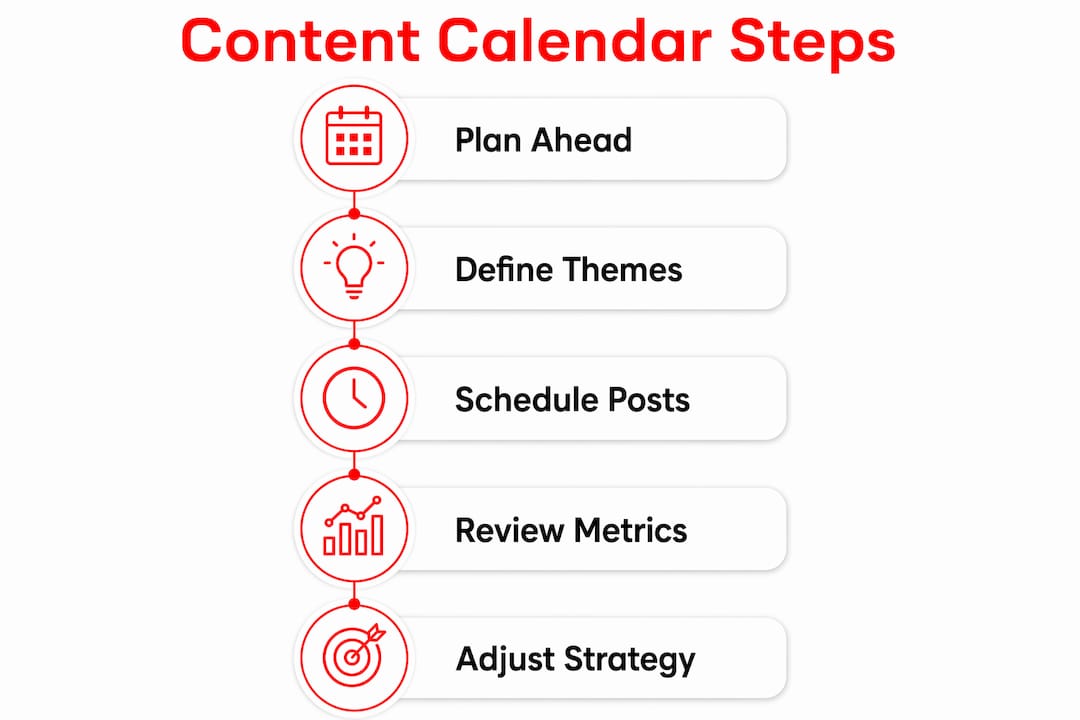
Integrating operational metrics into your calendar review process is what separates good gym marketing from great gym marketing. Pull your lead-to-tour conversion rate and attendance data monthly. If a campaign is underperforming, adjust the offer or the channel. Do not wait until the end of the quarter to find out a promotion missed its target.
Pro Tip: Set a monthly 30-minute calendar review meeting with whoever manages your marketing. Review last month's KPIs, confirm next month's content is built, and flag any community events worth reacting to. This single habit prevents 90% of the last-minute content crises gym owners complain about.
How to integrate your content calendar with digital signage
Coordinating your content calendar with gym digital signage is one of the highest-leverage moves available to gym operators. Scheduling signage content alongside social and email campaigns unifies your messaging across every touchpoint a member encounters, from the moment they walk in to the moment they check their phone in the locker room.
The practical steps for integration are straightforward:
- Map your screens to your calendar columns. Add a "Signage" column to your content calendar alongside Social, Email, and SMS. Every campaign should have a corresponding screen asset.
- Align screen content with campaign windows. If your January membership offer runs from January 2 to January 20, your lobby screen should show that offer for the same window. Not a week late.
- Use your signage platform's scheduling tools. Platforms like Kingdomsignage allow you to pre-schedule content to specific screens and rooms, so your spin studio sees class-specific promos while your weight floor sees different messaging.
- Track screen-specific engagement. Content performance metrics like attendee counts and engagement rates on gym screens give you data to refine which promotions work best in which physical spaces.
Managing multi-room gym displays from a single dashboard removes the logistical friction that causes most gyms to treat signage as an afterthought. When your screens are part of your calendar workflow rather than a separate task, your in-gym experience becomes a genuine marketing channel rather than a digital bulletin board.
The social media calendar for fitness and your in-gym signage calendar should not live in separate documents. They are the same campaign, delivered in different formats to the same member at different moments in their day.
Key takeaways
A gym digital content calendar works because it aligns every marketing channel, from social media to in-gym screens, with the member lifecycle and promotional calendar to reduce churn and increase revenue.
| Point | Details |
|---|---|
| Definition and structure | A gym digital content calendar organizes marketing across all platforms in a 12-month cycle with monthly themes and weekly cadences. |
| Member lifecycle alignment | Mapping content to onboarding and retention phases, especially in January and February, directly reduces member churn. |
| Plan 6 to 8 weeks ahead | Advance planning with batch content creation cuts production costs and prevents last-minute gaps in your marketing schedule. |
| Signage integration | Aligning digital signage with your social and email campaigns unifies messaging and turns your gym floor into a marketing channel. |
| Treat it as a living document | Reserve space for reactive content and review KPIs monthly to adjust campaigns based on real attendance and conversion data. |
Why most gym calendars fail before March
Most gym content calendars fail not because of poor planning but because of poor ownership. I have seen operators build genuinely impressive 12-month plans in January, complete with themed campaigns, awareness day hooks, and automated email sequences, only to abandon them by week six because no single person was accountable for execution.
The second failure mode is treating the calendar as a content production schedule rather than a marketing strategy document. Posting three times a week is not a strategy. Posting three times a week in service of a January onboarding campaign that feeds into a February retention push that connects to a March referral drive is a strategy. The calendar is the connective tissue.
What I have found actually works is assigning one person, not a committee, ownership of the calendar. That person reviews KPIs, approves reactive posts, and runs the monthly review meeting. Everyone else contributes content. Only one person decides what ships and when.
The other insight worth sharing: your digital signage is almost always the most underused channel in your gym content strategy. Most operators update their screens once a month if that. When you sync your screens to your content calendar through a platform like Kingdomsignage, you turn a passive display into an active part of every campaign. Members who never open your emails still see your promotions. That reach is real and it costs nothing extra once the system is set up.
— Kingdom
How Kingdomsignage fits into your gym content strategy
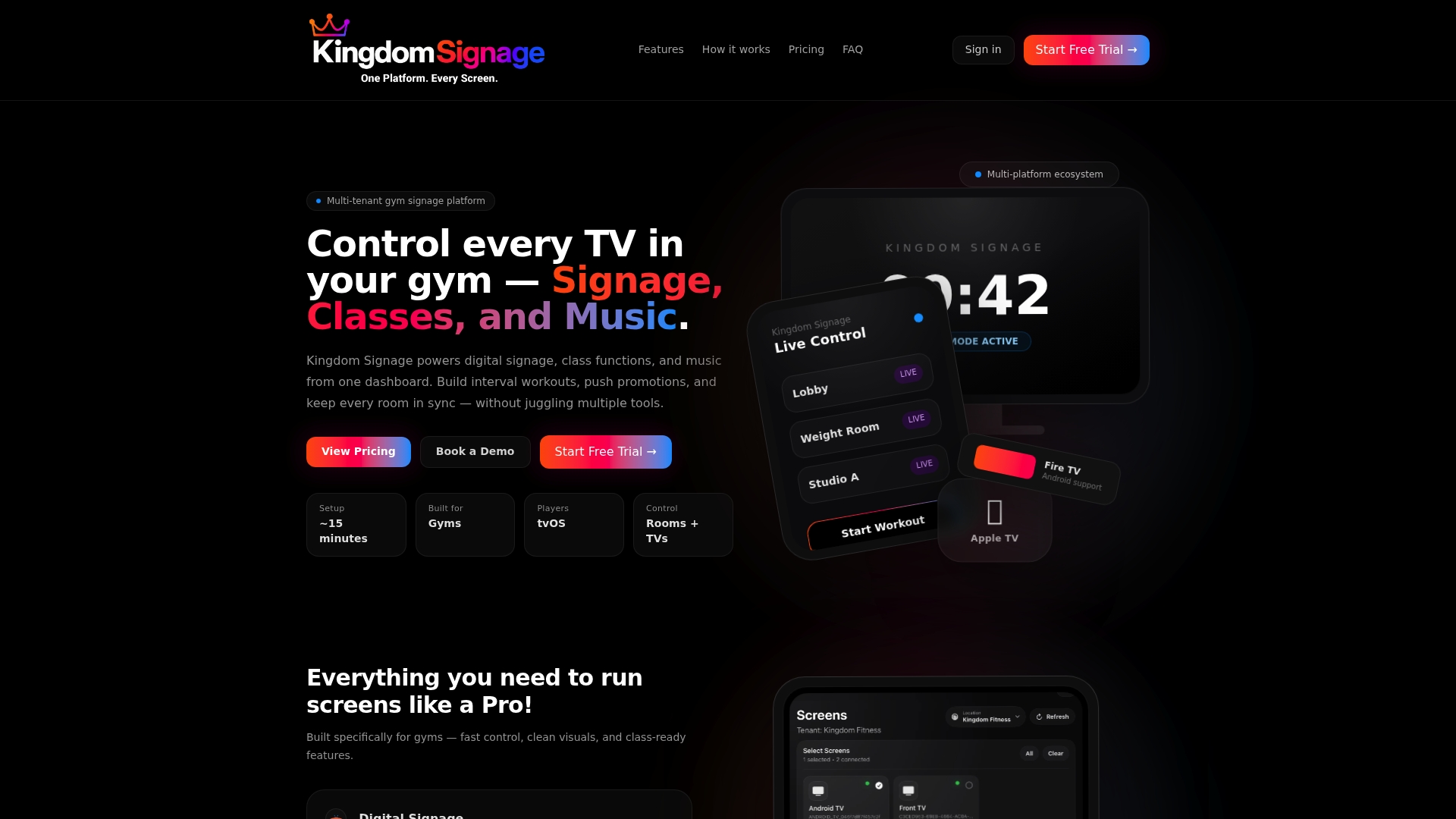
Kingdomsignage is built specifically for gym operators who want their digital signage to work as hard as their social media and email campaigns. The platform lets you schedule content to individual screens or entire rooms from one dashboard, so your lobby, spin studio, and weight floor each show the right message at the right time without logging into three separate tools.
When your content calendar says "January membership offer: January 2 to 20," Kingdomsignage executes that on every screen automatically. You can sync audio and visuals across rooms, support class transitions, and push real-time updates without pulling a staff member away from the front desk. Explore gym signage and control to see how the platform connects your content calendar to every screen in your facility.
FAQ
What is a gym digital content calendar?
A gym digital content calendar is a centralized scheduling tool that organizes fitness marketing content across platforms like social media, email, and digital signage, mapped to a 12-month cycle of campaigns, promotions, and member lifecycle milestones.
How far in advance should I plan gym content?
Plan content 6 to 8 weeks in advance to allow time for asset creation, approvals, and scheduling. Reserve 20 to 30% of weekly slots for reactive posts tied to community events or member highlights.
What tools do gyms use to manage content calendars?
Gym operators commonly use Notion and Google Sheets for flexible planning, Zen Planner for CRM-integrated scheduling, and Envibe for class-focused studios. Digital signage platforms like Kingdomsignage handle in-gym screen scheduling separately but should be coordinated with the same calendar.
How does a content calendar reduce member churn?
Structured communications aligned with the member lifecycle, particularly onboarding content in the first 30 days and retention campaigns in February, keep members engaged during the periods when cancellation risk is highest.
Can I integrate my content calendar with gym digital signage?
Yes. Adding a signage column to your content calendar and using a platform like Kingdomsignage to pre-schedule screen content ensures your in-gym displays match your active campaigns across social and email at all times.