
Gym digital signage is the most direct tool available for converting a browsing member into a confirmed class booking. When screens display live class availability, real-time capacity counts, and QR code booking links at the exact moment a member is deciding what to do next, enrollment friction drops and fill rates climb. Platforms like Mindbody and ABC Fitness now integrate with digital signage systems so that schedule data refreshes within 30 to 60 seconds, keeping every screen current. In-store digital ads produce an average 8.1% lift in conversion rates, and gyms that treat their screens as live booking interfaces rather than static notice boards see the largest gains.
How gym screens support class enrollment drives
The core mechanism is simple: screens placed at decision points show members what is available right now, not what was scheduled last Tuesday. Live class capacity displays covering the next 60 to 180 minutes produce a measurable 1 to 5% lift on total revenue and a 15 to 25% lift on upsell categories like premium classes and personal training add-ons. That lift comes from reducing the mental effort required to find, evaluate, and book a class.
The features that drive this outcome fall into a clear hierarchy:
- Real-time availability displays. Showing current occupancy and open spots for upcoming classes removes the guesswork that causes members to skip booking and head straight to the treadmill.
- Automatic schedule sync. Integrations with booking platforms like Mindbody, ABC Fitness, and Glofox push instructor substitutions, cancellations, and new openings to screens within seconds, not hours.
- Dynamic QR codes. Optimal QR code placement at high-intent areas like studio entrances and locker rooms lets members book on the spot without visiting the front desk. Dynamic codes allow you to update the linked offer or class without reprinting anything.
- Waitlist announcements. When a cancellation opens a spot, a screen alert converts a waitlisted member into an attendee before the slot goes cold.
- Zone-specific messaging. Lobby screens carry broad schedule overviews while studio-door screens show only the next two classes in that room, matching content to context.
Pro Tip: Separate your screen content into two clear categories: "do this now" and "good to know." Enrollment prompts, QR codes, and open-spot alerts belong in the first category. Motivational content and brand messaging belong in the second. Members act faster when the call to action is unmistakable.
What real-time data integration does for enrollment rates

Digital signage earns its place in a class enrollment strategy only when the data feeding it is current. Stale schedules on a screen are worse than no screen at all because they erode member trust. Schedule updates delivered within 30 to 60 seconds of a change in your booking platform keep every display accurate and credible.
The operational value goes beyond accuracy. Consider these integration-driven tactics:
- Low-fill alerts. Configure your signage CMS to flag any class that falls below a target fill percentage within a defined window before start time. Staff see the alert on a front desk dashboard and can offer a spot promotion or personal invitation to nearby members.
- Instructor substitution notices. When a popular instructor is replaced, members who booked for that instructor may cancel. A screen update that names the substitute and highlights their credentials can hold those bookings.
- Cross-room promotion. A member finishing a session in the weight room sees a screen showing a yoga class starting in 20 minutes with four spots open. Without that screen, the opportunity is invisible.
- Entry-point conversion. Screens at the gym entrance display the next three classes with live capacity. Members who arrived without a plan make a booking decision before they reach the locker room.
Pro Tip: Set your under-fill alert threshold at 50% capacity with 48 hours to go for premium classes and 24 hours for standard ones. That window gives your team enough time to run a targeted push notification or a front desk conversation before the class runs short.
What the evidence says about screens and enrollment
The performance data on gym digital signage is specific enough to plan around. Screens with live schedules and QR booking can increase class signups by up to 45%. That figure comes from a gym and spa case report tracking enrollment before and after signage deployment, and it reflects the combined effect of visibility, convenience, and timing.
| Metric | Reported outcome | Source context |
|---|---|---|
| Average conversion lift | 8.1% | Large-scale in-store digital signage study across 237 campaigns |
| Class signup increase | Up to 45% | Gym and spa signage deployment case report |
| Member retention improvement | 30% | Peak Performance Gyms, 18 locations, 162 displays |
| Revenue lift from live capacity displays | 1 to 5% total, 15 to 25% upsell | 2026 fitness operator playbook |
Peak Performance Gyms increased member retention by 30% after deploying digital signage across 18 locations with 162 displays. Retention and enrollment are directly connected: a member who regularly attends classes is far less likely to cancel their membership than one who uses only the gym floor. The signage in that case study combined dynamic schedule information with member engagement content, which is the combination that produces durable results rather than a one-time spike.
"Digital signage displaying live class availability at decision points outperforms generic awareness content in influencing purchase certainty." — Retail Media World
Emotionally driven content amplifies the conversion effect. The Stratacache study found that messages timed to match a member's current emotional state, such as a recovery class promoted after a high-intensity session, outperform generic promotional content. This is why content strategy matters as much as screen placement.
How to operationalize screen-driven enrollment strategies
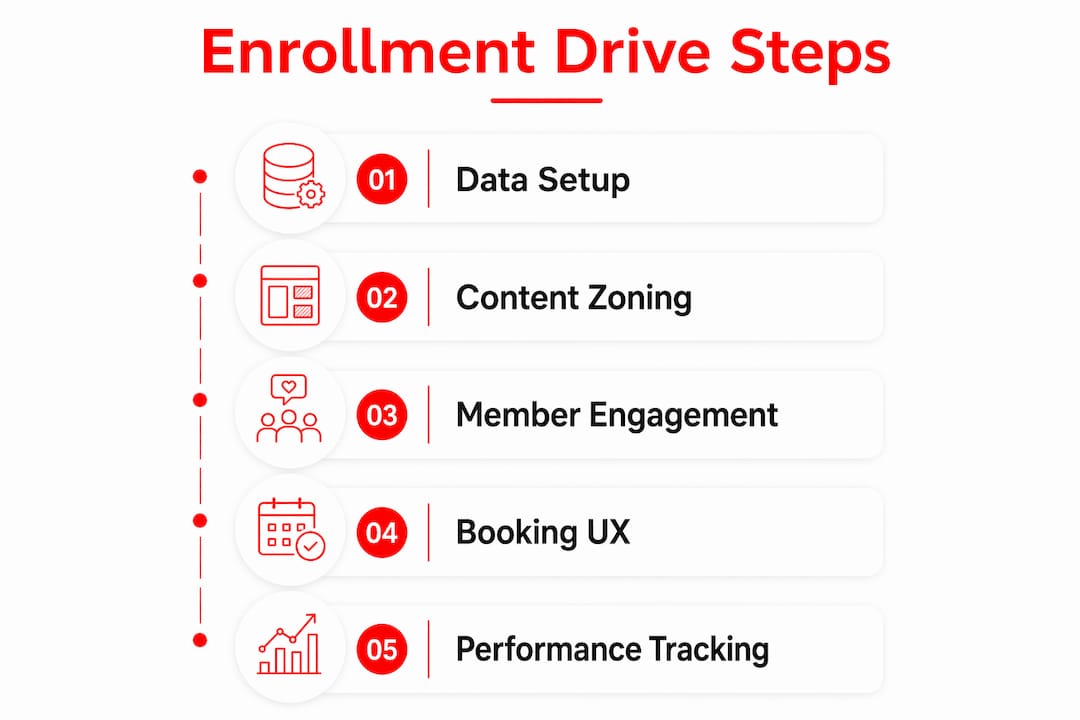
Knowing that screens work is the starting point. Building a system that consistently fills classes requires deliberate setup across four areas.
Placement and zone mapping
Map your gym into decision zones: entrance, lobby, studio doors, locker areas, and the gym floor. Each zone gets content calibrated to the member's likely intent at that moment. Entrance screens show the next 90 minutes of classes. Studio-door screens show only that room's upcoming sessions. Locker area screens carry QR codes for off-peak class promotions. Tracking performance metrics by zone tells you which placements drive the most scans and bookings.
Booking UX after the QR scan
A QR code that leads to a slow or confusing booking page kills the conversion the screen created. Booking pages must load in under 3 seconds on mobile and link directly to the class, not to a homepage. Every additional tap between scan and confirmation reduces completion rates. Test your QR flow monthly to catch broken links or session timeouts.
Staff workflows and dashboards
The booking counter dashboard at the front desk should display classes booked this week alongside utilization rates. When a class shows low fill, the front desk team has a specific, data-backed reason to mention it to the next member who walks in. This turns passive signage into an active sales conversation without requiring a script.
Measurement and iteration
Compare class fill rates for the four weeks before signage deployment against the four weeks after. Segment by class type, time slot, and instructor to identify where screens are moving the needle and where content needs adjustment. Member feedback collected through brief post-class surveys adds qualitative context to the enrollment numbers.
Key takeaways
Gym screens drive class enrollment by delivering live, relevant booking information at the exact moment members are deciding what to do next.
| Point | Details |
|---|---|
| Real-time data is non-negotiable | Schedule updates within 30 to 60 seconds keep screens credible and conversion rates high. |
| Zone-specific content outperforms generic displays | Match screen content to member intent at each location for measurably better results. |
| QR codes must link to fast, direct booking pages | Pages loading under 3 seconds with minimal steps are required to convert scans into enrollments. |
| Low-fill alerts enable staff intervention | Configuring alerts at 50% capacity gives your team time to act before a class runs short. |
| Evidence supports significant enrollment gains | Case data shows up to 45% more class signups and 30% better retention with well-deployed signage. |
What I've learned about screens and enrollment that most gyms miss
Most gym owners install screens and then treat content management as a secondary task. That is the single biggest reason signage underperforms. The screen is only as good as the data and content strategy behind it, and both require active maintenance.
The psychological dimension is underappreciated. A screen showing "3 spots left in Spin at 6:30 PM" creates urgency that a printed schedule never can. Members respond to scarcity signals in real time, and that response is subconscious. You are not just informing them. You are influencing a decision that happens in seconds.
I have also seen gyms over-invest in motivational content and under-invest in enrollment prompts. A highlight reel of members hitting personal records is engaging, but it does not fill Tuesday's 7 AM yoga class. The ratio that works in practice is roughly 60% enrollment-focused content and 40% engagement and brand content, adjusted by zone.
The future of this space is automated intervention. AI-driven systems that detect a low-fill class and automatically push a targeted offer to nearby members via screen and push notification will close the gap between signage and direct marketing. Gyms that build the data infrastructure now, clean booking integrations, zone-mapped screens, and tracked QR conversions, will be positioned to use those tools when they become standard.
— Kingdom
How Kingdomsignage helps gyms fill every class
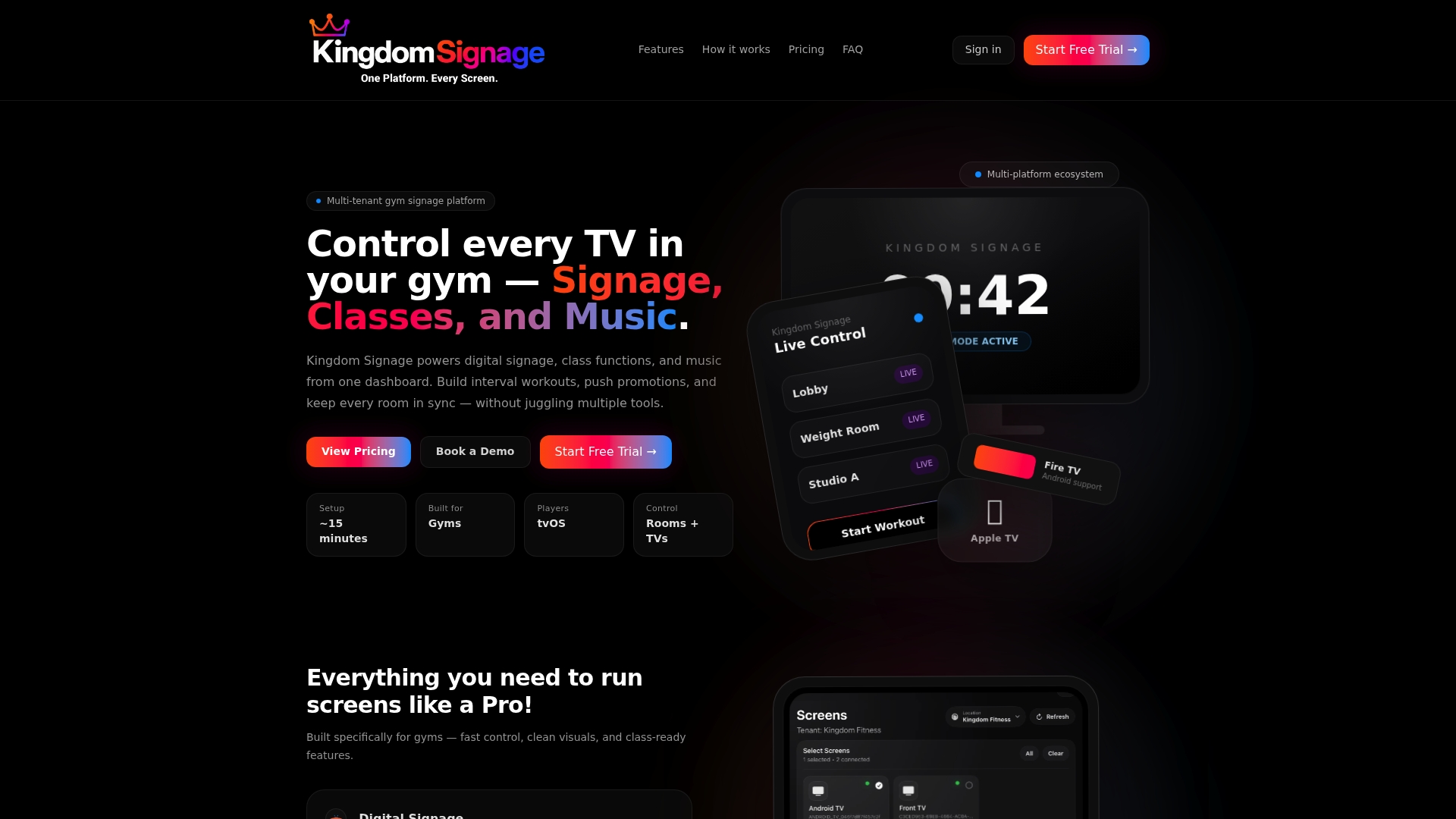
Kingdomsignage is built specifically for gym environments, unifying digital signage, TV control, and audio management through a single dashboard. The platform integrates with booking systems like Mindbody to push live schedule data to every screen in your facility, from the entrance display to the studio door. Content updates across multiple rooms happen simultaneously, so a last-minute class change appears everywhere within seconds. For gym owners who want to move from static printed schedules to a live gym signage system that actively supports enrollment, Kingdomsignage removes the need for multiple tools or manual updates. Visit Kingdomsignage to see how the platform handles real-time scheduling, QR booking integration, and multi-zone content delivery in one place.
FAQ
How do gym screens increase class enrollment?
Gym screens increase class enrollment by displaying live availability, open spots, and QR booking links at the moments members are deciding what to do. Screens with live schedules and QR codes can increase class signups by up to 45%.
What booking platforms integrate with gym digital signage?
Platforms like Mindbody, ABC Fitness, and Glofox integrate with digital signage systems to deliver schedule updates within 30 to 60 seconds of any change, keeping displayed information accurate.
Where should QR codes be placed in a gym for best results?
High-intent placement locations include studio entrances, the front desk, and locker areas. These are the points where members are most likely to act on a booking prompt.
How fast does a QR booking page need to load?
Booking pages must load in under 3 seconds on mobile and link directly to the class. Slower load times increase bounce rates and eliminate the conversion the screen created.
Can digital signage improve member retention as well as enrollment?
Yes. Peak Performance Gyms achieved a 30% retention increase after deploying digital signage across 18 locations, demonstrating that consistent class attendance driven by signage directly reduces member churn.