
A gym TV network is a specialized digital out-of-home signage platform that delivers curated video content, fitness programming, and advertising to screens installed throughout health clubs and fitness centers. The industry term for this category is digital out-of-home (DOOH) media, and understanding how it works is the first step toward using it strategically. The leading example is GymTV by Zoom Media, which operates across 100,000+ screens in more than 13,000 gyms across the US, Canada, and UK, reaching 55 million active lifestyle consumers. For gym owners, fitness professionals, and marketers, this infrastructure represents one of the most targeted and high-engagement media environments available today.
What is a gym TV network and how does it work?
A gym TV network functions as a managed content delivery system. Screens installed in cardio areas, weight floors, locker rooms, and lobbies receive a continuous feed of programming controlled through a central platform. That programming is a mix of fitness tips, music videos, lifestyle content, entertainment, and paid advertising, all curated to match the gym environment and its members.
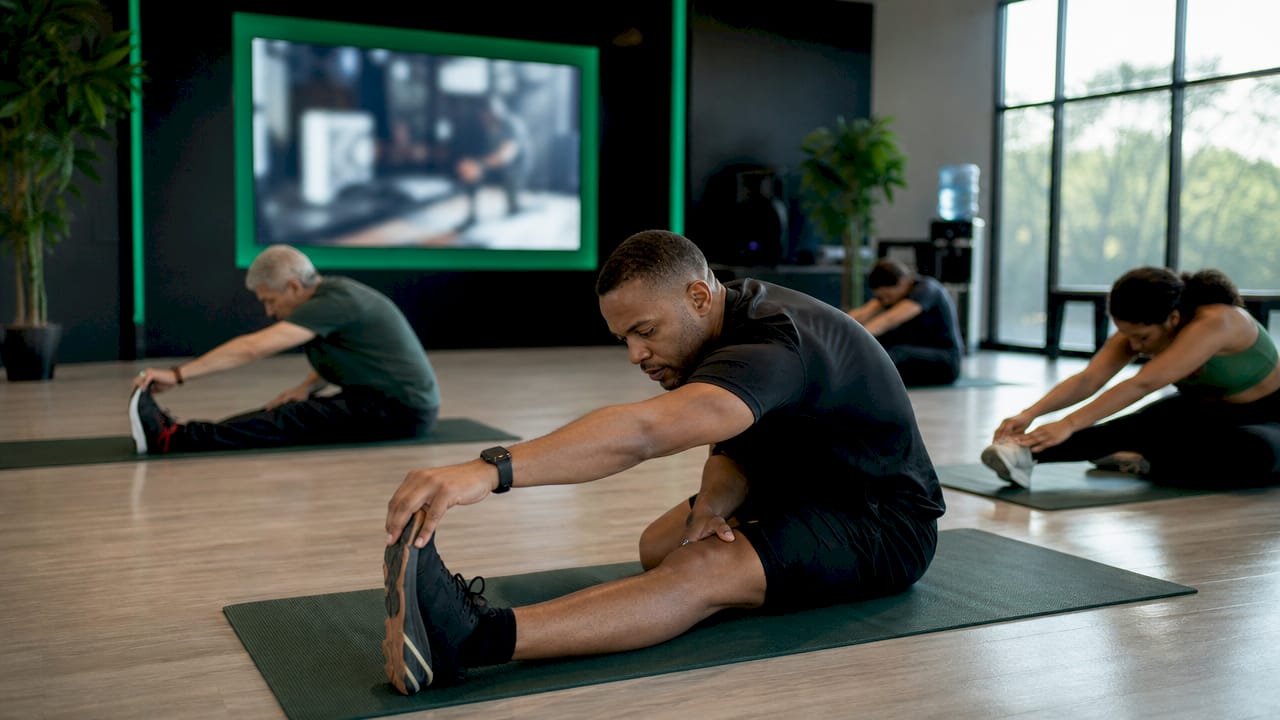
The infrastructure relies on digital signage hardware connected to a content management system (CMS). Operators or network providers schedule content in advance, push updates remotely, and swap advertising slots without touching a single screen on-site. Content programming flexibility allows the system to match gym clientele and marketing goals, meaning a boutique cycling studio and a large-format commercial gym can both run content that fits their brand.
The 24/7 nature of gym TV networks is a defining feature. Unlike a retail display that runs during store hours, gym screens operate across early morning, midday, and late-night sessions, maintaining consistent exposure throughout the day. Advertising and branded content are woven into the programming rather than interrupting it, which reduces viewer resistance.
- Content types: Music programming, fitness tutorials, nutrition tips, lifestyle segments, local news, and paid brand spots
- Screen placements: Cardio equipment rows, free weight areas, group fitness studios, lobbies, and locker rooms
- Delivery method: Cloud-based CMS with remote scheduling and real-time update capability
- Ad integration: Pre-roll, mid-roll, and branded content formats embedded in the content stream
Pro Tip: When evaluating fitness network options for your facility, ask providers for a content sample reel specific to your gym's demographic. A network built for a 24-hour commercial gym will feel out of place in a premium boutique studio.
Why gym TV networks benefit owners, members, and marketers
The benefits of gym TV split across three distinct groups, and understanding each one helps you make the case internally for investment.
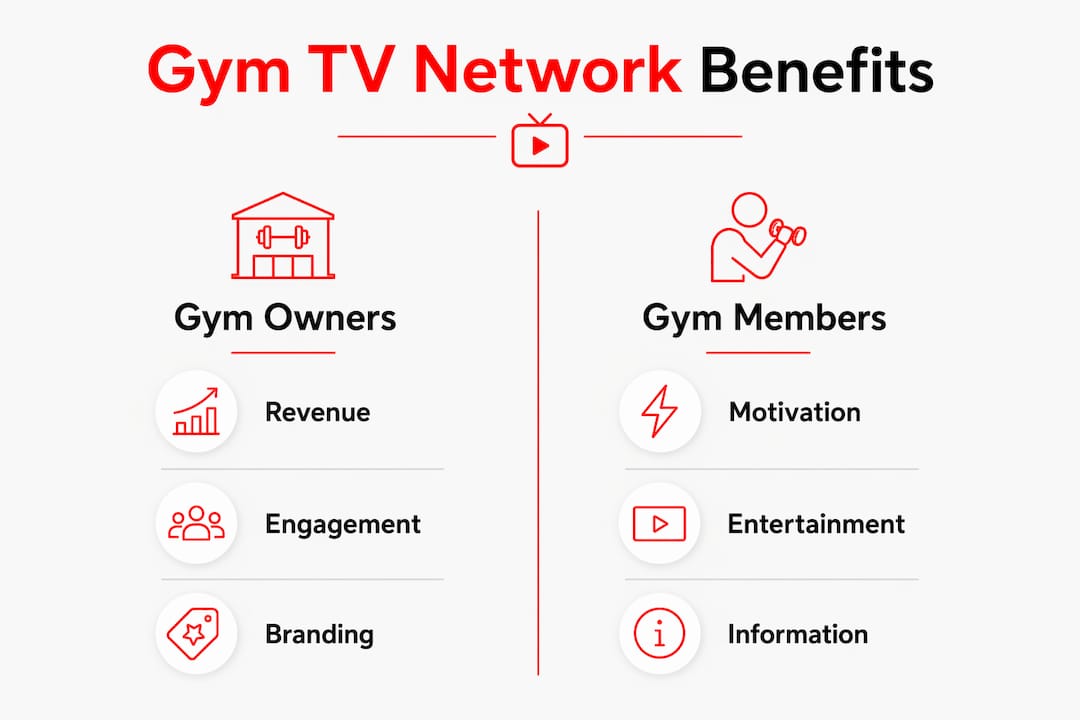
For gym members, on-screen content directly supports workout adherence. Entertainment options motivate and engage gym members, improving the likelihood they complete their session and return the next day. A member grinding through a 45-minute treadmill session is far more likely to stay engaged with content that matches their pace and interest than with a blank wall or a muted cable news feed.
For gym owners, the network creates a new revenue channel. Advertising partnerships with health, nutrition, apparel, and lifestyle brands generate income that offsets operational costs. More importantly, the content environment reinforces the gym's brand identity. A well-programmed screen network signals professionalism and attention to member experience, which directly supports retention.
For marketers and advertisers, the value proposition is unusually strong:
- High dwell time: Gym-goers spend 45 to 90 minutes per visit, far longer than the average retail or transit media exposure.
- Audience alignment: The gym environment self-selects for health-conscious, active consumers, making wellness and lifestyle brands a natural fit.
- Brand safety: Gym TV networks provide a trusted, wellness-aligned context that improves advertiser confidence and positive brand association.
- Measurable outcomes: Audience measurement tools allow brands to track awareness, consideration, and purchase actions influenced through gym TV advertising.
"Gym TV networks offer a high dwell time environment where engaged gym-goers are more receptive to wellness-aligned advertising, resulting in more effective brand engagement than typical retail or transit advertising spaces." — Perion, GymTV Publisher Spotlight
The combination of captive audience, brand-safe context, and measurable performance makes gym TV one of the stronger DOOH formats available to marketers targeting the active lifestyle segment.
Who are the major gym TV network providers?
The gym television channels market is led by a small number of specialized providers, with GymTV by Zoom Media holding the dominant position.
| Provider | Network Scale | Key Features |
|---|---|---|
| GymTV by Zoom Media | 13,500+ gyms, 55M consumers | 24/7 programming, full-funnel ads, experiential activations |
| Generic DOOH platforms | Varies by market | General digital signage, limited fitness-specific content |
| Kingdomsignage | Gym-specific deployment | Unified TV, audio, and class control via single dashboard |
GymTV's scale is its primary competitive advantage. Operating in 13,000+ health clubs across the US, Canada, and UK, the network supports national brand campaigns with local targeting, a combination that most DOOH formats cannot match at this scale. Through a partnership with VIOOH, GymTV has expanded its programmatic buying capabilities, making it accessible to media buyers who operate through standard demand-side platforms.
Beyond fixed screens, GymTV extends to large-format digital spectaculars, cardio personal viewing screens, digital and static billboards, sampling programs, and mobile extensions. This multi-surface approach creates brand activation opportunities that go well beyond a single screen on a treadmill row.
For gym owners who want control over their own content rather than relying on a third-party network, platforms like Kingdomsignage offer a different model. Instead of purchasing into a pre-built network, you manage your own screens, audio, and class programming from a single dashboard, retaining full control over what members see and hear at every point in their visit.
Pro Tip: If you operate multiple gym locations, prioritize a platform that lets you push content updates to all sites simultaneously. Managing each location individually is the single biggest time drain in gym digital signage operations.
How to integrate a gym TV network into your facility
Selecting and deploying a gym TV network requires decisions across four areas: infrastructure, content, revenue, and measurement.
Infrastructure and installation are the starting point. Assess your current screen inventory, network connectivity, and mounting positions before committing to any platform. Most commercial gym TV networks require a stable internet connection at each screen location, either wired or via a reliable Wi-Fi access point. Older screens may need media players or smart sticks to receive the content feed. Facilities with poor connectivity will experience buffering and content gaps, which undermine the member experience more than having no network at all.
Content customization separates effective deployments from generic ones. The best gym streaming services allow you to blend network-provided content with your own branded material, class schedules, promotional offers, and member spotlights. A gym that runs only third-party advertising without any facility-specific content misses the retention benefit entirely. Members respond to seeing their own gym reflected on screen.
Consider these practical factors when building your content strategy:
- Schedule content to match the time of day and the likely audience. Early morning members have different needs than lunchtime or evening crowds.
- Rotate promotional content on a defined cycle. Stale promotions signal inattention and reduce member trust in the messaging.
- Use audio and visual content together where possible. Screens running muted content in a loud gym environment lose most of their impact.
- Align advertising partnerships with your member demographics. A gym serving a 50-plus demographic should not run ads for energy drinks aimed at college athletes.
Revenue and advertising partnerships require a clear policy before you launch. Decide whether you will sell ad space directly to local businesses, join a national network like GymTV, or use a hybrid model. Direct sales generate higher margins but require sales effort. Network partnerships generate passive income but reduce your control over content.
Measuring impact closes the loop. Track member engagement signals such as class sign-up rates, promotional redemptions, and membership renewal rates in the months after launching or upgrading your network. Brands using gym TV advertising track awareness, consideration, and purchase actions. Gym owners should apply the same discipline to their own content performance.
Key takeaways
A gym TV network is a DOOH media platform that delivers measurable value to gym owners, members, and advertisers when deployed with a clear content strategy and the right infrastructure.
| Point | Details |
|---|---|
| Core definition | A gym TV network is a DOOH platform delivering curated content and advertising to gym screens. |
| Market scale | GymTV by Zoom Media reaches 55 million consumers across 13,500+ gyms in three countries. |
| Member benefit | On-screen entertainment improves workout adherence and supports membership retention. |
| Advertiser value | High dwell time and wellness alignment make gym TV a strong channel for active lifestyle brands. |
| Integration priority | Content customization and unified control across screens and audio maximize the member experience. |
The part most gym owners get wrong about gym TV
From working directly with gym operators, the most common mistake is treating the screen network as a passive amenity rather than an active management tool. Owners install screens, connect a network feed, and then leave the content on autopilot for months. The screens keep running, but the opportunity to use them as a retention and revenue asset quietly disappears.
The gyms that extract real value from their screen networks treat content the same way they treat their class schedule: reviewed weekly, updated regularly, and aligned with what members actually want. A January screen campaign promoting weight loss programs should look nothing like a June campaign promoting summer training packages. That level of intentionality is what separates a gym that uses TV as wallpaper from one that uses it as a genuine member engagement tool.
The other underused opportunity is audio. Most gym TV discussions focus entirely on the visual layer, but members spend more time listening than watching. A gym that syncs its screen content with its music programming creates a cohesive environment that feels curated rather than assembled. Kingdomsignage was built specifically to solve this problem, unifying TV content, class audio, and music control in one place so operators stop managing three separate systems.
The technology is not the hard part. The discipline to keep content fresh, relevant, and aligned with member behavior is where most facilities fall short. Start there.
— Kingdom
How Kingdomsignage helps you run a better gym TV network
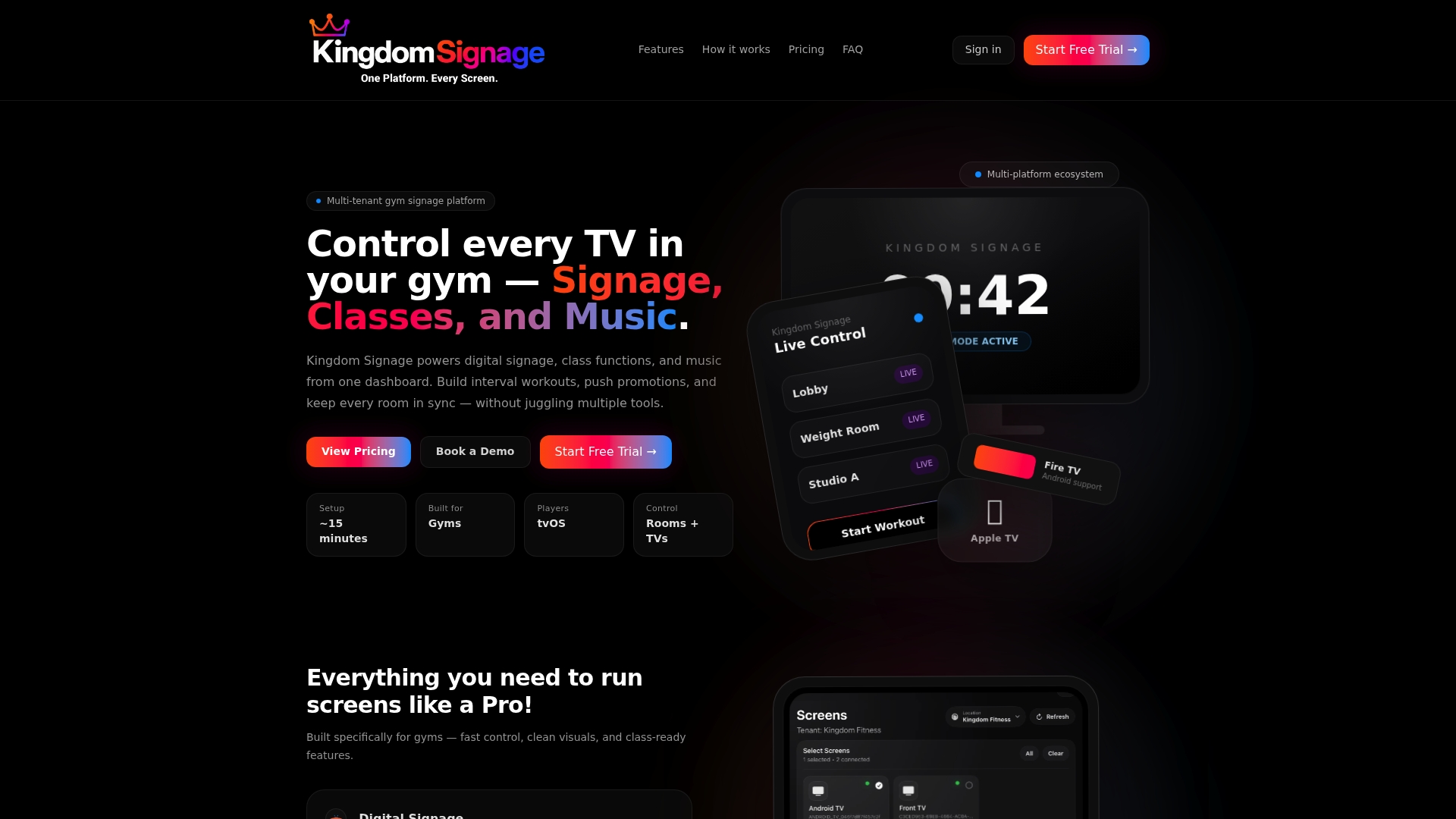
Managing gym TV content, class audio, and promotional screens through separate tools creates gaps in the member experience and wastes operator time. Kingdomsignage solves this by unifying TV control, music programming, and digital signage into a single dashboard built specifically for fitness facilities. Gym owners and fitness instructors can push content updates across multiple rooms instantly, sync audio and visuals for class transitions, and deliver promotional content without switching between platforms. If you are ready to take control of your facility's screen and audio environment, visit Kingdomsignage to see how the platform works for gyms like yours.
FAQ
What is a gym TV network in simple terms?
A gym TV network is a digital signage system that delivers curated fitness, lifestyle, and advertising content to screens installed throughout a gym. It operates continuously and is managed remotely through a content management platform.
How do gym TV networks make money for gym owners?
Gym owners earn revenue through advertising partnerships with brands targeting active lifestyle consumers. Networks like GymTV by Zoom Media connect gym owners with national and local advertisers, while owners can also sell ad space directly to local businesses.
What content runs on gym television channels?
Gym television channels typically run a mix of music programming, fitness tutorials, nutrition content, lifestyle segments, and paid brand advertising. The best networks allow gym owners to blend third-party content with their own branded material and class schedules.
What makes gym TV advertising different from other DOOH formats?
Gym TV advertising benefits from unusually high dwell time, with members spending 45 to 90 minutes per visit, combined with a self-selected health-conscious audience. This produces stronger brand engagement than retail or transit DOOH placements for wellness and lifestyle brands.
Do I need a large gym to benefit from a gym TV network?
No. Smaller facilities benefit from gym TV networks by using them primarily for member engagement and retention rather than third-party advertising revenue. Platforms like Kingdomsignage are built to serve single-location gyms as effectively as large multi-site operators.