
Gym screen dwell time is defined as the total time a member spends viewing digital displays during a single facility visit, and it is the most underused metric in fitness venue management. Unlike a billboard seen for three seconds from a car, gym screens hold attention for minutes at a time. Members visit 3–4 times per week and spend 45–90 minutes per session, creating a captive audience that no other retail or out-of-home environment can match. Understanding why gym screen dwell time matters is the first step toward turning that attention into measurable retention gains.
Why gym screen dwell time matters more than any other venue metric
Dwell time in a gym context is not the same concept used in web analytics or retail foot traffic studies. The industry term used in venue-based digital signage is audience dwell time, defined as the duration a person remains within the viewing zone of a screen. In a gym, that zone can be a treadmill row, a stretching area, or a lobby wall. The critical difference is duration.
Gym screens generate 8–25 minutes of dwell time per exposure. Standard pass-by digital ads, the kind seen on street-level screens, hold attention for 10–15 seconds. That gap is not marginal. It represents a fundamentally different communication opportunity, one where you can deliver layered messaging, build brand memory, and prompt real decisions rather than just create awareness.

The table below shows how gym dwell time compares to other common venue types.
| Venue type | Typical dwell time | Audience state |
|---|---|---|
| Street-level digital billboard | 10–15 seconds | Moving, distracted |
| Retail checkout queue | 2–4 minutes | Stationary, low engagement |
| Airport gate area | 15–30 minutes | Stationary, moderate engagement |
| Gym cardio or weight zone | 8–25 minutes | Stationary, physically focused |
The gym environment produces the longest dwell time of any non-waiting venue. Members are not browsing or rushing. They are locked into a physical routine, which means their eyes return to screens repeatedly within a single session.
How does gym screen dwell time influence member engagement and retention?
Dwell time drives engagement when the content on screen matches what a member cares about at that exact moment. A member resting between sets for 90 seconds is not going to read a dense paragraph. But a short, well-timed promotion for a Saturday spin class will register. Members experience "active pause" moments during 20-minute stationary workout blocks, and those windows are the highest-converting opportunities for targeted messaging on digital displays.
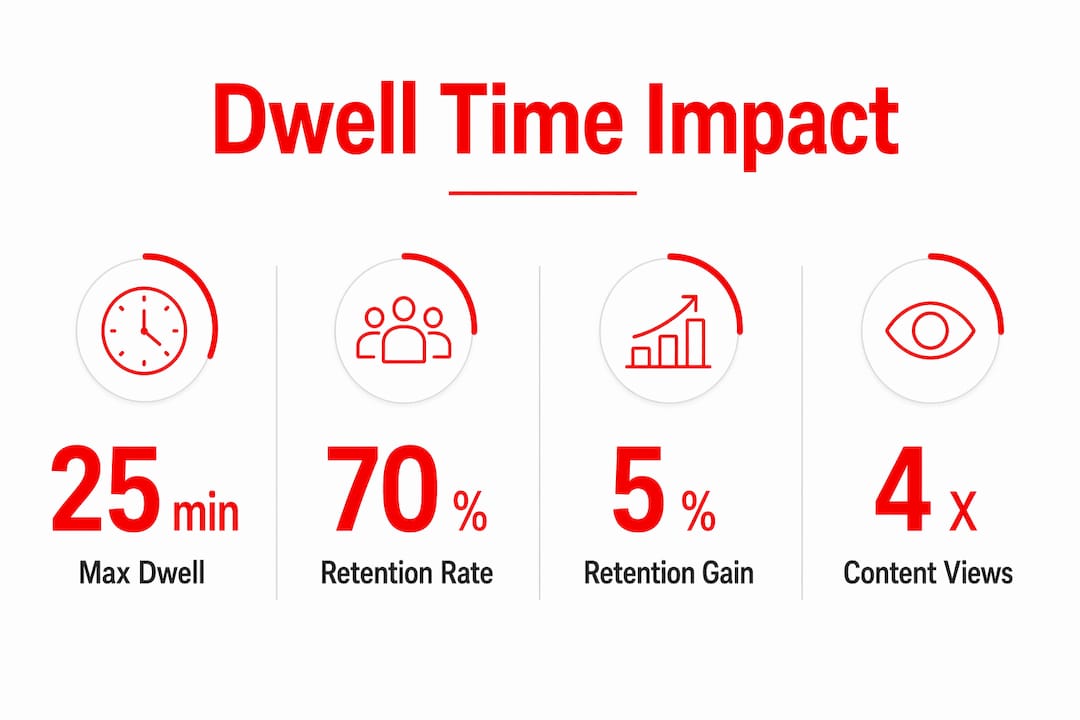
The financial case for getting this right is significant. Boutique gyms average 70–80% retention rates, and a 5% increase in retention can raise profits by 25–95%. That range reflects how deeply member loyalty compounds over time. A member who stays for three years instead of one is not just paying three times the dues. They refer friends, buy add-on services, and reduce your acquisition cost per member.
Screen content directly supports the conditions that produce that loyalty. Relevant, timely messaging signals to members that the facility is professionally managed and attentive to their experience. That perception matters. Facility quality linked to digital signage correlates directly with the retention rates seen in boutique fitness clubs.
Here is what high-dwell screen content drives when executed well:
- Class enrollment: Members who see a class promotion during a workout are more likely to sign up on the spot, especially when the screen shows real-time availability.
- Personal training sign-ups: Screens in rest areas that highlight trainer profiles and transformation results convert during the exact moment a member is thinking about their own progress.
- Retail and nutrition sales: A post-workout protein shake promotion displayed near the exit captures members at peak purchase intent.
- Community building: Screens showing member milestones, challenge leaderboards, or event announcements create a social layer that makes the gym feel like more than a place to exercise.
Pro Tip: Rotate class promotion content every two weeks. Members who visit four times per week will see the same screen 8–16 times in that period. Stale content trains them to ignore your screens entirely.
What are best practices for optimizing gym screen content based on dwell time?
Content length must match the dwell band of the zone where the screen lives. Dwell time is the best current proxy for audience attention in venue-based digital signage, and it varies significantly by screen location. A screen at the entrance sees 2–3 seconds of attention. A screen above a cable machine row sees several minutes. Running the same content loop in both locations wastes the longer opportunity and frustrates the shorter one.
Creative content for gym screens should be segmented by dwell time band: short-form for pass-by zones, medium-form for queue areas, and long-form for captive workout zones. This is not a creative preference. It is a structural requirement for effective communication.
Follow these steps to build a content strategy around dwell time zones:
- Map your zones. Walk the floor and identify where members stop for more than two minutes. Cardio rows, free weight areas, and stretching zones are your high-dwell locations. Lobbies and hallways are low-dwell.
- Assign content types by zone. High-dwell zones get detailed content: class schedules, trainer spotlights, member challenges, and multi-step promotions. Low-dwell zones get single-message visuals with one clear call to action.
- Set refresh cycles by visit frequency. Members who visit four times per week need new content every 7–10 days to stay engaged. Multiple weekly visits amplify message repetition, which builds brand memory but also accelerates content fatigue.
- Use real-time data feeds. Class schedule boards displayed on screens reduce front desk calls about class times and facility policies. Live schedules also give members a reason to look at screens every visit, not just occasionally.
- Test and measure. Track class enrollment rates before and after promoting a class on screen. Compare personal training inquiries during weeks with active screen promotions versus weeks without. Dwell time creates the opportunity. Content quality determines the outcome.
Pro Tip: Place your highest-value promotional content in cardio zones, not lobbies. Members on treadmills and bikes have nowhere to go for 20–45 minutes. That is your most reliable captive audience in the building.
For a practical starting point, setting up gym digital signage with zone-based content mapping is the fastest way to move from generic screen use to a real engagement system.
What operational factors affect dwell time in high-traffic gym areas?
Dwell time is not only a content and marketing concern. It is also an operational one. When too many members cluster around the same equipment, dwell time becomes a liability rather than an asset. Congestion at popular machines frustrates members, disrupts workout flow, and creates a negative experience that no screen content can fix.
High-dwell equipment should be placed off main circulation routes to prevent bottlenecks during peak hours. Cable machines, benches, and squat racks draw extended use and should anchor secondary zones rather than sit in the center of the floor. This keeps traffic moving and preserves the calm, focused environment that makes long dwell times productive rather than stressful.
Operational considerations that directly affect dwell time quality include:
- Equipment spacing: Tight spacing around high-use machines creates crowding that shortens effective dwell time because members leave the area rather than wait.
- Sightline planning: Screens must be visible from the equipment they serve. A screen mounted behind a cable machine row that members face away from generates zero dwell value.
- Peak hour sequencing: Stagger class start times and open gym hours to distribute traffic across zones. Even distribution means more members experience high-dwell screen exposure rather than clustering in one area.
The connection between layout and screen performance is direct. A well-designed floor plan extends the time members spend in screen-visible zones. A poorly designed one compresses it. Treating equipment layout and screen placement as a single decision, not two separate ones, produces better results for both member experience and content performance. Pairing this with gym class promotion strategies that account for traffic patterns gives gym managers a complete picture of how space and content interact.
Key Takeaways
Gym screen dwell time is the single most powerful attention metric available to fitness facility managers, and matching content length, placement, and refresh cycles to dwell zone data is what separates high-retention gyms from average ones.
| Point | Details |
|---|---|
| Dwell time far exceeds other venues | Gym screens hold attention for 8–25 minutes versus 10–15 seconds for street-level ads. |
| Active pause windows convert best | Members in 20-minute stationary workout blocks are the highest-value audience for promotions. |
| Retention gains compound financially | A 5% retention increase can raise profits by 25–95%, making screen engagement a direct revenue driver. |
| Content must match the dwell zone | Short-form content belongs in lobbies; long-form, layered messaging belongs in cardio and weight zones. |
| Layout and screens are one system | Equipment placement determines which members see screens and for how long. |
What most gym managers get wrong about screen strategy
The most common mistake I see is treating digital screens as a decoration budget rather than a communication system. Managers spend money on hardware, mount screens in the lobby, and then run the same promotional loop for six months. Members stop seeing it within two weeks.
The gyms that get this right think about screens the way a media buyer thinks about ad placements. They ask: who is in front of this screen, for how long, and what do they need to hear right now? A member on a treadmill for 30 minutes is not the same audience as a member walking past the front desk. Serving them the same content is a missed opportunity every single day.
The other pitfall is ignoring the social dimension. Dwell time functions as a deliberate business strategy for premium wellness clubs to create social wellness destinations, not just transactional gyms. Screens that show member achievements, community events, and group challenge results do something that promotional content alone cannot. They make members feel like they belong to something. That feeling is what drives the retention numbers that boutique gyms consistently outperform the industry on.
The practical fix is not complicated. Audit your screen locations against your floor plan. Identify your three highest-dwell zones. Assign dedicated content to each one and commit to refreshing it on a real schedule. The technology to do this well exists. The discipline to use it consistently is what separates gyms that retain members from gyms that constantly replace them.
— Kingdom
How Kingdomsignage helps you act on dwell time data
Managing screen content across multiple zones, rooms, and class schedules is where most gym managers hit a wall. Updating one screen is easy. Keeping six screens current, synced, and relevant across a busy facility is a different challenge entirely.
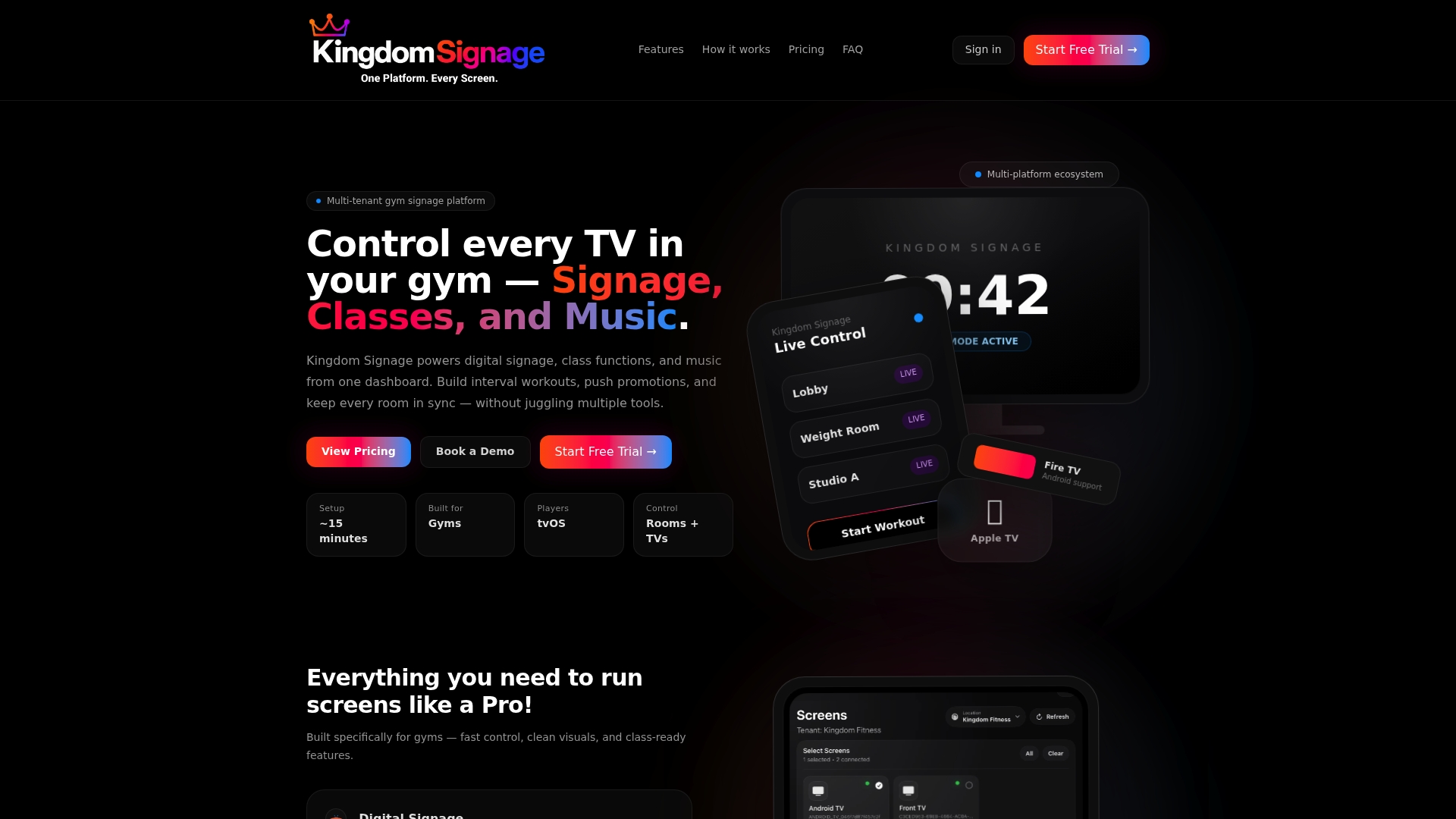
Kingdomsignage was built specifically for that problem. The platform gives gym operators a single dashboard to control TVs, class audio, workout music, and promotional content across every room. You can push a new class schedule to all cardio zone screens in seconds, sync audio to a live class without touching a separate device, and schedule content rotations that match your dwell time zones automatically. For gym managers who want to turn screen time into member engagement and retention, Kingdomsignage removes the operational friction that keeps most facilities stuck with generic, stale content.
FAQ
What is gym screen dwell time?
Gym screen dwell time is the duration a member spends within the viewing zone of a digital display during a facility visit. It ranges from 8–25 minutes in workout zones, making it one of the longest captive attention windows in any venue type.
How does dwell time affect gym member retention?
High-quality, relevant screen content during long dwell periods reinforces facility quality and drives actions like class sign-ups. Boutique gyms that invest in this approach average 70–80% retention rates, well above industry norms.
Where should gym screens be placed for maximum dwell time?
Cardio rows, free weight areas, and stretching zones produce the longest dwell times. Screens in these locations should carry detailed, regularly updated content rather than the single-message visuals suited to lobbies and hallways.
How often should gym screen content be updated?
Members who visit 3–4 times per week will see the same content 12–16 times per month. Content in high-dwell zones should refresh every 7–10 days to prevent members from tuning out screens entirely.
Does equipment layout affect screen dwell time?
Yes. Placing high-use equipment off main circulation routes prevents congestion and keeps members in screen-visible zones longer. Layout and screen placement should be planned together, not as separate decisions.