
Content automation in gyms is defined as the use of AI-driven software to automatically create, schedule, and distribute digital content that engages members and supports gym marketing and operations. This is the industry term for what gym owners often call "automated marketing for gyms" or "gym content management." The core value is clear: AI-powered content automation can reclaim 10–20 staff hours per week within the first month of deployment. That time goes directly back into coaching, member relationships, and floor operations. This guide covers what content automation does, why it works, and how to implement it without losing your gym's voice.
What is content automation in gyms, and how does it work?
Content automation in gyms refers to software systems that use AI to handle the creation and distribution of digital content across social media, email, in-gym screens, and member apps. The industry term is "marketing automation," but in the fitness context it extends well beyond email sequences. It covers everything from generating class descriptions to flagging at-risk members and sending them a personalized re-engagement message.
The technology works by connecting to your gym management system and pulling real operational data. Class attendance numbers, booking rates, and member visit frequency all feed into the system. The AI uses that data to decide what content to create, who to send it to, and when to publish it. The result is a content operation that runs on real signals rather than guesswork.
Most gyms deploy their first AI content system in 2–4 weeks. That short timeline matters because it means you see results before the novelty wears off.
What are the core features of gym content automation?
The features that matter most for gym owners fall into four categories.
- Automated content creation. AI tools like ChatGPT and Claude generate social media posts, blog articles, email newsletters, and class descriptions from simple prompts or raw data inputs. You provide the context; the AI produces the draft.
- Scheduling and multi-channel publishing. Content is queued and published automatically across Instagram, Facebook, your member app, and on-site screens. A gym digital content calendar built into the automation platform handles timing without manual intervention.
- Personalized member messaging. Automation platforms segment your member list by behavior. New trial members get onboarding sequences. Long-term members get loyalty recognition. Members who have not visited in two weeks get a re-engagement message.
- Integration with gym management systems. The best platforms pull live data from your property management system (PMS) to keep content relevant. A spike in Saturday morning attendance triggers a post about that class. A dip in bookings triggers a promotional offer.
- Performance tracking. Open rates, click rates, and conversion data feed back into the system so future content improves automatically.
Pro Tip: Start with one AI function, such as automated email follow-up for new leads, before adding social scheduling or churn prediction. Starting with a single AI function and expanding gradually produces better adoption and higher ROI than attempting full automation at once.
How does content automation improve gym marketing and member engagement?
The marketing impact of gym content automation is measurable and significant. Automated messaging via WhatsApp and Instagram DMs outperforms email-only strategies by 7x in conversion rate. Gyms that integrate automation with their management systems have seen trial-to-paid conversion rates rise from a baseline of 4–6% to 28–42% for seven-day trial cohorts. That is not a marginal improvement. It is a structural change in how your gym converts interest into revenue.
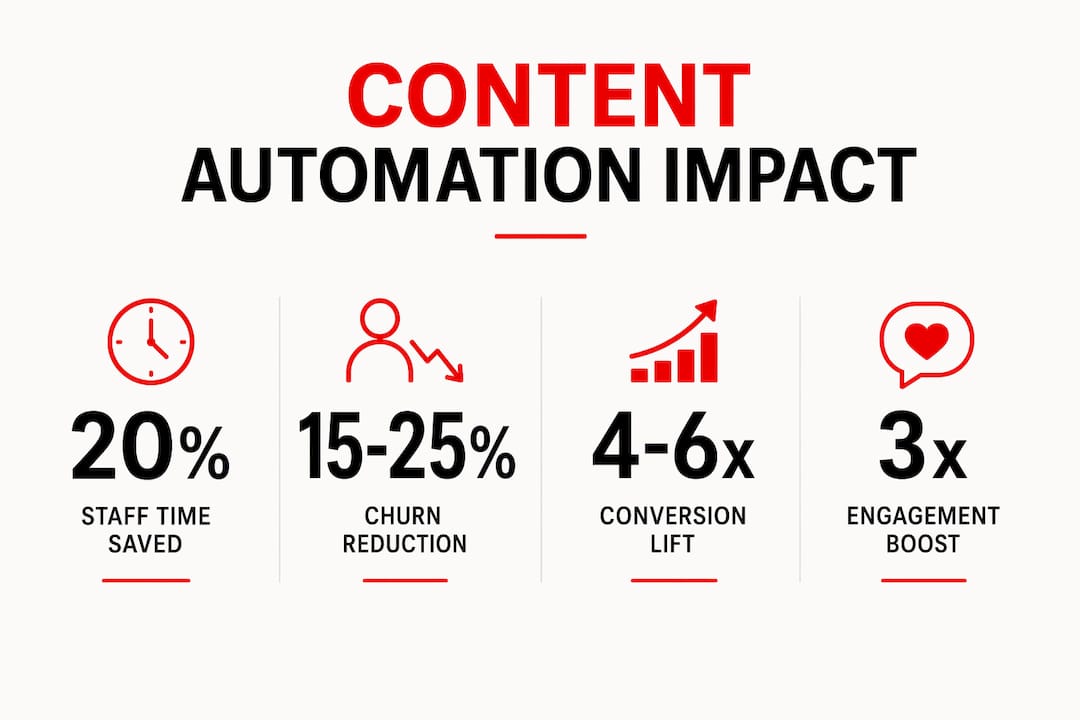
Retention is the other major lever. AI-driven churn prediction alerts reduce monthly churn rates by 15–25% by triggering personalized re-engagement messages 30–60 days before a member is likely to cancel. The system identifies behavioral signals, such as declining visit frequency or skipped class bookings, and acts on them automatically. You do not need a staff member monitoring a spreadsheet.
Content type also matters more than most gym owners realize. Automated content feeds focused on gym culture and member stories increase member visit frequency by 18%, outperforming simple class schedule posts. Members respond to community content. They want to see their gym as a place with a personality, not just a timetable.
| Metric | Manual content marketing | Automated content marketing |
|---|---|---|
| Trial-to-paid conversion | 4–6% | 28–42% |
| Monthly churn rate reduction | Minimal | 15–25% |
| Member visit frequency lift | Baseline | +18% |
| Staff hours spent on content | 10–20 hrs/week | Near zero |
Pro Tip: Record a six-minute audio "brain dump" about a training topic or member win. One six-minute recording can produce a full week of content, including blog posts, social slides, and emails, in about 30 minutes total. This keeps your content authentic and grounded in your actual expertise.
What are the best practices and pitfalls in gym content automation?
The biggest mistake gym owners make is treating automation as a "set and forget" system. Automation handles execution, but it still needs weekly human review. Class attendance data, booking trends, and member feedback should inform what the system produces. Reviewing real-time gym data weekly keeps your content relevant and your automation agile.
A second critical practice is separating your message types. Transactional messages, such as class reminders and booking confirmations, must live in a different channel from marketing messages like promotional offers and community stories. Mixing them on platforms like Meta's messaging tools creates compliance risks and reduces deliverability. Keep the channels clean.
The most common content mistakes include:
- Over-relying on generic AI outputs. AI drafts need your gym's voice layered in. A post that reads like it came from a template will not build community.
- Ignoring culture-driven content. Gyms that only automate class schedules miss the engagement lift that comes from member stories, coach spotlights, and behind-the-scenes posts.
- Skipping the review cycle. Automation without oversight drifts. A weekly 30-minute review session keeps everything on track.
- Adding too many features at once. Layering automation gradually prevents the overwhelm that causes gym managers to abandon the system entirely.
"The gyms winning at content automation are not the ones with the most tools. They are the ones who use real member data, review their outputs weekly, and keep their brand voice front and center. Technology executes. You still have to lead."
How can gym owners implement content automation workflows?
A practical implementation follows five steps.
- Choose your AI content tools and connect them to your gym management system. Tools like ChatGPT and Claude handle content generation. Your PMS provides the data. The connection between them is what makes automation relevant rather than generic.
- Identify your content types and channels. Decide which content you want to automate first: social posts, email sequences, member announcements, or on-site screen updates. Prioritize the channel where your members are most active.
- Build your first workflow. A simple starting workflow looks like this: record a short audio idea, run it through an AI transcription tool, prompt the AI to generate a blog post, three social captions, and an email, then schedule everything through your publishing platform.
- Extend to multi-channel publishing, including in-gym screens. Real-time gym content updates on digital displays keep members informed during their visit. Automated screen content tied to your content calendar means your physical space and your digital presence stay in sync.
- Review and refine weekly. Pull your performance data every week. Adjust messaging based on what drives bookings, visits, and conversions. Automation improves when you feed it better inputs over time.
AI suites for gyms with 300 or more members typically cost $5,000–$25,000 in setup and $300–$800 per month. Most operators see ROI within 60 days when the system is connected to lead follow-up and retention workflows. That timeline makes the investment defensible even for independent gym owners.
Pro Tip: Use your class attendance data as a content ideation engine. High-attendance classes signal what your members value. Build your automated content around those themes and watch engagement climb.
Key Takeaways
Content automation in gyms works best when AI-generated content is grounded in real member data, reviewed weekly, and built around gym culture rather than just class schedules.
| Point | Details |
|---|---|
| Define it correctly | Content automation uses AI to create, schedule, and distribute gym content automatically across all channels. |
| Start with one function | Begin with lead follow-up or email sequences before adding social scheduling or churn prediction. |
| Culture content outperforms schedules | Automated culture and story content increases member visit frequency by 18% versus class-only posts. |
| Separate message types | Keep transactional and marketing messages in different channels to avoid compliance issues. |
| Review weekly | Automation without weekly human review drifts from relevance and loses effectiveness quickly. |
The case for starting smaller than you think
Gym owners often come to me expecting content automation to be a big-bang transformation. They want to flip a switch and have their entire marketing operation run itself. That expectation sets them up for frustration.
The gyms I have seen get the most out of automation are the ones that started with a single workflow, usually lead follow-up, and ran it for 30 days before adding anything else. They learned what the system could and could not do. They found the gaps where their brand voice was missing. Then they expanded.
The shift in member search behavior is real. Members are increasingly using AI-powered chat tools to find gyms, read reviews, and compare options. Gyms that lack consistent, high-quality automated content risk becoming invisible in that environment. But the answer is not to automate everything overnight. The answer is to build a content operation that reflects your actual gym culture, one workflow at a time.
The gyms that will win in 2026 are not the ones with the most automation. They are the ones whose automated content still sounds like them.
— Kingdom
How Kingdomsignage supports gym content delivery
Gym content automation does not stop at social media and email. Your in-gym screens are a critical part of the member experience, and they deserve the same level of control and automation as your digital channels.
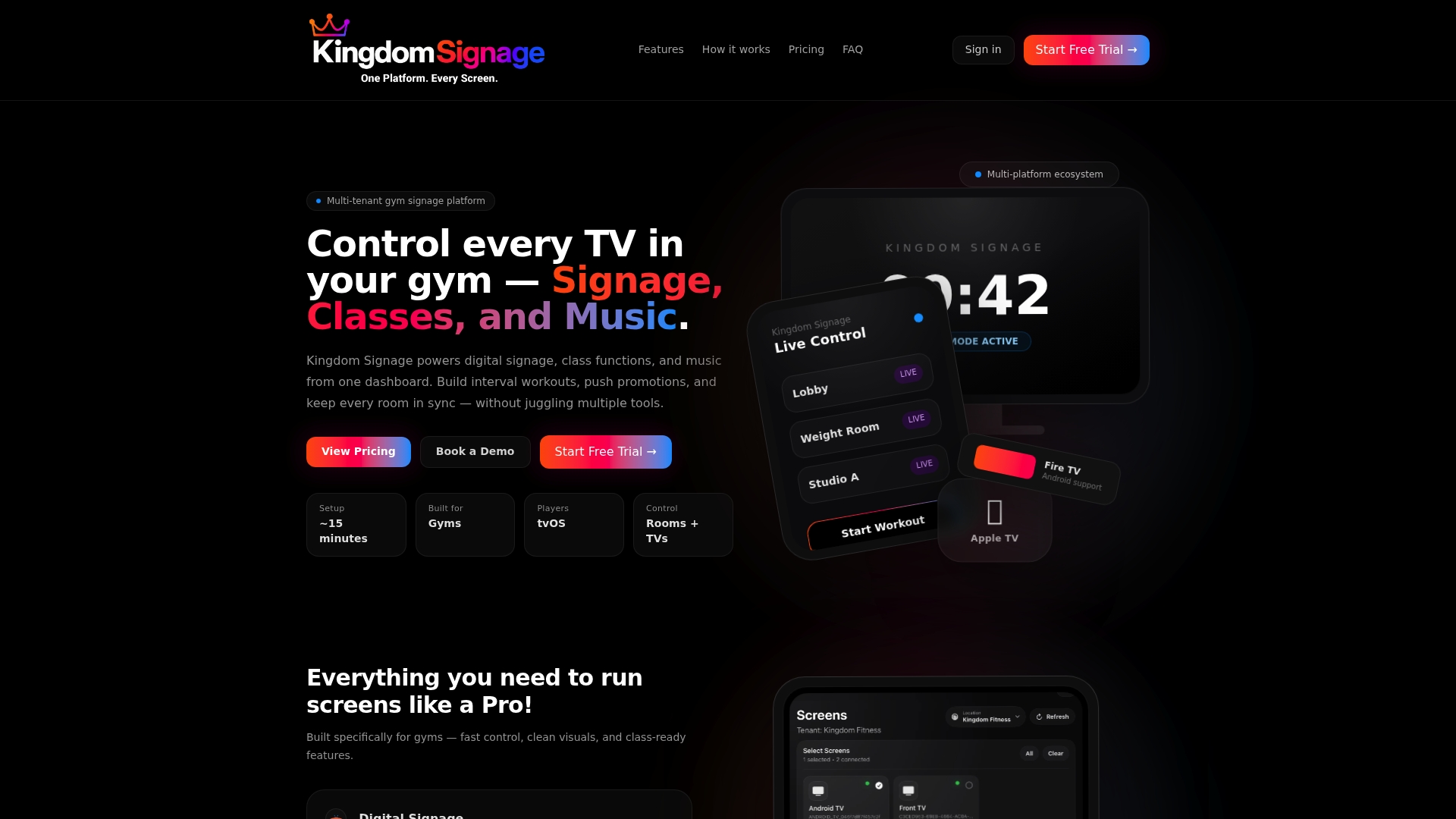
Kingdomsignage gives gym operators a single dashboard to manage TVs, workout class displays, and music across every room. You can schedule content, push real-time updates, and sync audio and visuals without juggling multiple tools. For gym owners who have built an automated content workflow, Kingdomsignage is the gym digital signage platform that brings that content to life on the floor. Promotional campaigns, class announcements, and member stories all reach members at the moment they are physically present in your space.
FAQ
What is content automation in gyms?
Content automation in gyms is the use of AI-driven software to automatically create, schedule, and distribute digital content across social media, email, and in-gym screens. It connects to gym management systems to produce relevant, personalized content without manual effort.
How much time does gym content automation save?
AI-powered content automation can reclaim 10–20 staff hours per week within the first month. That time is recovered from manual content creation, social posting, and member follow-up tasks.
What types of content can gyms automate?
Gyms can automate social media posts, email newsletters, class descriptions, member re-engagement messages, promotional campaigns, and on-site digital screen content. Culture-driven posts and member stories are among the highest-performing automated content types.
How does content automation help with member retention?
AI-driven churn prediction identifies at-risk members 30–60 days before cancellation and triggers personalized re-engagement messages automatically. This approach reduces monthly churn rates by 15–25%.
Where should gym owners start with content automation?
Start with a single function such as automated lead follow-up or new member onboarding emails. Run that workflow for 30 days, review the results, and then add the next layer. Progressive implementation produces better adoption and avoids the overwhelm that causes most automation projects to stall.