
Scheduled promotional content in gyms is defined as marketing messages that are deliberately planned, timed, and distributed to promote programs, offers, or events while keeping members engaged between purchases. This practice sits at the center of modern gym marketing strategies because random posting produces inconsistent results and wastes staff time. The industry standard calls for an 80/20 content ratio: 80% valuable engagement content and 20% promotional posts. That ratio prevents audience fatigue while keeping your gym visible and conversion-ready. Gym managers who schedule content in advance spend less time reacting and more time running their facilities.
What does effective scheduled promotional content look like in gym marketing?
Effective scheduled promotional content follows a clear structure. It does not appear randomly. Each post serves a defined purpose within a broader gym marketing strategy, whether that purpose is building trust, driving trial sign-ups, or filling a class.
The 80/20 content ratio is the most widely cited benchmark for gym social media. Four out of every five posts should educate, entertain, or inspire. One post should promote. That balance keeps your audience from tuning out your feed entirely.

Posting frequency matters as much as content quality. 3 to 5 posts per week is the proven range for gym social media performance. Fewer posts reduce visibility. More posts often reduce engagement per post. Hitting that window consistently is more valuable than occasional high-effort campaigns.
The format of promotional posts also determines their success. Strong promotional content ideas include:
- Limited-time membership offers with a specific expiration date to create urgency
- Class launch announcements tied to a registration link or QR code
- Transformation testimonials that end with a direct invitation to join
- Seasonal challenges with a clear entry point and prize
Every promotional post needs a clear call to action such as "join today" or "book your free trial." Without one, well-produced content fails to generate leads. The call to action is not optional. It is the mechanism that turns attention into revenue.
Pro Tip: Batch your promotional posts separately from your engagement content. Write all four promotional posts for the month in one sitting, then schedule them using tools like Later or Buffer. This keeps your promotional messaging consistent without interrupting your daily workflow.
How to build and manage a promotional content calendar for gyms
A gym content calendar is not a spreadsheet of random post ideas. It is a planning document that ties every piece of content to a business goal, a time period, and a distribution channel.
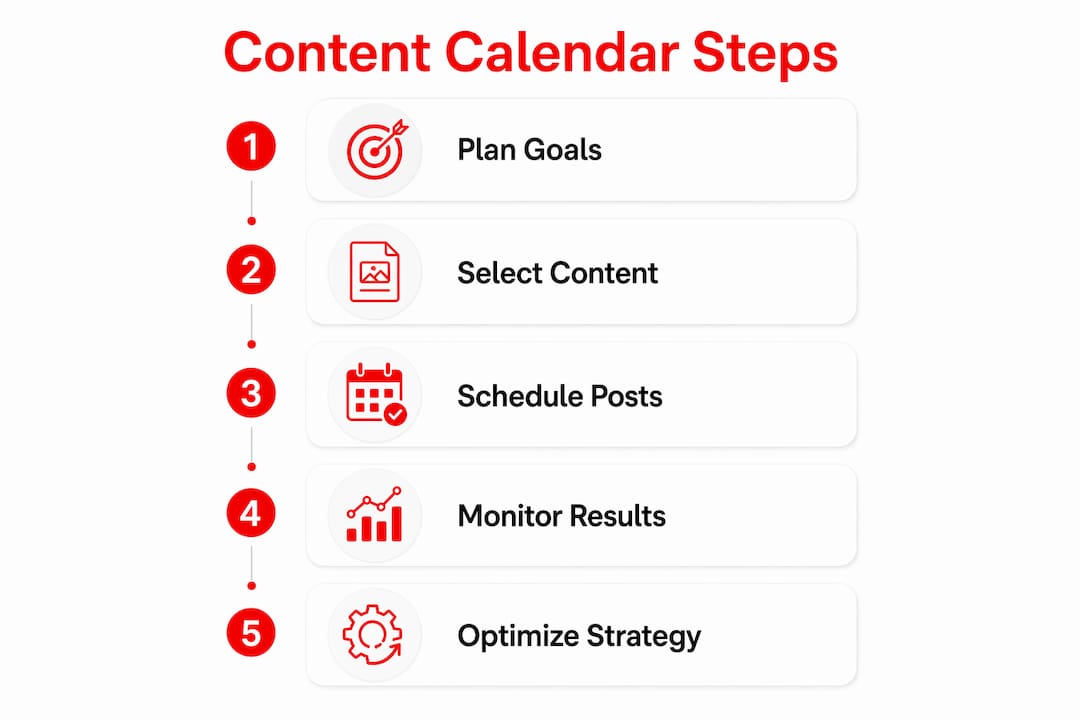
The most effective approach uses a quarterly thematic framework. Each quarter gets one or two primary themes that align with seasonal behavior and business objectives. A gym running a "New Year, New Habit" theme in january, for example, schedules its promotional content around trial memberships and beginner classes. That focus makes every post feel intentional rather than filler.
Building a quarterly calendar follows a repeatable process:
- Define your business goal for the quarter. Examples: increase trial sign-ups by 20%, fill a new yoga class, or sell 50 personal training packages.
- Choose your primary theme. Align it with a seasonal moment or a program launch.
- Map your content formats. Decide which posts go on Instagram, which go in email newsletters, and which display on in-gym screens.
- Assign weekly content types. A thematic weekly formula of educational, behind-the-scenes, testimonial, personality, and promotional posts covers all five content functions.
- Schedule content in advance. Use Google Sheets or Notion to track status, and use scheduling tools like Later or Buffer to publish automatically.
Pro Tip: Reserve one hour every Sunday evening to review the coming week's scheduled posts. Adjust any content that no longer fits current events, and confirm that every promotional post still has an active link or offer attached.
The table below shows how a quarterly calendar maps content types to channels and goals.
| Week focus | Content type | Primary channel | Business goal |
|---|---|---|---|
| Educational | How-to fitness tips | Instagram, email | Build trust and authority |
| Behind the scenes | Staff and facility tours | Instagram Stories | Humanize the brand |
| Testimonial | Member success story | Facebook, email | Social proof for conversions |
| Promotional | Membership offer or class launch | All channels + gym screens | Drive sign-ups and revenue |
Gym managers who use AI tools like ChatGPT alongside frameworks such as RACE can save 5+ hours weekly on content drafting. That time saving compounds across a quarter. A gym that reclaims five hours per week gains more than 60 hours per quarter to focus on member experience and operations.
What role do automated nurture systems play alongside scheduled promotional content?
Scheduled promotional content is one touchpoint in a larger system. Treating a single post as a complete marketing effort is the most common mistake gym managers make.
Promotional content supports nurture funnels that include email sequences, SMS follow-ups, and in-person conversations. A member who sees a promotional post and clicks a link has expressed high intent. What happens in the next 60 seconds determines whether that interest converts or disappears.
The key components of an effective nurture system alongside scheduled promotions include:
- Immediate automated response. An AI-driven SMS agent that responds within 60 seconds of a lead inquiry captures attention while it is still active.
- Email follow-up sequence. A three-to-five email series that delivers value and reinforces the promotional offer over 7 to 14 days.
- In-gym screen reinforcement. Digital signage that displays the same offer members saw online creates a consistent experience from online to physical space.
- Staff handoff protocol. A clear process for front desk staff to follow up personally when a lead visits after seeing a promotion.
Scheduling a high-intent promotional post without an automated response system in place is the equivalent of running a TV ad with a disconnected phone number. The interest exists. The infrastructure to capture it does not. Automated AI-driven responses within 60 seconds after a promotional post significantly improve conversion rates and reduce lost leads.
The pitfall of skipping automation is invisible. Gym managers see a post perform well on engagement metrics and assume the marketing worked. What they do not see is the percentage of interested prospects who clicked, found no immediate response, and signed up at a competitor's gym instead.
How to measure and optimize your gym's scheduled promotional content
Measurement separates gyms that grow from gyms that stay busy. Tracking the right metrics tells you which promotional content ideas actually drive revenue and which ones only generate likes.
The two categories of metrics gym managers need to track are engagement metrics and conversion metrics. Engagement metrics include likes, comments, saves, and shares. Conversion metrics include link clicks, form submissions, trial bookings, and paid sign-ups. Engagement without conversion means your content entertains but does not sell.
| Metric type | What to track | What it tells you |
|---|---|---|
| Engagement | Likes, comments, saves, shares | Content resonance and audience interest |
| Reach | Impressions, follower growth | Visibility and brand awareness |
| Conversion | Link clicks, form fills, trial bookings | Direct revenue impact of promotional posts |
| Efficiency | Time spent vs. leads generated | Whether your content process is worth the investment |
Refining your approach requires testing one variable at a time. Change the call to action on one post and keep everything else the same. If bookings increase, the new call to action is more effective. If they stay flat, test the offer itself. This method gives you clean data rather than guesswork.
Audience fatigue is a real signal. When engagement drops across multiple consecutive promotional posts, the 80/20 ratio has likely shifted. Pull back on promotions for two weeks, return to educational and testimonial content, and then reintroduce promotional posts with a fresh offer. The gym digital content calendar approach makes this kind of adjustment easy because you can see the full picture at a glance.
Key Takeaways
Scheduled promotional content in gyms works when it follows a defined ratio, connects to a quarterly goal, and feeds into an automated system that captures leads before they disappear.
| Point | Details |
|---|---|
| Follow the 80/20 ratio | Post 80% engagement content and 20% promotional content to prevent audience fatigue. |
| Post 3 to 5 times per week | This frequency maximizes visibility without reducing per-post engagement. |
| Build a quarterly calendar | Tie every promotional post to a seasonal theme and a specific business goal. |
| Automate lead response | Respond to high-intent leads within 60 seconds using AI-driven SMS or email tools. |
| Track conversions, not just likes | Measure trial bookings and sign-ups to confirm promotional content drives real revenue. |
What gym managers consistently get wrong about promotional content
Most gym managers I work with make the same mistake. They treat promotional content as something they do when they have time, rather than something they plan in advance and protect like a class schedule.
The second mistake is more costly. Managers invest real effort in creating a strong promotional post, it performs well, and then nothing happens. No follow-up. No automated message. No staff protocol. The lead cools within hours and signs up somewhere else. The post looked like a success because the likes were good. The business result was zero.
Batching content creation is the single habit that changes everything. Batch-creating content in three hours or less per week is achievable for most gym managers when they work from a quarterly theme and a weekly formula. The alternative is daily improvisation, which produces inconsistent quality and eventually leads to dormant accounts.
The piece most managers overlook is the connection between in-gym screens and digital promotional content. A member who sees a membership offer on Instagram and then walks into your gym and sees the same offer on a gym promotion screen is far more likely to act. Consistency across channels is not a design preference. It is a conversion strategy.
My honest recommendation: build your quarterly calendar first, automate your lead response second, and then worry about content quality third. A mediocre post with a fast follow-up outperforms a polished post with no system behind it.
— Kingdom
How Kingdomsignage helps gyms run scheduled promotional content
Kingdomsignage gives gym managers a single dashboard to control TVs, digital signage, workout class displays, and audio across every room. Scheduling promotional content no longer requires separate tools for each screen or manual updates during peak hours.
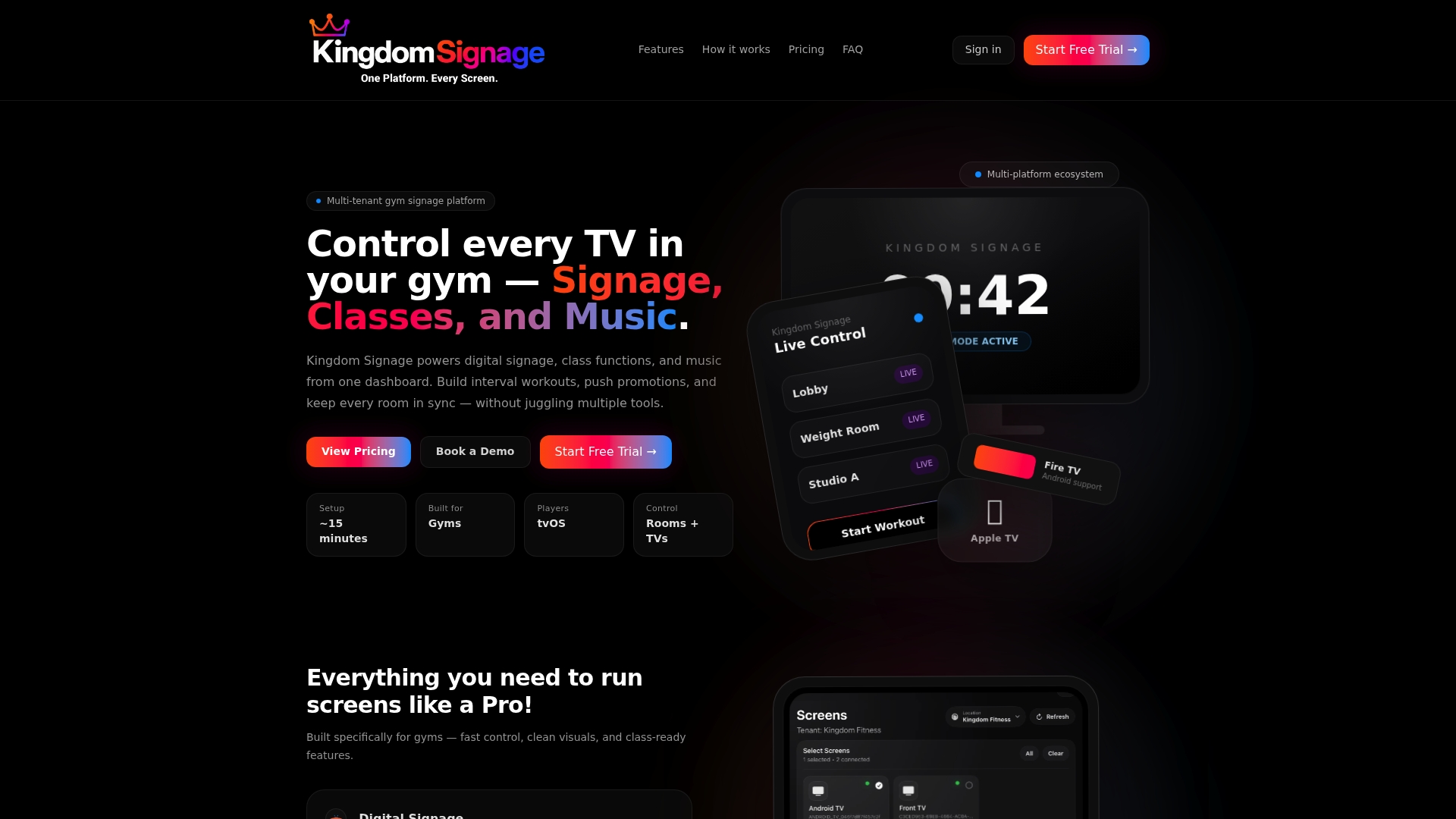
With Kingdomsignage, you can schedule membership offers, class launches, and seasonal promotions to display automatically on gym screens at the right time. Real-time updates push instantly across all displays without interrupting classes or requiring staff intervention. The platform connects your online promotional calendar directly to your in-gym environment, so the offer a member saw on social media is the same one they see on the screen when they walk through the door. Visit Kingdomsignage to see how the platform supports your gym's full promotional content strategy.
FAQ
What is scheduled promotional content in a gym?
Scheduled promotional content in a gym is marketing material, including social posts, emails, and digital signage, that is planned and timed in advance to promote offers, classes, or memberships. It differs from ad hoc posting because every piece connects to a business goal and a publishing schedule.
How often should a gym post promotional content?
Gyms should post promotional content once for every four engagement posts, following the 80/20 content ratio. With a posting frequency of 3 to 5 times per week, that means roughly one promotional post per week.
What tools help gyms schedule promotional content?
Scheduling tools like Later and Buffer allow gym managers to preview feeds and post at optimal times without daily manual effort. AI tools like ChatGPT help draft content faster, reducing the weekly time investment significantly.
Why does promotional content fail to generate gym sign-ups?
Promotional content fails when it lacks a clear call to action or when no automated follow-up system captures interested leads. A post that drives clicks but has no immediate response mechanism loses most of its potential conversions within the first hour.
How does a gym content calendar improve marketing results?
A gym content calendar built around quarterly thematic frameworks ties promotional posts to specific business goals rather than filling space. That alignment makes it easier to measure results and adjust offers based on what actually drives sign-ups.