
Finding gym digital signage software that fits branding, class control, and multi-room music needs without overpaying or juggling multiple vendors is difficult. Many platforms tie features to higher pricing tiers, require proprietary hardware, or lack managed content and music support for all gym sizes. This comparison covers pricing, hardware requirements, content management, and live control for four ClubCom competitors so gym owners can match a solution to their specific needs.
Table of Contents
- Kingdom Signage
- CloudFit
- ClubCom
- Tone Digital Signage and Audio Solutions
- Comparison of alternatives
Kingdom Signage
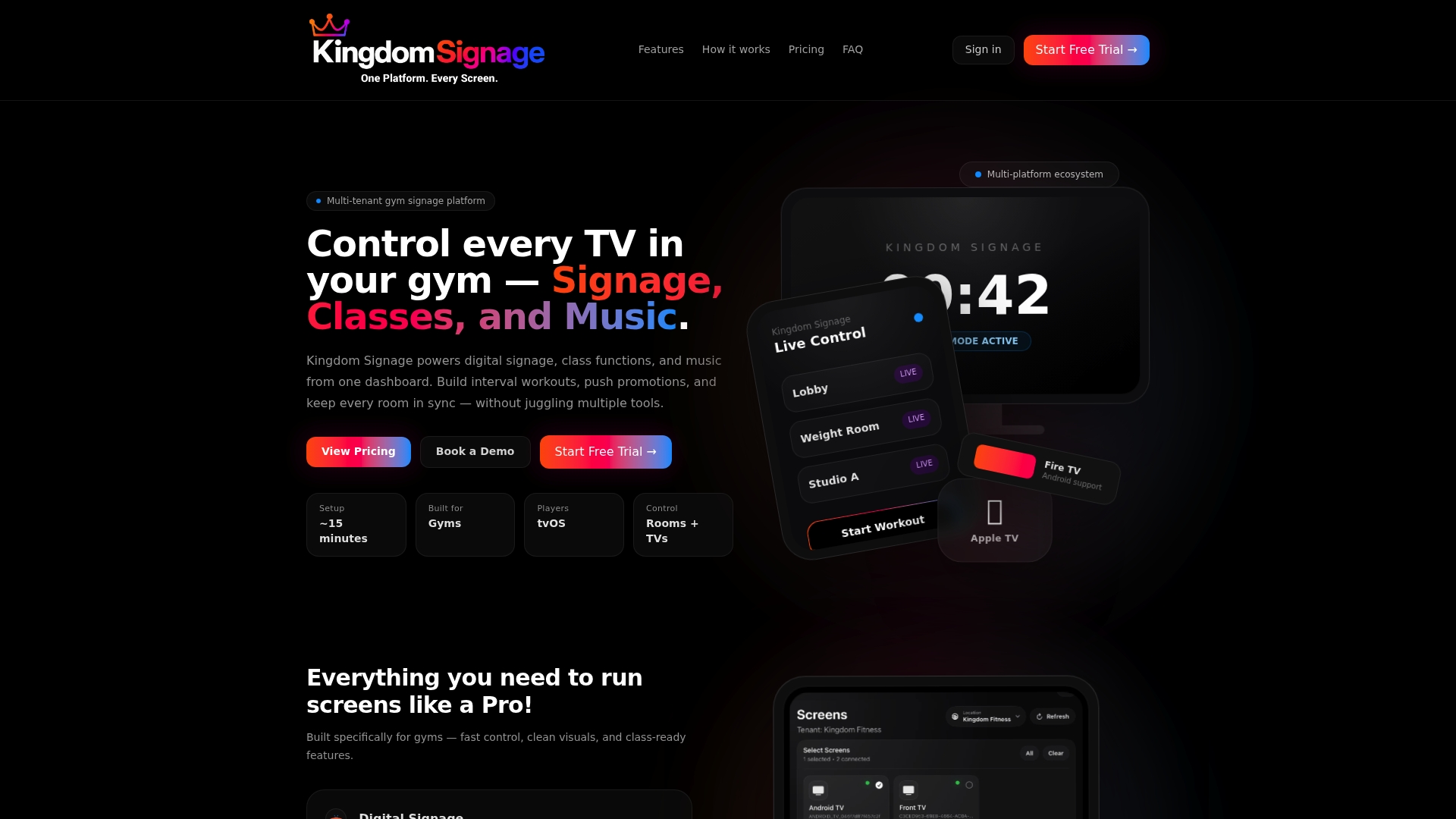
At a Glance
Kingdom Signage reports a 15-minute installation for a basic setup. That claim highlights how fast a gym can get screens and audio under centralized control. The system runs on Apple TV and Android devices. It manages signage and music from one dashboard, so staff can update class content and promos live.
Core Features
Kingdom Signage includes customizable signage playlists and a class schedule display that updates automatically. An interval workout builder includes demo videos, and a live control dashboard lets staff push content and announcements in real time. Room based music control synchronizes audio with class mode and announcements across multiple rooms.
Key Differentiator
Designed specifically for gyms, Kingdom Signage focuses on quick setup, live content control, and multiple room synchronization. The platform works with existing Apple TVs and Android devices, so gyms avoid buying special displays. That combination targets class transitions and in class audio management directly.
Pros
Customizable signage and workout management map directly to how studios run classes and promotions. The vendor claims fast deployment, and that estimate matters if you need screens live ahead of a membership drive. One dashboard controls multiple screens and rooms, which reduces the number of systems your staff must learn. Support for existing Apple TVs and standard displays lowers hardware costs. Built in live control lets instructors update on screen cues and music between classes.
Cons
- Pricing is based on screen count, which can increase costs as a gym adds more screens.
Who It's For
Gym owners and fitness operators who run multiple rooms or locations will benefit most. Small studios that use Apple TV or Android sticks can get started quickly. Franchises with consistent class schedules will find the centralized schedule and promo workflow helpful.
Unique Value Proposition
Syncing audio and visuals across rooms using existing Apple TV and Android hardware removes the need for separate signage and music systems. That approach reduces device clutter, lowers upfront hardware spending, and centralizes control for front desk and instructors. The result is fewer tools to manage during class turnover.
Real World Use Case
A fitness franchise deploys Kingdom Signage to push the same interval workout video and class schedule across several locations at the same time. Staff use the dashboard to update promotions and switch music for a specific room before a class. Members see consistent messaging and hear synchronized audio during sessions.
Pricing
Plans start at $149/month for up to 5 screens and $299/month for up to 20 screens. Custom enterprise options are available for multi location operators and larger deployments.
Website: https://kingdomsignage.com
CloudFit
At a Glance
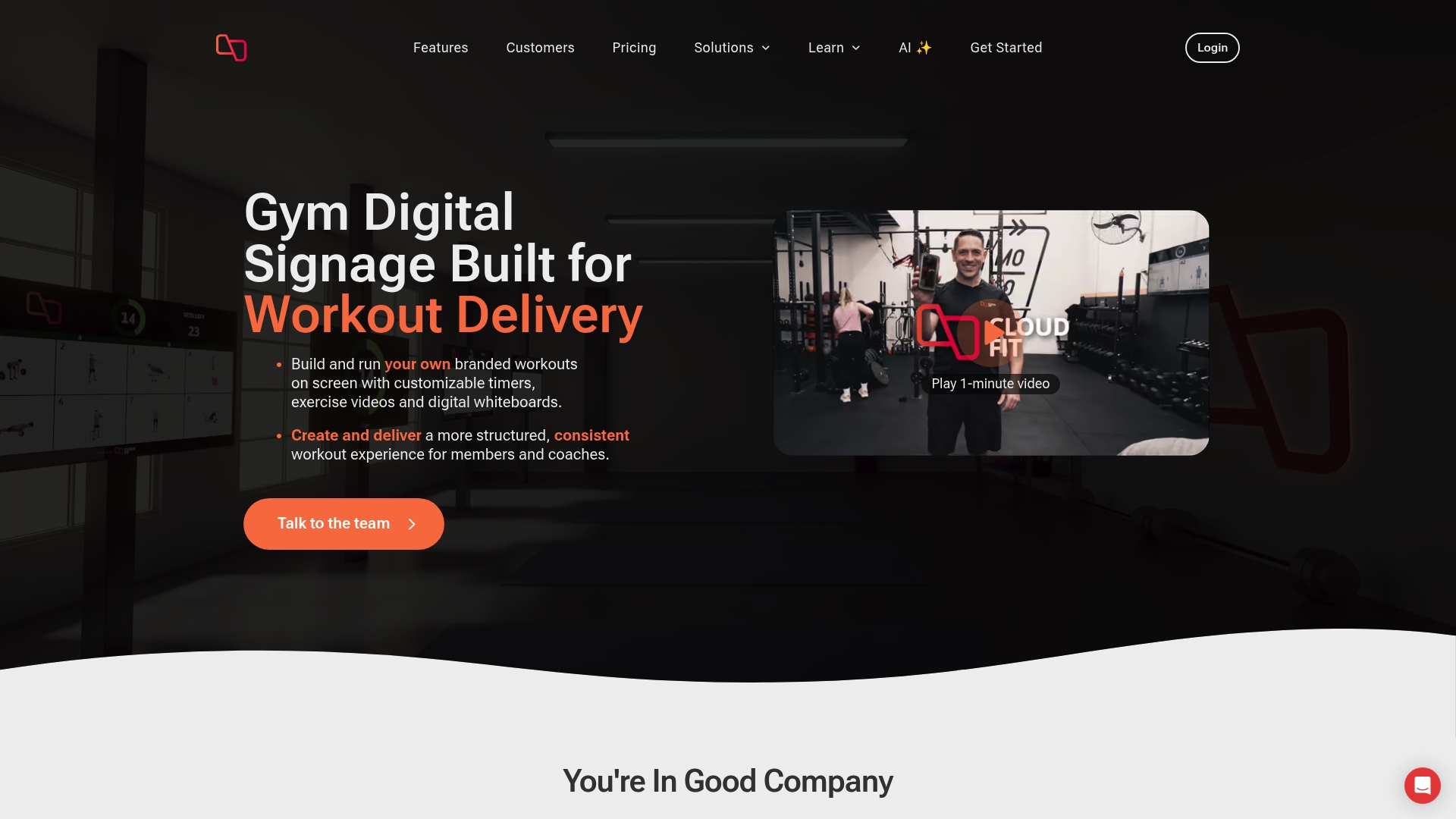
Supports multiscreen display for up to 15 screens. CloudFit runs from the cloud, so trainers can push synchronized workouts and timers to every display from a single dashboard. The service includes an exercise video library, a digital whiteboard, and an AI assistant for workout suggestions.
Core Features
CloudFit provides a builder for custom workouts that combines timers, uploaded exercise videos, and on-screen messaging for classes. The platform supports multiscreen layouts, account-level branding, and multi-location management for gym chains. CloudFit AI helps assemble workouts and suggest sequences to reduce manual setup time.
Key Differentiator
CloudFit stands out for its extensive multiscreen support paired with an AI workflow that speeds content creation. That combination makes it practical to run synchronized classes across rooms and sites without separate tools. The product focuses on branded, instructor-led displays rather than general advertising use.
Pros
CloudFit is straightforward to operate, which helps staff with limited technical experience prepare classes quickly. The platform offers strong customization, so you can match on-screen colors, logos, and messaging to your brand. Multiscreen support and multi-location controls let regional operators keep class content consistent across sites. The exercise library and upload option let trainers reuse filmed demos and build a proprietary content catalog.
Cons
- Pricing tiers may be costly for small gyms on the free plan. The Business plan starts at a set monthly fee and higher capabilities sit behind paid tiers.
- Some advanced functions require higher plans or add-ons. Small operations may need to upgrade for AI recommendations or multi-location management.
- Requires compatible off-the-shelf hardware. Buyers must verify player and display compatibility because hardware costs vary.
When It May Not Fit
If you want a system that serves general digital signage and advertising, CloudFit may not match that use case. The platform focuses on branded workout delivery and places limits on commercial reuse of published workouts. Gyms that cannot invest in compatible players or pay for higher plans may find the fit poor.
Who It's For
CloudFit suits gym operators, boutique studios, and recreation centers that want consistent, branded class delivery across rooms or sites. It also fits regional chains that need centralized content control and synchronized session timing. Studio owners who expect to upload their own video demonstrations will find the library and upload capabilities useful.
Real World Use Case
A regional gym chain used CloudFit to standardize group classes across several locations. Trainers launched the same timed circuits and instructional videos to each studio, keeping transitions tight and cues consistent. Members received identical on-screen instructions, which reduced trainer confusion and improved class pacing.
Pricing
CloudFit offers a free tier and a Business plan priced at USD $149 per month. The vendor advertises discounts or custom pricing for enterprise and multi-site agreements, so larger buyers can negotiate volume terms.
Website: https://cloudfit.tv
ClubCom
At a Glance
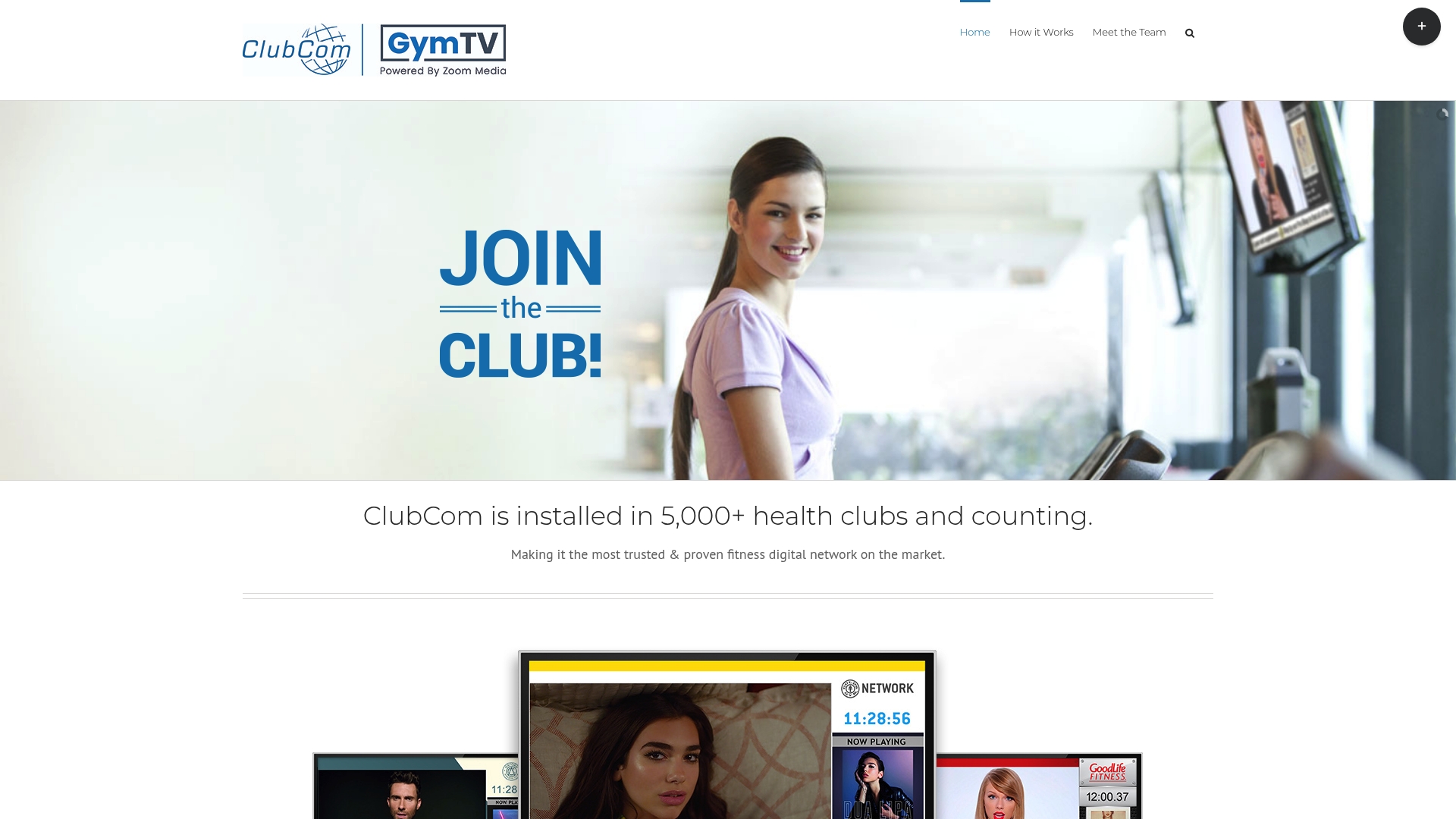
ClubCom reports installation in over 5,000 health clubs worldwide. That footprint combines gym music, music videos, and digital signage to replace traditional overhead systems. Clubs use the network to show class schedules, promote offers, and sell advertising space.
Core Features
The system bundles gym music and video playback with digital signage for schedules, promotions, and trainer endorsements. It supports branded entertainment networks and customizable content so clubs can match on-floor messaging to their brand. Advertising partnerships let clubs sell ad slots alongside entertainment and announcements.
Key Differentiator
The product stands out for that installation footprint and its integrated advertising revenue streams. That reach gives clubs a ready channel to monetize floor media and a familiar package for fitness operators.
Pros
The vendor claims wide adoption among health clubs, which helps with credibility when selling ad inventory. Built for gym content and custom branding helps trainers and managers maintain a consistent club identity. Combining entertainment, schedules, and promos in one system reduces the number of separate AV vendors a club needs.
Cons
- No detailed third party reviews are publicly provided, so potential limitations or drawbacks remain unclear.
- Website materials do not list technical requirements or system specs, which complicates deployment planning for IT staff.
- Focus is mainly on fitness and health clubs, so the platform may not suit other venue types without customization.
When It May Not Fit
If you operate a venue outside fitness, this package may need heavy customization. Technical requirements and third party reviews are not publicly specified, which makes planning deployments harder for technically minded managers. Clubs seeking open APIs or off the shelf integrations should expect limited options from the vendor. Budget planning may require direct quotes because pricing is not published.
Who It's For
Club owners and managers at mid-sized and large clubs who want a packaged entertainment and signage network will find this relevant. Operators focused on ad revenue and consistent floor messaging will get the most from the offering. Smaller boutique studios may face higher relative costs.
Real World Use Case
A health club installs ClubCom to replace its overhead sound system with a digital network. The network streams music, displays class schedules, promotes offers, and generates ad revenue. Managers report simpler control of music and promotions, while sales teams pitch ad slots to local businesses. That combination turns floor entertainment into a revenue line without adding separate ad sales platforms.
Website: https://clubcom.com
Tone Digital Signage and Audio Solutions
At a Glance
LED screen production, music playlist programming, and remote content updates come from the same vendor. That combination suits properties that need visuals and audio coordinated across spaces. The company pairs hardware installation with ongoing content curation for clients that prefer a managed service.
Core Features
Tone handles managed display content and music playlist management while producing and installing LED screens. The offering includes consultation, planning, and multimedia design plus content control through the Tone App platform. Remote updates and playlist scheduling let facility staff or appointed members change what plays without on site technicians.
Key Differentiator
The main distinction is the focus on full project delivery that covers planning, hardware, and content operations. Tone positions itself as a single point of contact for equipment, programming, and technical support. That reduces vendor handoffs for venues that want the supplier to run both the screens and the soundtrack.
Pros
Tone delivers project services from initial planning through installation and ongoing support, which lowers the coordination work for facility teams. The company provides managed content and curated playlists so staff can delegate display and music choices to the vendor. Experience with custom LED production and large scale multimedia projects supports installations across malls, office campuses, and entertainment sites.
Cons
- Limited public detail on specific software features or third party integrations. This makes it hard to verify workflow fit for existing member management systems.
- No customer reviews or independent feedback are shown, so reputation claims rely on vendor materials.
- Detailed pricing is not published, which complicates budget comparisons during procurement.
Who It's For
This service suits business owners, property managers, and facility staff who prefer a managed approach to displays and sound. Gym and fitness studio owners that want synchronized screens and centrally controlled background music will find the single supplier model useful. It fits locations where members expect consistent visuals and audio across rooms.
Real World Use Case
A shopping mall deploys synchronized LED advertising panels and background music across corridors and common areas. The vendor programs playlists and updates promotional content remotely while handling ongoing maintenance. A large gym could use the same model to manage reception displays, class screens, and zone music from one vendor.
Website: https://tone.co.il
Comparison of alternatives
Comparison of alternatives
Choosing the right platform for gym digital signage and control means weighing specific aspects of supported features, possible integrations, and performance scalability. Here, we assess the significant benefits and trade-offs associated with each option.
Robustness of Features
Among the competitors, Kingdom Signage excels in concurrent multiscreen and multirole uses, along with synchronization between audio cues for classes across locations. Comparatively, ClubCom focuses on monetizing advertising content alongside gym overhead systems. On the other hand, CloudFit marries AI suggestions to the control panel for curating personalized, trainer-focused class systems.
Cost-efficiency and Transparency
Gym operators aiming at scalability might see pushing content and promotional options across varied multimedia deployments efficient via Tone's LED's ingenuity. ClubCom serves exceptionally well within those vendor-alike backed gym environments seeking monetization trajectories ever presented upfront elaborations exhibiting support clarity.
Best fit
- Expanding gyms and franchises: Kingdom Signage makes adoption secure and impactful given cross-purpose sound-system flex permuted around invested locations.
- Boutique studios focusing on granular approach defending optimum aesthetics involvement: CloudFit aids solidifying trusted interface completing customers' identity loyalties.
Our pick
Overall
Choose the right gym and fitness digital signage software by considering their pricing, features, targeted audiences, and differentiating factors.
| Product Name | Primary Features | Best For | Pricing | Notable Limitation |
|---|---|---|---|---|
| Kingdomsignage | Signage playlists, interval workout builder | Gyms using Apple TV or Android devices | Starting at $149/month for 5 screens | Increased costs as screen counts grow |
| CloudFit | Multiscreen management, exercise video library | Studio owners needing branded, synchronized displays | Free tier available, $149/month for Business plan | Some advanced functions require upgrades |
| ClubCom | Digital signage with entertainment integration | Medium to large fitness clubs | Pricing not published | Lacks detailed third-party reviews |
| Tone Digital Signage | Full service hardware and content management | Businesses preferring managed display and audio solutions | Pricing not published | Limited software feature and integration details |
How to Manage Gym Signage and Audio Beyond clubcom.com Alternatives
Gym operators looking for clubcom.com alternatives may face challenges like handling multiple devices and complex content updates across rooms. Kingdomsignage solves this by uniting digital signage and audio control through one simple dashboard. It works with your existing Apple TV and Android devices to sync workout classes, music, and promotions live with less hassle.
Kingdomsignage provides:
- Quick setup fitting gym environments
- Centralized control of multiple screens and rooms
- Live content updates for smoother class transitions
Explore how Kingdomsignage delivers real-time content management that improves member engagement and lowers hardware costs. Visit the site and see how you can control your gym’s screens and music from one place.
FAQ
What features make Kingdomsignage suitable for gyms?
Kingdomsignage is designed for gyms and offers customizable signage playlists and live content control. The platform integrates scheduling updates automatically and allows real-time class content management, making it ideal for fitness environments. Gyms seeking efficient digital signage should strongly consider this option.
How does CloudFit's offering compare to Kingdomsignage for gym operators?
CloudFit excels with its extensive multiscreen support and AI-driven workout suggestions that reduce setup time. Kingdomsignage, on the other hand, focuses more on quick setup and live content control for class environments. Gym operators should choose based on their priority—sophisticated AI tools or streamlined content management.
Can gyms benefit from the pricing structure of Kingdomsignage?
Yes, Kingdomsignage offers pricing that starts at $149/month for up to 5 screens, which is budget-friendly for many gyms. This tiered pricing model makes Kingdomsignage accessible to a variety of gym sizes and ensures effective advertising and class management at a reasonable cost.
What unique advantage does Kingdomsignage provide for fitness studios?
Kingdomsignage allows centralized control for signage and music across multiple rooms, which minimizes the need for separate systems. This feature is particularly valuable for fitness studios with multiple class formats, allowing for smoother transitions and consistent messaging.
How does Kingdomsignage's installation process benefit gym owners?
Kingdomsignage boasts a 15-minute installation for basic setups, enabling gyms to get screens up and running quickly. This fast deployment is crucial for gyms that want to launch promotional signage ahead of membership drives or events.
Does Kingdomsignage support existing hardware for gym installations?
Yes, Kingdomsignage integrates with existing Apple TVs and Android devices, which helps gyms avoid extra hardware costs. This support ensures that gyms can utilize their current setup, making it a cost-effective option for operators.